
Table of contentsShowHide
- 1.Start With Your Exam Level and Available Time
- 2.Divide Each Paper Into Practical Study Units
- 3.Choose a Lecture Order That Supports Understanding
- 4.Balance Lectures With Independent Practice
- 5.Use a Weekly Subject Rotation
- 6.Build Revision Into the Path From Day One
- 7.Use Tests as Checkpoints, Not Just Scorecards
- 8.Make Online Classes Work for You
- 9.Review and Adjust the Learning Path Every Week
- 10.Common Planning Mistakes to Avoid
- 11.How CA Exams Test Series Can Fit Into Your Plan
- 12.Conclusion
A subject-wise learning path turns a large syllabus into manageable steps. It helps you see which topics depend on earlier concepts, how much time each paper needs, and when you should move from learning to question practice. It also prevents a common problem: completing many lectures in one subject while leaving other papers untouched for weeks.
The plan should not treat every subject identically. A numerical paper may require regular problem-solving, while a theory-heavy paper may need active recall, written answers, and repeated revision. Reflect these differences in your schedule instead of assigning every subject the same number of hours by default.
Start With Your Exam Level and Available Time
Identify your course level, applicable syllabus, attempt, and target date for completing the first learning cycle. Check the latest official syllabus and exam guidance for your attempt. Then calculate realistic study hours after classes, work, travel, family responsibilities, and rest.
Do not build a timetable around your best possible day. Build it around a normal week. A schedule with breathing room is more useful than a perfect-looking plan that collapses after two busy days.
Divide Each Paper Into Practical Study Units
Break every paper into chapters or logical topic groups. For each unit, estimate the time needed for lectures, note-making, question practice, and revision. Use official study material and course structure as a starting point, then adjust the sequence when one topic depends on another.
Create a tracker with columns for topic, lecture status, first practice, revision date, test status, and confidence. Mark a topic complete only after attempting questions without looking at the solution. Watching a lecture alone is learning exposure, not full completion.
Choose a Lecture Order That Supports Understanding
Begin with foundational topics that make later chapters easier. If a teacher recommends a sequence, understand the reason before changing it. Avoid jumping between unrelated chapters simply because one lecture looks more interesting. At the same time, do not wait until an entire subject is finished before practising.
Use a small learning loop: preview the topic, watch the class, write a short summary in your own words, solve basic questions, attempt exam-style questions, and schedule a quick review. This makes gaps visible early.
Balance Lectures With Independent Practice
A frequent mistake in online learning is allowing lecture time to consume the whole study day. Lectures explain material, but marks depend on what you can recall and write independently. After a lecture, close the video and explain the key idea without notes. Then solve questions before checking answers.
For numerical subjects, practise calculations and presentation steps. For law and other theory-based papers, practise structuring answers, identifying the relevant rule or principle, and applying it to facts. Include mixed questions that require you to decide which concept applies.
Use a Weekly Subject Rotation
A rotation keeps all papers active without forcing you to study every subject daily. Use two main subjects on weekdays and reserve a shorter block for revision. Rotate the priority subject each week, giving extra time to papers or chapters where diagnostic results show the greatest need.
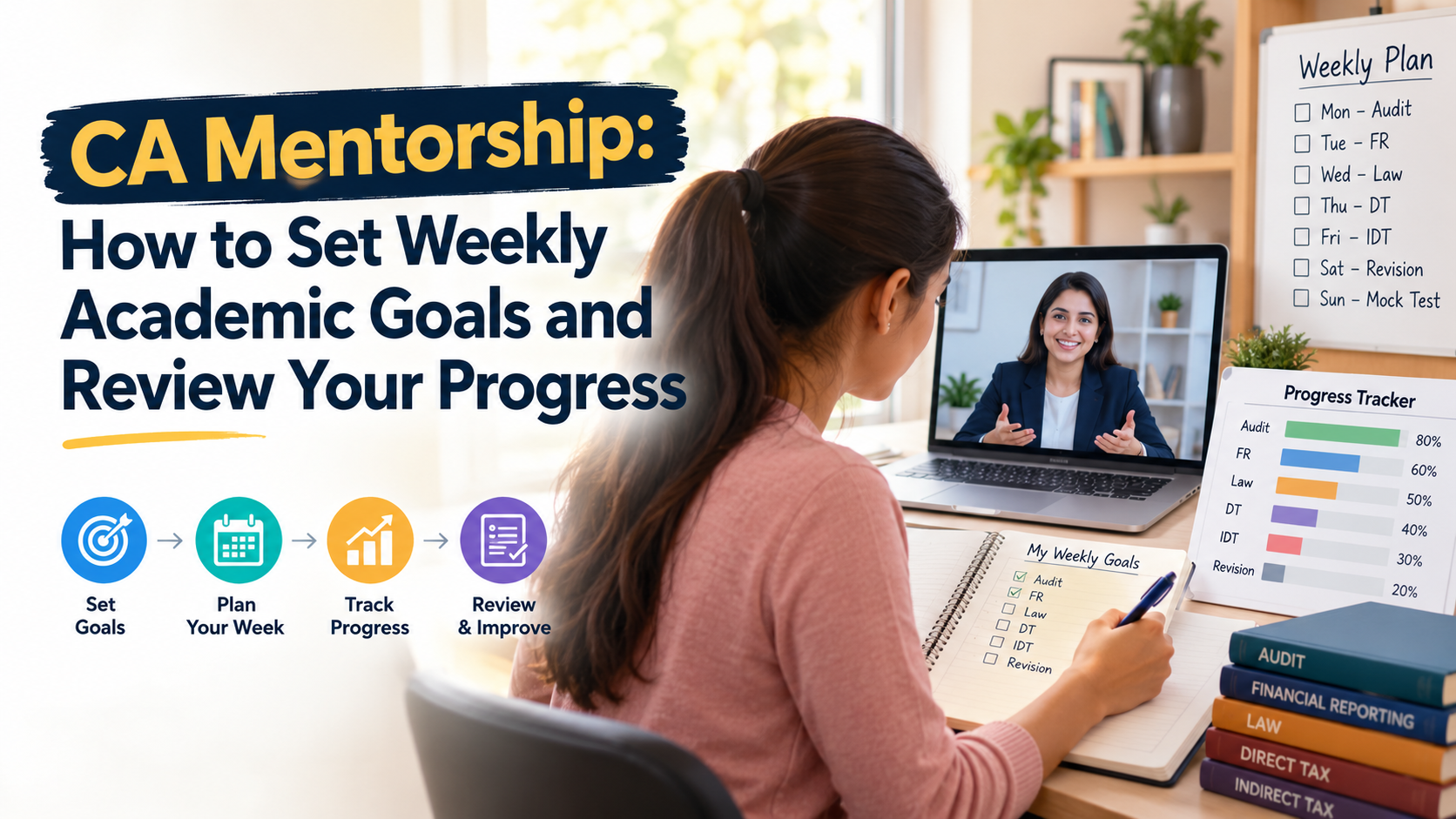
Example rotation: Monday—Subject A learning and Subject B practice; Tuesday—Subject C lecture and Subject A questions; Wednesday—Subject B learning and Subject D revision; Thursday—Subject A difficult questions and Subject C practice; Friday—Subject D learning and Subject B timed set; Saturday—mixed practice and backlog buffer; Sunday—mini-test, analysis, and light revision. Adapt the pattern to your actual papers and available hours.
Build Revision Into the Path From Day One
Revision should be scheduled before you feel you have forgotten everything. Review a new topic briefly the next day, revisit it after about a week, and test it again after a few weeks. Adjust the spacing according to difficulty and how well you remember the material.
Use active recall rather than repeatedly reading highlighted pages. Close your notes and write down the main rules, formulas, steps, or arguments. Compare your response with the source and correct the gaps.
Use Tests as Checkpoints, Not Just Scorecards
A chapter test tells you whether the learning path is working. Begin with topic-level questions, then use mixed tests as syllabus coverage grows. Under timed conditions, practise reading requirements carefully, planning answers, managing time, and presenting solutions clearly.
Classify mistakes as concept gaps, forgotten details, calculation errors, misreading, time issues, or weak presentation. Give each error a next action. A concept gap may need a short lesson review and fresh questions; a time issue may need timed practice rather than another lecture.
Make Online Classes Work for You
Use platform features intentionally. Adjust playback speed only when you can still follow the explanation, bookmark difficult sections, and keep questions for a dedicated doubt-clearing session. Avoid watching classes while scrolling through messages. One focused lecture with proper follow-up is more useful than several videos playing in the background.
Maintain a doubt list with the exact topic, the step you do not understand, and what you have already tried. This helps you ask clearer questions and prevents confusion from returning during revision.
Review and Adjust the Learning Path Every Week
At the end of each week, compare planned work with completed work. Ask what you understood, what you can solve independently, and what still needs support. If a chapter took longer than expected, update the plan instead of pushing every later task forward automatically.
Keep the core structure stable for a reasonable trial period. Make changes based on evidence—test performance, recall, workload, and remaining syllabus—not on one difficult session or a new timetable seen online.
Common Planning Mistakes to Avoid
Do not measure progress only by lecture completion. Do not postpone revision until the syllabus is finished. Avoid making elaborate notes that leave no time for practice, and do not copy another student’s timetable without considering your strengths and constraints. Prioritise prerequisites, high-impact weaknesses, and topics needed for upcoming assessments.
The purpose of a plan is to support learning, not to create guilt. If you miss a block, decide whether it should be moved, shortened, or dropped in favour of a more important task.
How CA Exams Test Series Can Fit Into Your Plan
A test series can provide structured practice under time limits and feedback on answer-writing. Use chapter tests after completing a unit and broader mock tests when enough of the syllabus is covered. After receiving feedback, return the findings to your tracker so the next week reflects actual weaknesses.
CA Exams Test Series can be one practice resource alongside official study material, classes, and self-study. Choose tests that match your stage of preparation, and leave time to analyse each test rather than collecting tests you never review.
Conclusion
A strong subject-wise learning path is not simply a list of online lectures. It connects teaching, independent practice, spaced revision, testing, and weekly review. Start with a realistic schedule, rotate subjects to keep them active, and use mistakes to decide what needs attention next. With a clear process, online CA classes become part of a complete preparation system rather than an endless video checklist.
Frequently Asked Questions
How should I divide subjects while attending online CA classes?
Divide the week into focused blocks for two or three papers, based on syllabus size and difficulty. Keep short revision sessions for earlier topics, and adjust the rotation using test results and the time remaining before your attempt.
Should I finish all lectures before practising questions?
No. Practise after each topic or small chapter group. Early practice shows whether you understood the explanation and helps you identify doubts before they spread into later chapters.
How many hours should I study daily for CA exams?
There is no single ideal number. Set a realistic target based on course level, remaining syllabus, responsibilities, and attempt date. Track focused study and question practice rather than counting hours alone.
How can I remember topics taught in online classes?
Use active recall, next-day reviews, weekly revision, and spaced practice. Close your notes and reproduce key ideas from memory, then correct gaps using official material or class notes.
When should I take a chapter-wise test?
Take a chapter test after studying the topic, attempting practice questions, and reviewing the basics. Analyse errors before moving on, then schedule another short recall session later.
What should I do if I fall behind my timetable?
Identify essential tasks, estimate the backlog honestly, and revise the coming week. Protect practice and revision time, and avoid recovering missed hours by sacrificing sleep or all rest.
Is it better to study one subject at a time?
Focused work on one subject can help with complex concepts, but leaving other papers untouched too long can weaken recall. A planned rotation balances concentration with regular contact across subjects.
How can I track progress beyond lecture completion?
Track whether you can recall concepts without notes, solve new questions, complete timed sets, explain mistakes, and improve after feedback. These indicators show whether study time is turning into exam skills.
Can a test series replace online CA classes?
No. Classes support concept learning, while tests assess application, timing, and answer presentation. Most students need a suitable combination of learning, self-study, revision, and assessment.
How often should I change my subject-wise plan?
Review it weekly and make small changes when evidence supports them. Avoid replacing the whole timetable after every difficult day. Adjust priorities when test results, syllabus coverage, or responsibilities change.