
Table of contentsShowHide
- 1.Why Some Students Prefer Studying One Subject at a Time
- 2.What Does Intensive Subject-Wise Study Actually Mean?
- 3.How to Choose the Order of Subjects
- 4.A Practical Cycle for Studying One Subject Intensively
- 5.Sample Plan for One Subject at a Time
- 6.How to Keep Earlier Subjects Fresh While Moving Forward
- 7.How to Use CA Classes Effectively in This Approach
- 8.Where a CA Exams Test Series Fits Into the Plan
- 9.Common Mistakes to Avoid With Subject-Intensive Preparation
- 10.Adjust the Method to Your CA Course Level
- 11.Track Progress and Decide When to Move On
- 12.Conclusion
Some CA students learn best when they can focus on one subject for a sustained period. Instead of switching between several papers every day, they prefer to understand a subject properly, practise its questions, revise key concepts and then move to the next one. This approach can make difficult topics feel more manageable, especially when a subject requires regular problem-solving or detailed conceptual understanding.
However, studying one subject intensively works best when it includes revision and planned recall. Completing a subject and leaving it untouched for weeks can lead to forgetting. With a sensible schedule, regular short reviews and practice through a CA test series, students can benefit from focused study without losing touch with earlier subjects. CA Exams Test Series can support this process by helping students check their preparation through structured practice.
Why Some Students Prefer Studying One Subject at a Time
Every student has a different learning rhythm. Some are comfortable switching between subjects during the day, while others need longer blocks to understand a topic and build confidence. A subject-intensive approach gives students time to follow a concept from the basics to application without repeatedly restarting their train of thought.
This method may be useful for students who find a subject particularly demanding, are returning to studies after a break, or need to complete a subject in a structured way before moving ahead. It can also help students who prefer setting one clear target for a study block rather than juggling several unrelated tasks.
Still, one-subject-at-a-time preparation should not mean ignoring every other paper until the end. The key is to focus deeply on the current subject while keeping previous subjects active through short revision sessions and periodic tests.
What Does Intensive Subject-Wise Study Actually Mean?
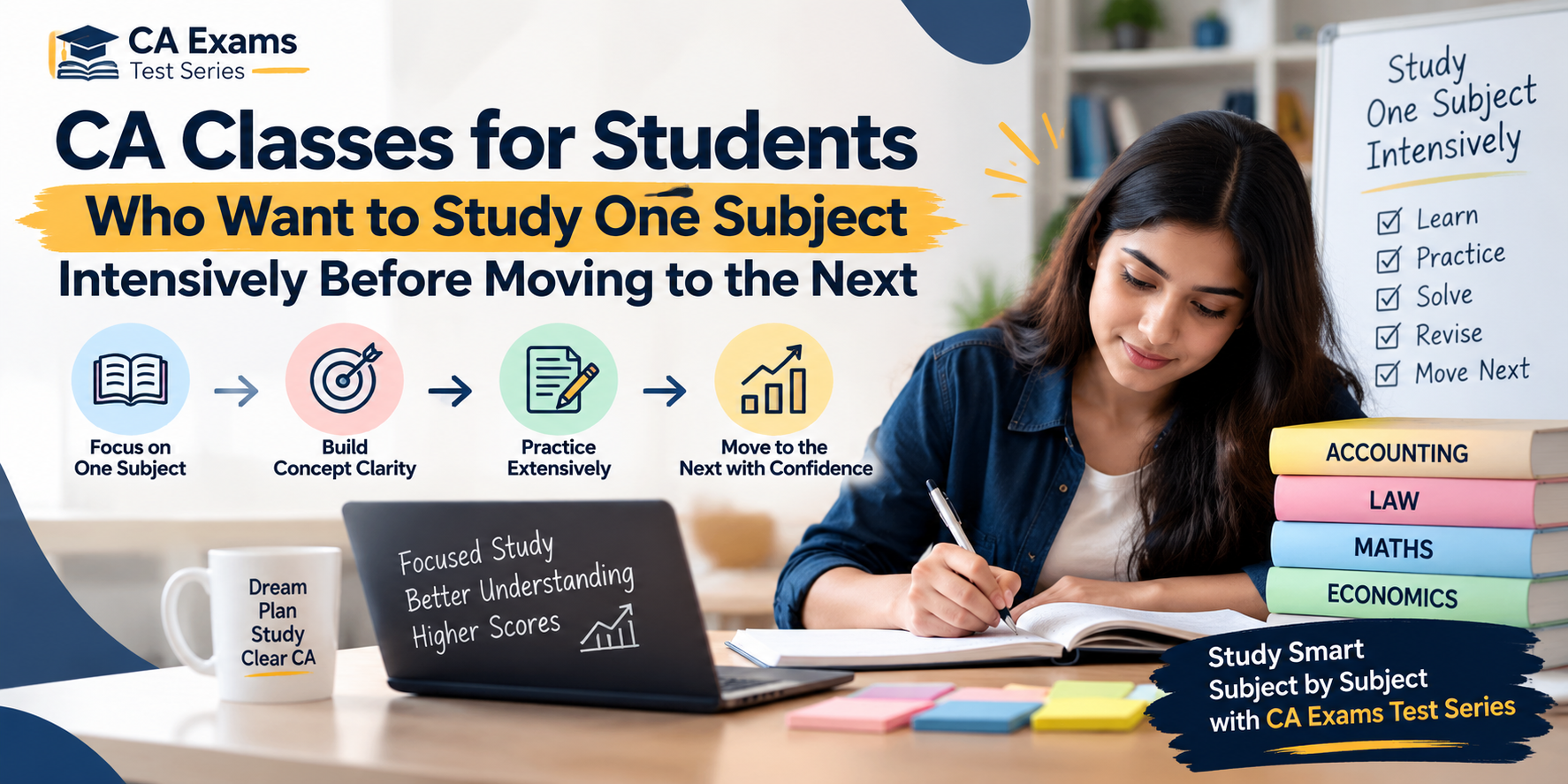
Intensive study is not simply spending many hours on one subject. It means working through the subject with a clear sequence: understand the concept, make concise notes, solve relevant questions, test recall and review errors. Each stage supports the next, so the student is not just reading chapters but checking whether the learning can be used independently.
Set a defined outcome before beginning a study block. For example, aim to understand a specific topic, solve a set of questions and explain the main rules without looking at notes. A clear outcome makes it easier to decide when to move forward and when a topic needs more work.
Use the current ICAI syllabus and official study resources to decide the scope of each topic. Coaching classes, recorded lectures and external notes can supplement learning, but they should not create confusion about what is actually required for the examination.
How to Choose the Order of Subjects
Start by listing the subjects you need to prepare and divide each into manageable units. Consider syllabus size, difficulty, your current understanding and how much time remains before the examination. Do not choose the order only because one subject looks easy; a difficult paper may need to be started earlier so there is enough time to revisit it.
One practical method is to begin with a subject that requires sustained conceptual learning, then move to another subject while retaining the first through brief review sessions. If two subjects rely on related concepts, studying them in a sensible sequence may help you connect ideas. However, the best order depends on your course level, strengths and exam schedule.
Keep your plan flexible. If a topic takes longer than expected, adjust the next milestone instead of rushing through it just to follow the calendar. At the same time, set a limit on how long you will remain stuck on one chapter. Mark unresolved doubts and seek help while continuing with manageable parts of the syllabus.
A Practical Cycle for Studying One Subject Intensively
Use a repeatable cycle for each subject. First, review the syllabus and divide the subject into units. Next, study the concepts in order, prepare concise notes and solve questions soon after learning each topic. At the end of a unit, attempt a short test without notes and list the mistakes that need attention.
After completing the main units, attempt a subject-level test or mock paper under timed conditions. Analyse the result before moving on. If the same concepts are repeatedly causing errors, schedule a targeted revision session. If the problem is timing or answer presentation, practise those skills rather than rereading the entire chapter.
Before declaring a subject complete, make a short revision sheet with key formulas, provisions, definitions, methods or common mistakes as relevant to that paper. This should be a quick reference for later revision, not a replacement for understanding the subject.
Sample Plan for One Subject at a Time
| Stage | Suggested focus | Check before moving on |
|---|---|---|
| Days 1–2 | Review syllabus and learn core concepts | Can you explain the basics in your own words? |
| Days 3–5 | Complete key topics and solve practice questions | Can you apply concepts without copying examples? |
| Day 6 | Revise weak areas and attempt a topic-wise test | Which errors repeat, and why? |
| Day 7 | Attempt mixed questions and summarise key points | What needs spaced revision later? |
| Following weeks | Start the next subject and revisit this one briefly | Can you still recall key ideas and solve questions? |
This sample is a framework rather than a fixed timetable. Adjust the number of days according to the subject, your available hours and your familiarity with the material. A lengthy or difficult paper may need more time, while a familiar subject may require less.
How to Keep Earlier Subjects Fresh While Moving Forward
The biggest risk of completing one subject before starting another is forgetting what you learned first. To reduce this risk, use spaced revision. Return to the previous subject briefly after a day, again several days later and then at longer intervals. The review can be short if you test yourself actively rather than rereading everything.
Use question-based recall wherever possible. Try to write a formula, explain a concept, outline a provision or solve a short question without looking at the answer. Then check what you missed. This makes revision more active and shows which information is still available from memory.
Keep a weekly slot for older subjects, even while most of your study time goes to the current one. A small amount of planned maintenance is easier to manage than restarting a forgotten subject from the beginning just before the examination.
How to Use CA Classes Effectively in This Approach
Classes can provide structure, explanations and a sequence for completing the syllabus. Before a lecture, quickly review the topic heading and note any questions you already have. During the class, focus on understanding the reasoning rather than copying every sentence. Afterward, spend time summarising the concept in your own words and solving a few related questions.
If you attend live or recorded classes, avoid treating lecture completion as proof that the topic is mastered. Understanding while a teacher explains is different from recalling the concept independently. Close the notes and test yourself after class; return to the relevant part of the lesson only when you identify a specific gap.
Keep one organised set of notes for each subject and update it as you practise. Record recurring errors and important clarifications, but avoid rewriting all the material repeatedly. The aim is to create a resource that supports revision and practice, not another task that consumes study time.
Where a CA Exams Test Series Fits Into the Plan
A test series can help you check whether intensive study is producing exam-ready understanding. Topic-wise tests are useful after completing a unit, while subject-level papers can help assess broader coverage. Full-length mock tests are more helpful when you have studied enough of the syllabus to attempt the paper meaningfully.
Choose tests that align with the current syllabus and applicable exam pattern. After attempting a test, review the errors and identify whether they came from a concept gap, weak recall, incorrect application, calculation mistakes, poor presentation or time management. Each category calls for a different response, so avoid treating every lost mark as a reason to reread the entire subject.
CA Exams Test Series can be part of a structured practice routine alongside official ICAI material, classes and revision. Use the results to make decisions about what to revisit and what to practise next. A test series is a support tool, not a substitute for studying the syllabus or a guarantee of a particular score.
Common Mistakes to Avoid With Subject-Intensive Preparation
One mistake is spending too long perfecting one subject while leaving insufficient time for the remaining papers. Set a realistic completion window and define what 'ready to move on' means. You do not need to know every detail perfectly before progressing; you need a sound understanding, practice evidence and a plan to revisit weak areas.
Another mistake is making extensive notes but solving too few questions. Reading and note-making can feel productive, yet exams require independent recall and application. Include question practice throughout the subject, not only after the whole syllabus has been covered.
Students may also postpone revision until the entire course is complete. This creates a heavy revision burden and makes early topics harder to retrieve. Short, spaced reviews and cumulative tests can prevent this problem. Finally, do not judge your progress only by hours studied. Measure completed learning goals, test performance and whether repeated errors are reducing.
Adjust the Method to Your CA Course Level
For CA Foundation, focus on building the basics, understanding the question formats and practising consistently across the required papers. Subject-wise blocks can help you establish concepts, but keep a schedule that allows regular revision across the full set of subjects.
For CA Intermediate, the volume and depth of the syllabus make planning especially important. Break subjects into units, include practice after each topic and use cumulative tests to check retention. If you are preparing for more than one group, make sure the plan leaves enough time for each paper and the applicable exam requirements.
For CA Final, focused study can help with detailed concepts and application, but answer-writing practice and revision are essential. Use subject-level tests, integrated questions where relevant and full-paper practice as your preparation progresses. In every course, confirm the latest syllabus and exam information from ICAI rather than relying on an old timetable or outdated material.
Track Progress and Decide When to Move On
At the end of each study week, review what you planned against what you completed. Record the units covered, questions attempted, test results, recurring errors and the next action. This helps you identify whether the schedule is realistic and whether extra time is needed for a particular topic.
Use clear completion criteria. You may be ready to move on when you can explain the main concepts without notes, solve representative questions with reasonable accuracy and identify any remaining weak points. You do not need to eliminate every mistake, but you should know what still needs revision and when you will return to it.
Review your overall plan every week. If a subject is taking longer, adjust the remaining schedule deliberately. Protect revision time for completed subjects and keep enough room for mock tests as the exam approaches. A plan that adapts to evidence is more useful than one that looks perfect but ignores actual progress.
Conclusion
Studying one CA subject intensively before moving to the next can work well for students who prefer sustained focus. The approach becomes more effective when it combines concept learning, question practice, timed testing and planned revision of earlier subjects.
Build your schedule around realistic goals, use classes to clarify concepts and let mock-test results guide your next steps. With consistent practice and regular review, CA Exams Test Series can support a more organised preparation routine without making subject-wise study feel disconnected from the final examination.
Frequently Asked Questions
Is it effective to study one CA subject at a time?
It can be effective for students who benefit from sustained focus, provided they keep earlier subjects active through short revision sessions and periodic tests. The method should include concept learning, question practice and review rather than long reading sessions alone.
Should I complete one subject fully before starting another?
You can prioritise one subject for a defined period, but avoid waiting until the end of the course to revise it. Schedule brief reviews and mixed practice so earlier topics remain familiar while you progress through the syllabus.
How many days should I spend on one CA subject?
There is no fixed number of days for every subject. Consider syllabus size, difficulty, your existing knowledge and the time remaining before the exam. Set weekly milestones and adjust them based on practice results and revision needs.
How do I avoid forgetting a subject after completing it?
Use spaced revision and active recall. Revisit key concepts after short intervals, solve a few questions without notes and review mistakes. A weekly maintenance session can help preserve earlier learning while you focus on a new subject.
When should I attempt a CA mock test?
Attempt topic-wise tests after studying a unit, then use subject-level tests when you have covered a substantial portion of the paper. Full-length mocks become more useful as your syllabus coverage and exam readiness improve.
Can CA classes alone prepare me for the exam?
Classes can explain concepts and provide structure, but independent question practice, revision and mock tests are also important. Test yourself without notes to check whether you can recall and apply what you learned during class.
How can CA Exams Test Series help with subject-wise preparation?
A suitable test series can help assess topic understanding, subject coverage, timing and answer quality. Use test results to identify specific weaknesses and plan revision, while continuing to rely on current official ICAI resources for the syllabus.
Should I make notes for every subject?
Concise, well-organised notes can support revision, especially for key concepts, formulas, provisions and recurring mistakes. Avoid rewriting entire chapters. Create notes that help you recall and apply the material quickly.
Is one-subject-at-a-time study suitable for CA Intermediate and CA Final?
It can be adapted to both levels, but the plan must account for syllabus depth, paper requirements and available time. Include cumulative practice, revision of completed subjects and appropriate mock tests as preparation advances.
How do I know when I am ready to move to the next subject?
Check whether you understand the core concepts, can solve representative questions independently and have identified remaining weak areas. You can then move forward while scheduling those weak areas for later revision instead of waiting for perfect mastery.


