
Table of contentsShowHide
- 1.Begin With an Honest Time Audit
- 2.Set a Clear Target for the Attempt
- 3.Build a Weekday and Weekend Routine
- 4.Study Actively Instead of Reading for Hours
- 5.Plan Around Workload Peaks
- 6.Sample Weekly Routine for a Working Candidate
- 7.Make Revision Part of the First Study Session
- 8.Protect Energy, Sleep and Concentration
- 9.Use Mock Tests Efficiently
- 10.How CA Exams Test Series Can Fit Your Routine
- 11.Avoid Common Mistakes Made by Working Students
Preparing for a CA examination while working full-time is challenging because study hours must fit around office responsibilities, travel, family commitments and fatigue. The solution is not to copy a full-time student's timetable. It is to create a realistic routine that protects regular study and makes every session purposeful.
A sustainable plan combines small weekday sessions, deeper weekend blocks, revision and timed practice. Your schedule should reflect the hours you can genuinely maintain, not the hours you hope to find after an exhausting day.
Begin With an Honest Time Audit
For one week, record your work hours, commute, meals, sleep, family commitments and the periods when you have the most energy. This reveals the study time that is actually available. It may be a short morning session, a focused period after dinner, or a longer block on a non-working day.
Do not plan every free minute as study time. A timetable with no room for delays or rest often collapses after a busy week. Set a minimum routine for demanding days and a fuller routine for days when work is manageable.
Set a Clear Target for the Attempt
Confirm the applicable syllabus, exam dates and the amount of material you still need to cover. Divide the preparation period into learning, practice, revision and mock-test stages. If the syllabus is large, decide which topics must be completed first without leaving the rest of the plan undefined.
Set weekly outcomes rather than only daily hour targets. For example, a weekly outcome might be to finish a module, solve a defined question set and revise the previous week's material. This helps you measure progress even when work emergencies shift individual study sessions.
Build a Weekday and Weekend Routine
Weekdays are often best for manageable tasks: reviewing a concept, solving a few questions, revising short notes or correcting mistakes from a test. Keep the task ready before the session begins so you do not spend limited time deciding what to study.
Use longer weekend blocks for difficult chapters, integrated questions and timed papers. Include breaks and review time. If weekends are frequently occupied by work or family duties, spread longer sessions across available mornings or lighter workdays instead of depending on a single perfect day.
Study Actively Instead of Reading for Hours
Passive reading can feel productive without showing whether you can recall or apply the material. After studying a section, close the book and explain the main idea in your own words. Solve a question, write a short answer or use a blank page to list key steps from memory.
Keep notes concise and useful for revision. Record formulae, important distinctions, provisions or steps that you repeatedly forget, along with the mistakes you make in practice. Avoid rewriting entire chapters when time is limited; your notes should make the next revision faster.
Plan Around Workload Peaks
Some jobs have predictable busy periods such as month-end closing, audits, reporting deadlines or seasonal workloads. Identify these in advance and reduce the planned study load slightly during those periods. Complete essential tasks earlier where possible and schedule catch-up sessions after the peak.
If unexpected overtime occurs, use a fallback session rather than abandoning the week. Even a short revision or a few well-chosen questions can maintain continuity. Move missed work deliberately to another slot instead of creating an unrealistic backlog.
Sample Weekly Routine for a Working Candidate
| Day | Suggested focus | Example session |
|---|---|---|
| Monday | Concept review | 30–45 minutes on one topic |
| Tuesday | Question practice | Solve and check a short set |
| Wednesday | Recall and revision | Revise notes and previous mistakes |
| Thursday | Continue syllabus | Study a new subtopic and answer questions |
| Friday | Weekly consolidation | Review what was covered |
| Saturday | Deep study | Longer block for a difficult chapter |
| Sunday | Test and planning | Attempt a test, analyse errors and plan next week |
This sample is a starting point, not a fixed timetable. Adjust it to your shift, commute, energy and family responsibilities.
Make Revision Part of the First Study Session
Working professionals may have limited time to revisit a chapter later, so build quick revision into the learning process. Review the previous session for a few minutes, study the next concept and finish with a question or recall exercise. This creates repeated contact with the material without requiring a separate full revision day for every topic.
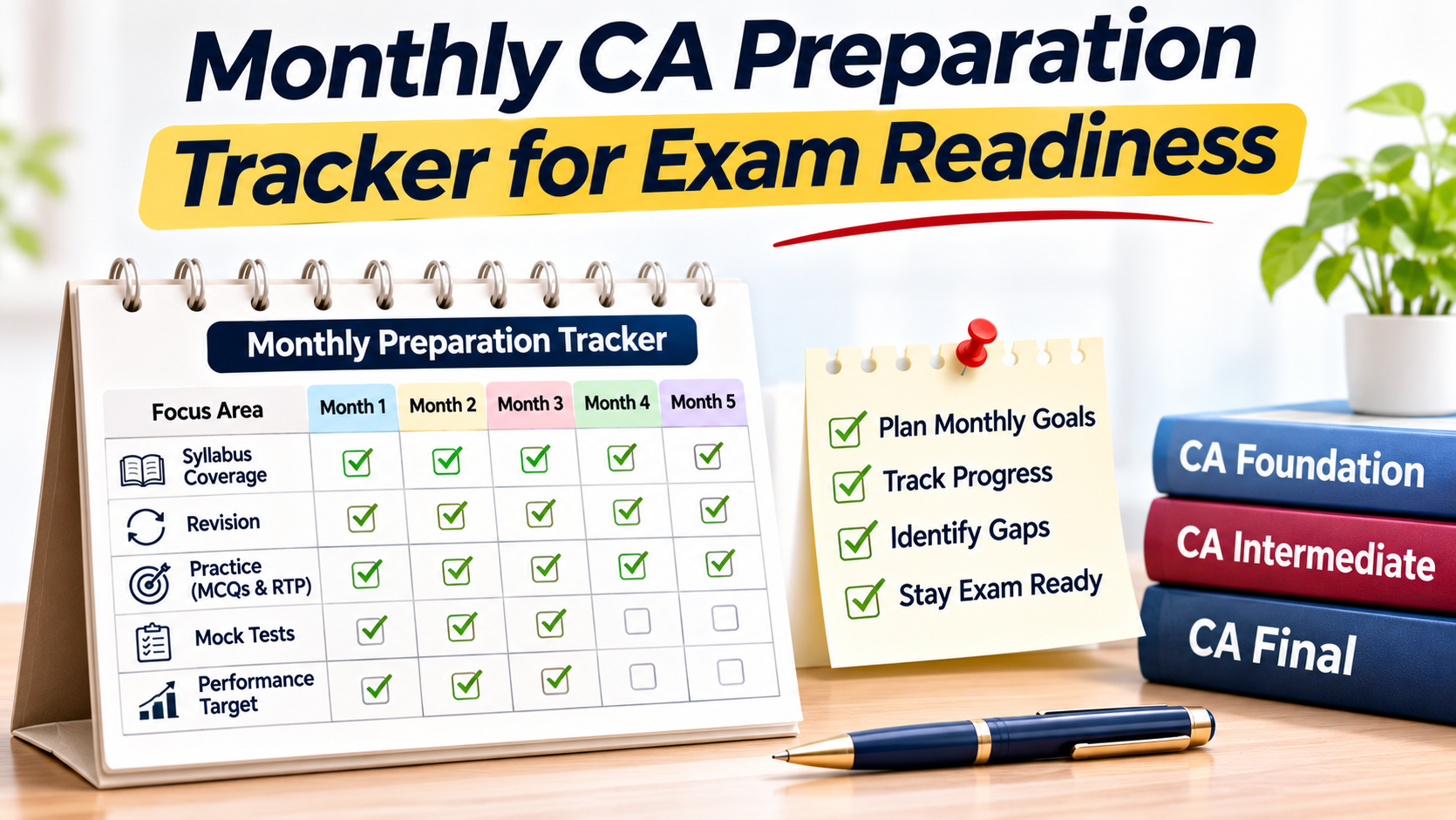
Use spaced revision: revisit a topic after a short interval, then again later in the month or during the planned revision stage. A calendar or simple tracker can remind you what needs another review. The goal is to reduce the amount you must relearn near the exam.
Protect Energy, Sleep and Concentration
Long study sessions after a full workday are not always effective. Match difficult tasks to your highest-energy period and use lower-energy periods for lighter revision. Take short breaks, keep study materials ready and reduce phone distractions during focused sessions.
Sleep and recovery support attention and recall. Avoid making all-night study a regular strategy. If you are consistently exhausted, reduce the plan to a manageable level and improve consistency rather than judging success by the number of hours spent at a desk.
Use Mock Tests Efficiently
Schedule mock tests early enough to learn from them. A full-length test may need a protected block, while topic tests can fit into shorter sessions. Follow the exam time limit where possible and review the paper soon after attempting it, while the reasons behind your choices are still clear.
After each test, identify the highest-impact corrections. A working candidate may not have time to fix ten different issues at once, so choose two or three priorities for the coming week. Track whether the same errors reduce in the next attempt.
How CA Exams Test Series Can Fit Your Routine
CA Exams Test Series can be used as a structured practice component alongside your main study material. Choose test dates that fit your preparation stage and use the result to decide what to revise. If evaluation or feedback is available, turn it into a short list of actions rather than merely checking the score.
Do not add tests simply to make the timetable look busy. Every test should have a purpose: checking a chapter, practising time management, improving answer presentation or measuring readiness. Reserve time to correct the mistakes the test reveals.
Avoid Common Mistakes Made by Working Students
Common problems include copying a full-time timetable, sacrificing sleep, waiting for a completely free weekend, and restarting the plan after every missed session. Another trap is spending all available time watching lectures without leaving room for question practice.
Build a plan that can survive ordinary disruptions. Decide what your minimum study session looks like, keep a weekly buffer and review progress honestly. Consistency across several months usually matters more than a few extreme study days.
Frequently Asked Questions
How many hours should a working professional study daily for CA?
There is no single correct number. Start with the time you can maintain around work and sleep, then increase it if your schedule permits. Weekly coverage, question practice and revision are better measures than an unrealistic daily target.
Can I prepare for CA exams while working full-time?
Yes, with a realistic schedule, clear weekly goals and regular practice. Plan around your work commitments, use short weekday sessions and protect longer blocks for difficult topics and mock tests.
Is morning study better than night study?
The best time is the period when you can concentrate consistently. Some candidates prefer mornings before work; others study after dinner. Test both options and choose the routine that fits your energy and responsibilities.
How can I manage office overtime during exam preparation?
Create a lighter fallback routine for busy days and keep a buffer in your weekly plan. When overtime disrupts a session, move the essential task to a realistic slot instead of trying to recover every missed hour immediately.
Should working students study on weekends only?
Weekend study alone may make revision and recall difficult if there is a long gap between sessions. Short weekday sessions help maintain continuity, while weekends can be used for deeper study and full-length practice.
How can I revise with very limited time?
Use concise notes, active recall, short question sets and a mistake log. Focus on topics you have already studied and schedule spaced reviews so you do not have to relearn everything near the exam.
When should working professionals take mock tests?
Begin topic tests as chapters are completed and schedule full-length tests when you have enough syllabus coverage to benefit from them. Leave time after each test to review and correct mistakes.
How do I stay consistent after a tiring day at work?
Prepare the task in advance and set a small minimum target for difficult days. A short, focused session is more useful than repeatedly postponing study while waiting for a perfect level of energy.
Can CA Exams Test Series help working candidates?
A structured test series can provide planned practice and help reveal weaknesses in timing, accuracy and presentation. Choose tests that match your syllabus and reserve time to act on the feedback.