Table of contentsShowHide
- 1.Map Both Academic Calendars First
- 2.Set Priorities for Each Week
- 3.Create a Flexible Daily Timetable
- 4.Use College Subjects and CA Learning Wisely
- 5.Build a Strong Study Method
- 6.Sample Weekly Roadmap
- 7.Handle Semester Examination Weeks
- 8.Make Smart Use of Vacations and Free Days
- 9.Track Progress With Tests and Reviews
- 10.Using CA Exams Test Series Alongside College
- 11.Avoid Burnout and Last-Minute Panic
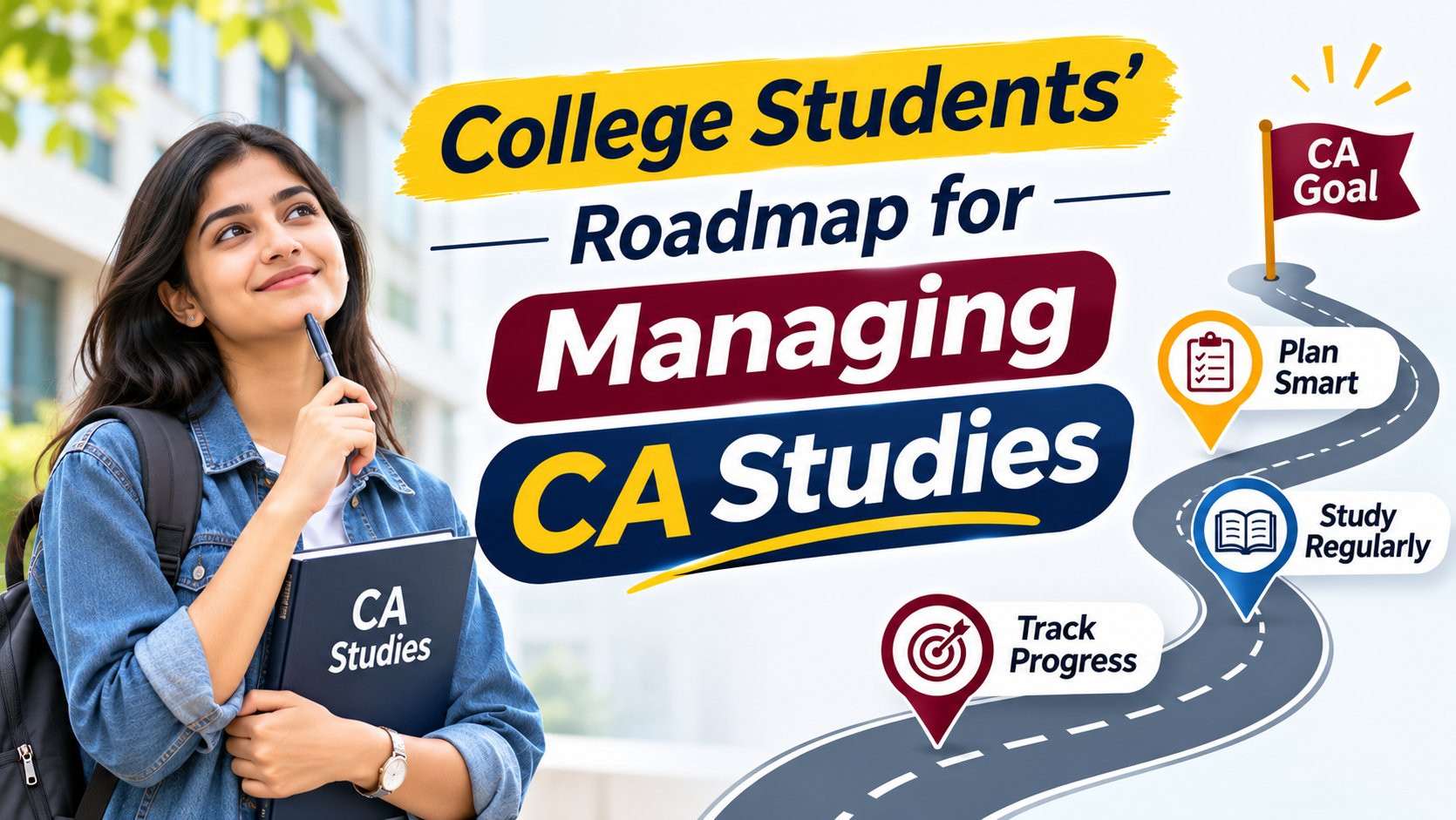
Managing college studies alongside CA preparation can be demanding. Lectures, assignments, internal examinations and travel compete for the same hours needed for the CA syllabus. Without a plan, students may switch constantly between tasks and feel that neither course is moving forward.
A useful roadmap connects both calendars, sets weekly priorities and uses different kinds of study sessions for different tasks. You do not need to study every subject every day; you need a routine that keeps college requirements under control while steadily moving CA preparation ahead.
Map Both Academic Calendars First
Write down college lectures, practicals, assignment deadlines, internal exams and attendance requirements. Add CA exam dates, registration or form deadlines that apply to your attempt, revision targets and mock-test dates. A combined calendar helps you see clashes before they become urgent.
Mark high-pressure periods such as semester examinations and major college submissions. Plan CA tasks earlier where possible, then use a lighter revision routine during the busiest college weeks. This is more realistic than expecting the same study hours throughout the year.
Set Priorities for Each Week
At the beginning of the week, choose a small number of concrete outcomes for college and CA preparation. For CA, that might mean completing one module, solving a set of practical questions and revising an earlier topic. For college, it might mean finishing an assignment or preparing for an internal test.
Rank tasks by deadline, importance and effort. Avoid writing a long list that cannot fit into the week. If the plan is too large, identify what can be moved without harming your preparation and schedule it for a specific later date.
Create a Flexible Daily Timetable
Use class-free periods, early mornings or evenings for focused study, depending on your routine. Short gaps are useful for flashcards, formula recall or reviewing notes, but difficult new concepts usually need a longer uninterrupted session. Match the task to the time available.
Keep a standard routine for ordinary college days and a separate version for examination weeks. A flexible plan allows study to continue when lectures run late or assignments take longer than expected. The aim is to preserve consistency, not follow a timetable perfectly every day.
Use College Subjects and CA Learning Wisely
Some concepts or skills may overlap between college courses and CA subjects, but do not assume the syllabuses are identical. Check the relevant CA syllabus and learning outcomes. Where concepts overlap, use the connection to strengthen understanding, then practise the specific format and depth required for the CA paper.
Keep separate checklists for college and CA deliverables. This prevents a college assignment from being mistaken for CA exam practice and helps you see whether each course is receiving enough attention.
Build a Strong Study Method
Begin a session with a clear question: what should you understand or be able to solve by the end? Read or watch only what is needed to learn the concept, then close the material and recall the main points. Finish with questions, an explanation in your own words or a short written answer.
Use a mistake log for repeated errors and concise revision notes for concepts that are easy to forget. Avoid spending hours beautifying notes. Notes should help you retrieve information quickly and guide practice, not become another assignment.
Sample Weekly Roadmap
| Day or period | CA focus | College focus |
|---|---|---|
| Weekday with classes | 30–60 minutes of revision or questions | Attend lectures and note deadlines |
| Free afternoon | Difficult concept or practice set | Complete urgent assignment if needed |
| Weekend day 1 | Long study block for CA syllabus | Catch up on college tasks |
| Weekend day 2 | Topic test and error review | Plan upcoming classes and submissions |
| Semester exam week | Short recall session if feasible | Prioritise semester preparation |
| College vacation | Deep study, mixed tests and revision | Finish any pending academic work |
Use the example below as a flexible framework. Move sessions around your actual lecture schedule and keep some buffer for assignments and unexpected college work.
Handle Semester Examination Weeks
During semester exams, college deadlines may need to take priority for a short period. Prepare for these weeks in advance by completing important CA topics earlier and maintaining a brief CA revision habit where possible. Short recall sessions can help preserve continuity without competing with urgent college preparation.
After semester exams finish, return to the regular CA plan with a specific catch-up list. Do not try to recover every missed hour in one weekend. Identify the most important unfinished tasks, spread them over the next couple of weeks and continue the normal routine.
Make Smart Use of Vacations and Free Days
College breaks can provide valuable time for deeper CA study, but they should not be planned as endless study marathons. Set weekly goals, divide long topics into manageable blocks and schedule practice tests. Leave room for rest and other responsibilities so that the routine remains sustainable.
Use free days to complete topics that require uninterrupted concentration, consolidate previous chapters and review mock-test errors. A vacation plan should create progress that carries into the semester rather than depend on a temporary schedule you cannot maintain once classes resume.
Track Progress With Tests and Reviews
Topic tests can show whether you understand a chapter before moving forward. Mixed-topic tests help you practise switching between concepts, while full-length papers develop pacing and answer presentation. Choose the test type that matches your current stage of preparation.
Review each result and record the next action. If your answers are accurate but slow, practise timed questions. If you forget earlier chapters, add spaced revision. If college work is repeatedly displacing CA sessions, adjust the calendar rather than blaming yourself for not following an unrealistic plan.
Using CA Exams Test Series Alongside College
CA Exams Test Series can provide a planned way to practise questions alongside your college schedule. Select tests that match the syllabus and your stage of preparation. Add the test and its review session to your calendar before the week begins so that evaluation is not postponed indefinitely.
Use feedback to make study time more targeted. A student who loses marks through incomplete answers needs structured writing practice; a student who struggles with concepts needs more learning and guided questions. The test is valuable when it leads to a clear next step.
Avoid Burnout and Last-Minute Panic
Trying to excel in college and CA by studying late every night can reduce concentration and make both workloads harder. Protect sleep, take breaks and plan a lighter routine during demanding weeks. Ask for help from teachers or peers when you do not understand a topic rather than letting the backlog grow.
Do not compare your daily timetable with another student's. Their commute, classes, responsibilities and learning pace may be different. Measure your progress against your own weekly targets and make adjustments early.
Frequently Asked Questions
Can I prepare for CA while attending regular college?
Yes. Use a combined calendar, set weekly targets and protect regular study sessions. Your plan should account for attendance, assignments, internal examinations and travel rather than assuming every day is fully available.
How many hours should a college student study for CA?
The right amount depends on class hours, commute, responsibilities and the exam timeline. Start with a consistent weekly target and increase it when possible. Track syllabus progress and practice quality, not hours alone.
Should I study CA every day?
Frequent study helps maintain continuity, but the schedule can vary. Short revision on busy days and longer sessions on free days can work well. Avoid leaving long gaps without reviewing previously studied topics.
How do I manage CA preparation during semester exams?
Plan for semester weeks in advance, complete important CA tasks earlier and temporarily reduce the CA workload. Keep brief revision sessions where possible, then return to a realistic catch-up plan after college exams.
Can college subjects help with CA preparation?
Some concepts may overlap, but the syllabuses and exam requirements may differ. Use shared concepts to strengthen understanding and separately check what the CA syllabus requires for each paper.
What should I do if college assignments disrupt my timetable?
Move the missed CA task to a specific open slot and update the weekly plan. Keep a buffer for assignments and avoid trying to recover every missed hour at once.
Are weekends enough for CA study?
Weekends can support longer sessions, but short weekday revision usually helps maintain recall. Combine manageable weekday tasks with deeper weekend study, according to your actual timetable.
When should I start taking CA mock tests?
Use topic tests after studying chapters, then move to mixed-topic and full-length papers as your preparation develops. Leave time to analyse mistakes and practise the skills that need improvement.
How can CA Exams Test Series fit into a college timetable?
Schedule relevant tests in advance and reserve time to review the results. Use the feedback to choose your next revision tasks, while keeping college deadlines and the applicable CA syllabus in view.