Table of contentsShowHide
- 1.Begin with a clear performance diagnosis
- 2.Rank weaknesses by impact
- 3.Set measurable weekly targets
- 4.Repair conceptual gaps before adding speed
- 5.Use focused drills for recurring errors
- 6.Improve time management through timed sections
- 7.Strengthen answer presentation
- 8.Retest the same skill after a gap
- 9.Review the plan every week
- 10.Build a repeatable improvement cycle with CA Exams Test Series
- 11.Quick Reference Table
A disappointing mock-test score can be frustrating, especially after several days of preparation. However, the result becomes useful when you identify the reasons behind it and decide what to change before the next paper.
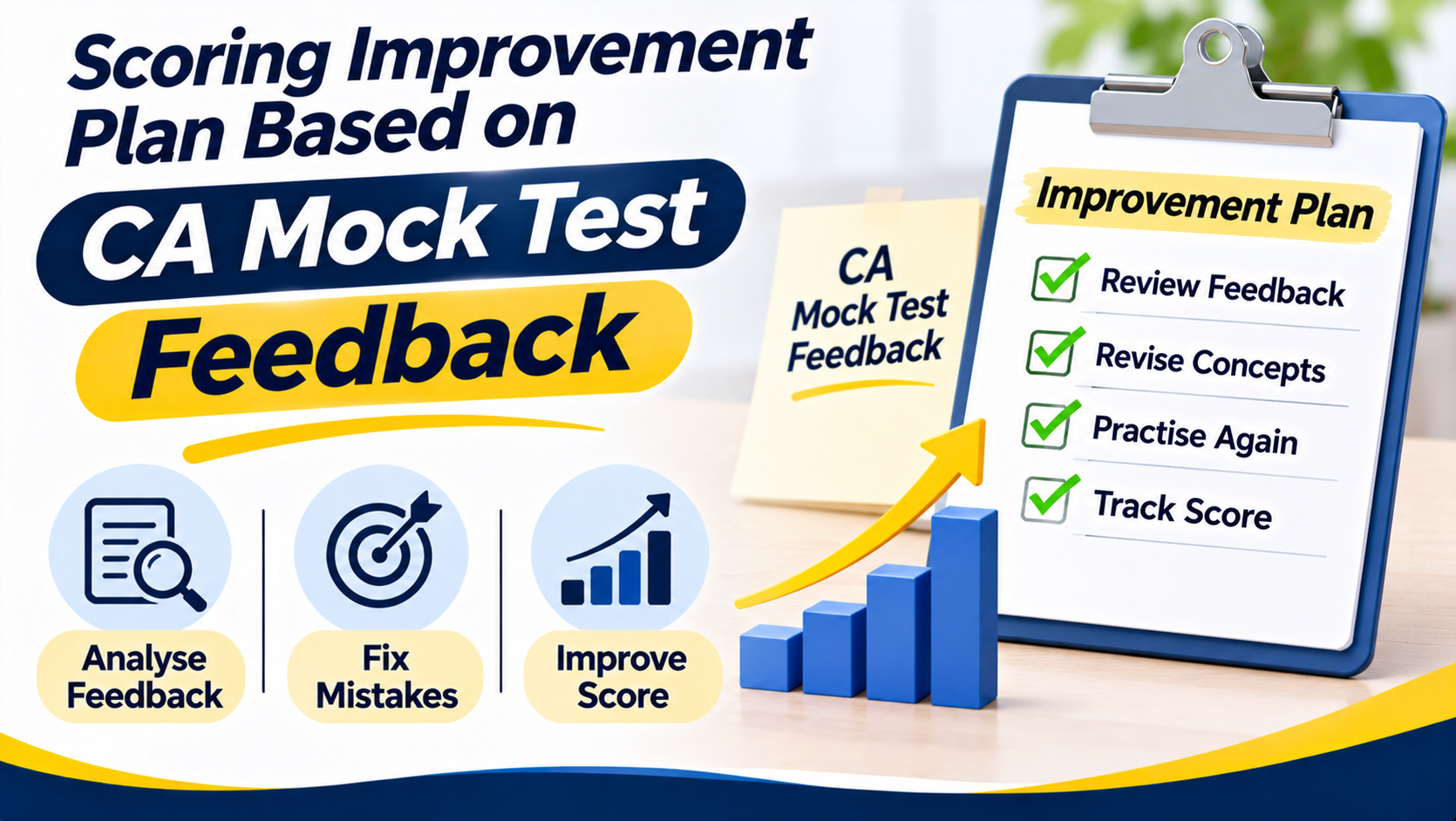
A scoring improvement plan should be specific, realistic and measurable. Rather than studying everything again, use feedback to identify the changes most likely to improve accuracy, completion and answer quality.
Begin with a clear performance diagnosis
Review the latest paper and divide lost marks into broad reasons: knowledge gaps, application errors, calculation mistakes, incomplete answers, poor time use and presentation issues. Use evaluator comments and your own attempt to support each observation. Avoid assuming every low score is caused by insufficient study hours.
Rank weaknesses by impact
Prioritise issues that occur repeatedly, affect several questions or relate to important syllabus areas. A repeated error in a basic calculation method may deserve attention before a one-off mistake in a difficult question. Identify improvements that can be made quickly too.
Set measurable weekly targets
Convert each weakness into a target that can be checked. Complete a defined number of questions from a weak topic, attempt a timed section within the limit or reduce repeated calculation errors. Targets should fit available study hours and leave room for syllabus revision.
Repair conceptual gaps before adding speed
If you cannot explain the underlying concept, faster practice may only repeat the same mistake. Return to the study material, make a concise note of the principle and solve basic questions before moving to exam-level applications. Introduce time limits as accuracy improves.
Use focused drills for recurring errors
For calculation mistakes, practise the steps where errors occur and check signs, units and totals. For theory, write answers from memory and compare them with required points. For case-based questions, identify the issue, apply the relevant rule and write a supported conclusion.
Improve time management through timed sections
If you leave questions unfinished, practise sections under realistic time limits. Decide in advance how long to spend on each requirement. Compare planned and actual time afterwards. Adjust if you are repeatedly reading, writing unnecessary introductions or spending too long on one calculation.
Strengthen answer presentation
Use headings where helpful, keep workings in sequence and answer each part separately. In theory papers, make the explanation relevant. In practical papers, show the method and label the final result. Check whether your answer can be understood without seeing your rough work.
Retest the same skill after a gap
After revising a weak area, do not rely only on a question you have memorised. Attempt a fresh question of a similar type after a short gap. This checks whether you learned the method rather than remembered the answer. Record the result.
Review the plan every week
Check which actions were completed and whether the next test shows improvement. If a target was unrealistic, adjust it. If a weakness continues, investigate the cause again rather than simply increasing the number of questions.
Build a repeatable improvement cycle with CA Exams Test Series
Use CA Exams Test Series mock papers and feedback as checkpoints. Attempt, analyse, revise, practise and retest. Over time, this cycle can help you make better use of study hours and develop a more controlled examination approach.
Quick Reference Table
| Step | Action | Measure of progress |
|---|---|---|
| Diagnose | Classify marks lost by reason | List of recurring issues |
| Prioritise | Select high-impact weaknesses | Three or fewer priority areas |
| Practise | Complete focused revision and drills | Accurate question attempts |
| Apply | Use corrections in timed practice | Better completion and fewer errors |
| Retest | Attempt a fresh comparable question | Improvement across attempts |
Frequently Asked Questions
How many mock tests should a CA student attempt?
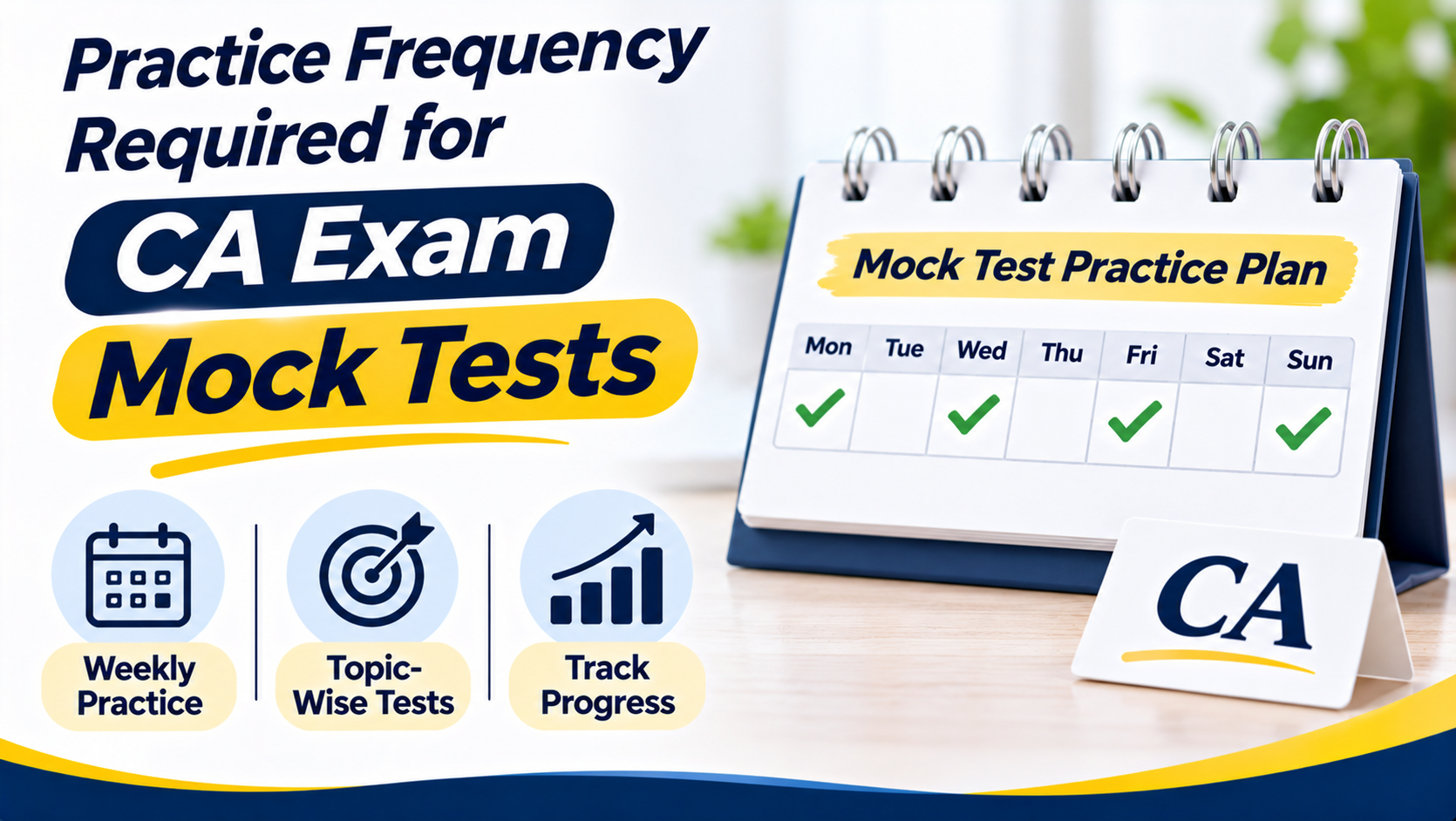
There is no fixed number for every student. Choose a frequency that matches syllabus coverage and leaves enough time to analyse each paper and revise the weaknesses it reveals.
Should I attempt a full-length mock test before completing the syllabus?
Short or sectional tests are useful while learning. Full-length papers become more meaningful when you have covered enough of the syllabus to make the attempt representative.
Why is analysing a mock test important?
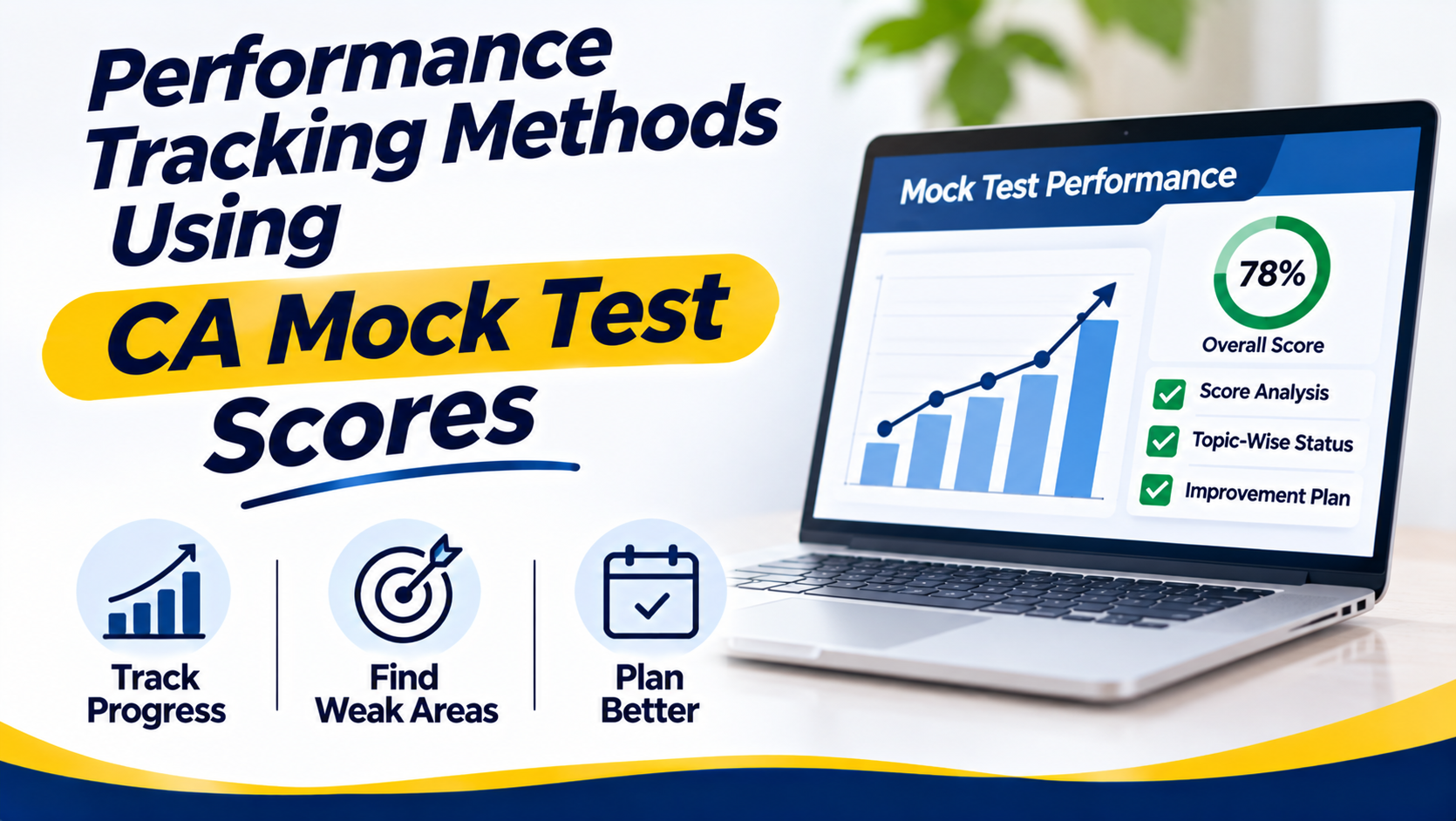
Analysis explains why marks were lost. It can reveal conceptual gaps, calculation errors, incomplete answers and time-management problems that a score alone does not identify.
How should I handle repeated mistakes?
Record each repeated error, revisit the underlying concept or method and practise fresh questions of the same type. Recheck the skill after a gap to confirm that the correction has lasted.
Are previous question papers enough for CA preparation?
Previous papers help you understand question styles and practise application, but combine them with the current syllabus, study material, revision and suitable mock tests.
How can I improve answer-writing skills?
Practise within a time limit, address every part of the requirement, show relevant workings and organise theory answers with clear explanations and conclusions where needed.
Should I compare my mock-test score with other students?
Use comparison carefully. Your most useful measure is progress across comparable tests, including accuracy, completion and reduction of repeated errors.
What should I do if my mock-test marks do not improve?
Check whether your practice addresses the actual cause of lost marks. Change the method if necessary, clarify difficult concepts and retest with a fresh paper.
How should I use evaluator comments?
Look for repeated comments about relevance, structure, missing steps or incomplete explanations. Choose one or two points and apply them deliberately in your next answer.
How can CA Exams Test Series help with mock-test preparation?
CA Exams Test Series can provide a structured way to practise papers and review performance. Combine available feedback with your own error log and a realistic revision plan.