Table of contentsShowHide
- 1.What an assessment report can show
- 2.Understand the score in context
- 3.Identify strengths worth maintaining
- 4.Find the source of lost marks
- 5.Use evaluator comments to improve answer writing
- 6.Read topic-wise performance carefully
- 7.Track progress across multiple reports
- 8.Convert feedback into specific actions
- 9.Know the limits of assessment reports
- 10.The role of CA Exams Test Series
- 11.Quick Reference Table
A score tells you how you performed in a test, but it does not always explain why you achieved that result. An assessment report can provide a clearer picture by showing where marks were gained or lost and which skills need attention.
For CA aspirants, this information is valuable only when it leads to a change in preparation. Reading feedback, identifying a recurring issue and testing a corrective action should become part of every mock-test cycle.
What an assessment report can show
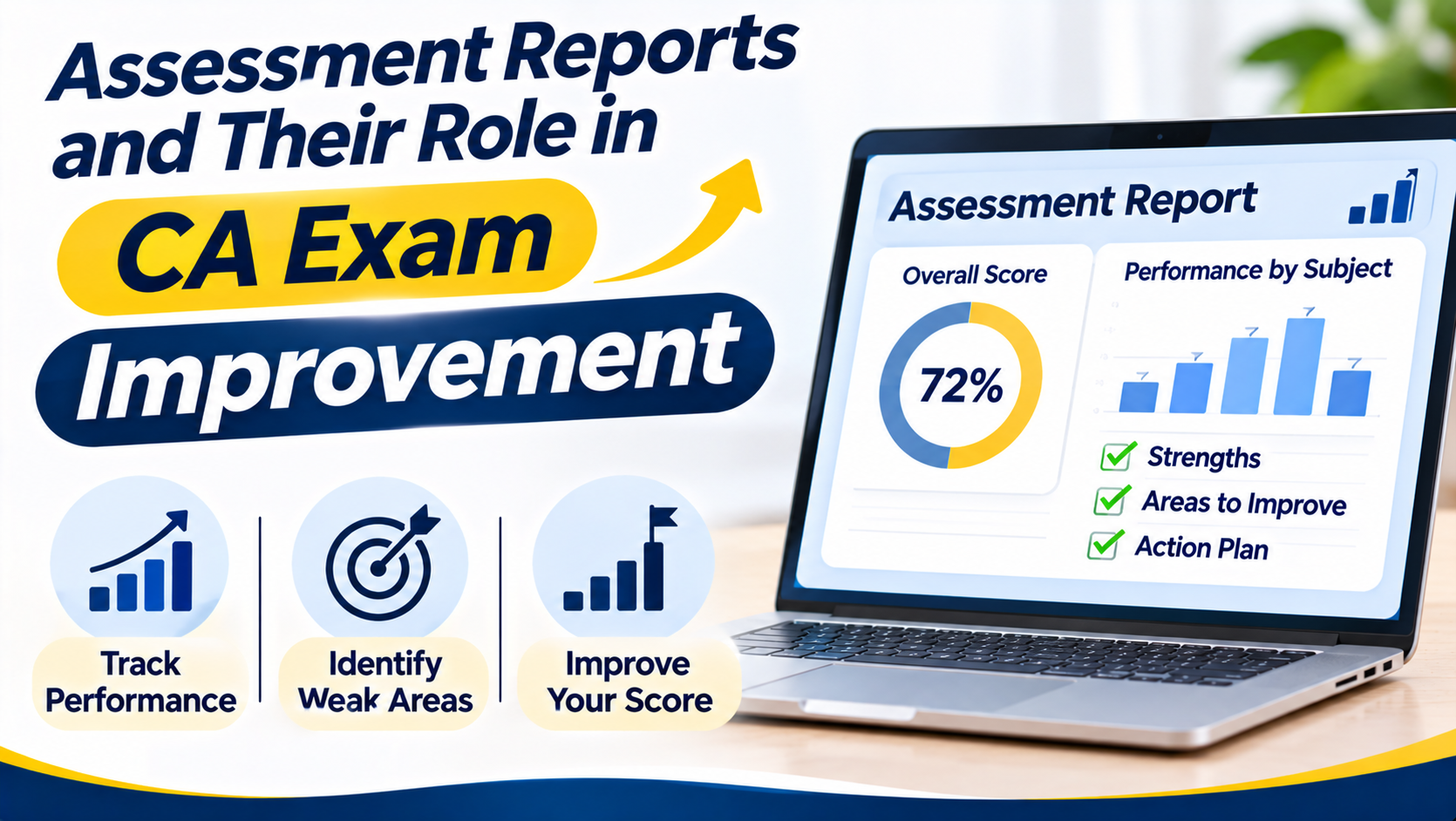
Depending on the test and evaluation format, a report may include marks, question-wise performance, comments on answer quality, topic-level observations and areas for improvement. Some reports may also provide progress information. Check what the report actually measures before drawing conclusions.
Understand the score in context
Read a score alongside paper difficulty, syllabus coverage and attempt quality. A higher score in a narrow chapter test cannot be directly compared with a full-syllabus paper. Track performance across similar tests to identify a meaningful trend.
Identify strengths worth maintaining
Reports can help recognise topics where your understanding and application are consistent. Do not stop revising these areas completely. Use shorter revision sessions and periodic questions to keep them active while giving more time to weaker topics.
Find the source of lost marks
Was the answer incorrect because the concept was unclear, the question was misread, a step was omitted or the conclusion was incomplete? Different causes need different solutions. More reading may help a conceptual gap, while timed writing may suit an execution problem.
Use evaluator comments to improve answer writing
Comments on relevance, structure, working notes, terminology and completeness can show how to make an answer easier to assess. Select one or two recurring comments and apply them in the next paper. Avoid changing every aspect of your writing at once.
Read topic-wise performance carefully
Topic-level scores can help decide where to revise, but small samples may not represent your overall ability. If a topic appears in only one question, treat the result as a signal to investigate rather than a final judgement. Confirm the weakness with another question.
Track progress across multiple reports
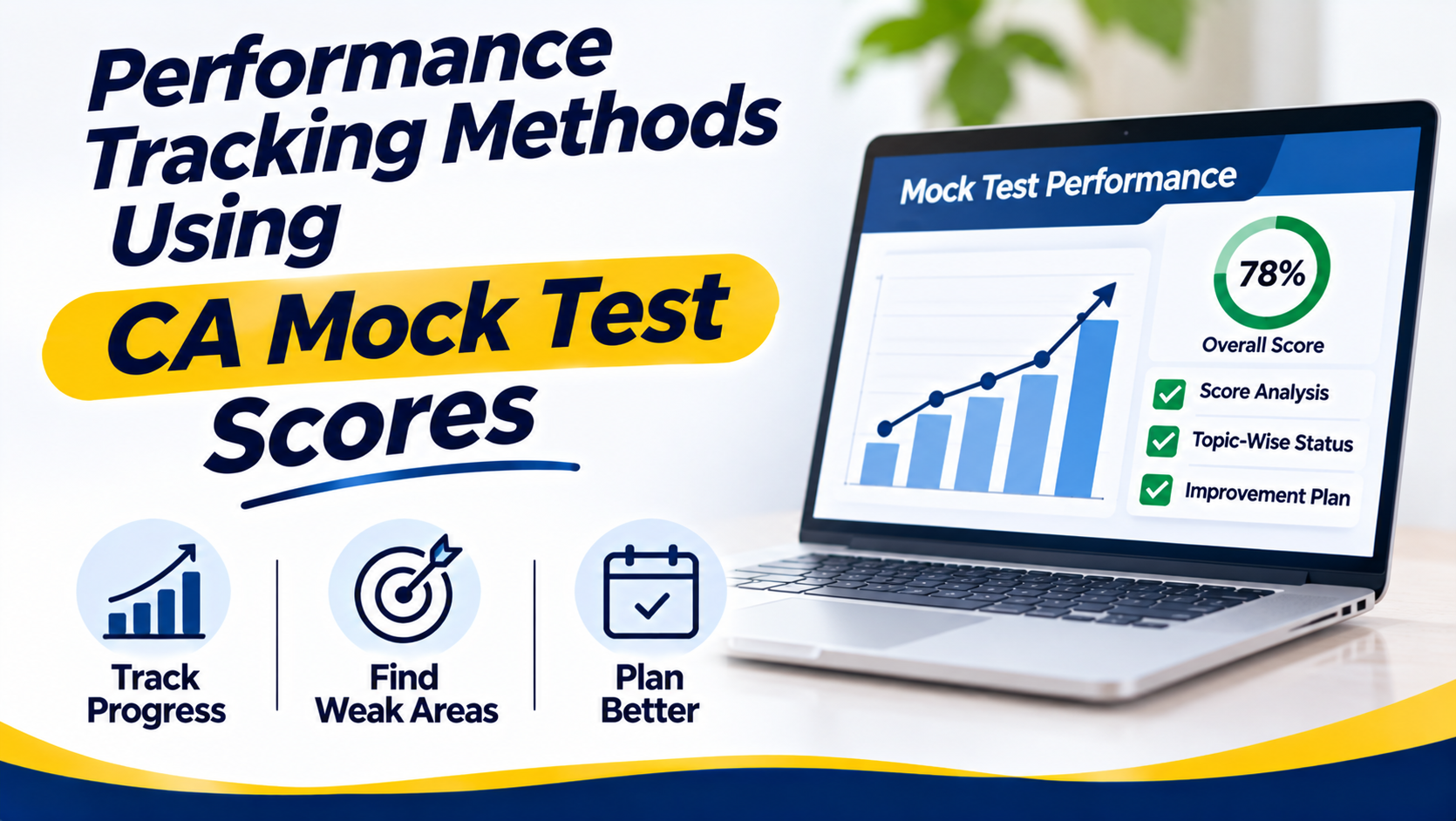
Keep reports in date order and record the same indicators each time: total marks, completion, accuracy, repeated errors and time control. A simple trend can show whether your changes are working. Improved completion can be meaningful even if marks have not yet moved.
Convert feedback into specific actions
Avoid vague goals such as 'work harder in taxation'. Write an action you can complete and verify: revise a defined topic, solve a set of questions, practise one answer in a fixed time or review a provision. Add a date and check the result in the next assessment.
Know the limits of assessment reports
A report is a learning aid, not a guarantee of the final examination result. Evaluation methods may differ, and one test cannot capture every part of your ability. Use reports with study material, the official syllabus, suggested answers and qualified guidance where needed.
The role of CA Exams Test Series
CA Exams Test Series can support a regular cycle of attempting papers and reviewing assessment feedback. Make the report useful by keeping your own notes, clarifying unclear comments and applying recommendations in subsequent practice.
Quick Reference Table
| Report indicator | What it may reveal | How to respond |
|---|---|---|
| Question-wise marks | Strong and weak answers | Review lost marks question by question |
| Topic performance | Areas needing revision | Confirm gaps with more practice |
| Evaluator comments | Presentation and completeness issues | Apply writing improvements |
| Completion and timing | Pace and time allocation | Practise timed sections |
| Progress across tests | Whether changes are helping | Continue or adjust the action plan |
Frequently Asked Questions
How many mock tests should a CA student attempt?
There is no fixed number for every student. Choose a frequency that matches syllabus coverage and leaves enough time to analyse each paper and revise the weaknesses it reveals.
Should I attempt a full-length mock test before completing the syllabus?
Short or sectional tests are useful while learning. Full-length papers become more meaningful when you have covered enough of the syllabus to make the attempt representative.
Why is analysing a mock test important?
Analysis explains why marks were lost. It can reveal conceptual gaps, calculation errors, incomplete answers and time-management problems that a score alone does not identify.
How should I handle repeated mistakes?
Record each repeated error, revisit the underlying concept or method and practise fresh questions of the same type. Recheck the skill after a gap to confirm that the correction has lasted.
Are previous question papers enough for CA preparation?
Previous papers help you understand question styles and practise application, but combine them with the current syllabus, study material, revision and suitable mock tests.
How can I improve answer-writing skills?
Practise within a time limit, address every part of the requirement, show relevant workings and organise theory answers with clear explanations and conclusions where needed.
Should I compare my mock-test score with other students?
Use comparison carefully. Your most useful measure is progress across comparable tests, including accuracy, completion and reduction of repeated errors.
What should I do if my mock-test marks do not improve?
Check whether your practice addresses the actual cause of lost marks. Change the method if necessary, clarify difficult concepts and retest with a fresh paper.
How should I use evaluator comments?
Look for repeated comments about relevance, structure, missing steps or incomplete explanations. Choose one or two points and apply them deliberately in your next answer.
How can CA Exams Test Series help with mock-test preparation?
CA Exams Test Series can provide a structured way to practise papers and review performance. Combine available feedback with your own error log and a realistic revision plan.