Table of contentsShowHide
- 1.Why concepts are forgotten after studying
- 2.Use active recall instead of passive rereading
- 3.Follow a spaced revision schedule
- 4.Create compact revision material while studying
- 5.Practise questions immediately after revising
- 6.Use subject-specific revision methods
- 7.Maintain an error log and revisit weak areas
- 8.Plan weekly and final revision realistically
- 9.Quick Reference Table
- 10.How CA Exams Test Series Can Support Your Preparation
Preparing for a CA examination involves learning a wide range of concepts, provisions, formulas and practical methods. The real challenge, however, is not always understanding a topic for the first time. It is remembering that topic accurately when a question appears in the examination. Reading the same chapter repeatedly may create familiarity, but familiarity does not always translate into recall.
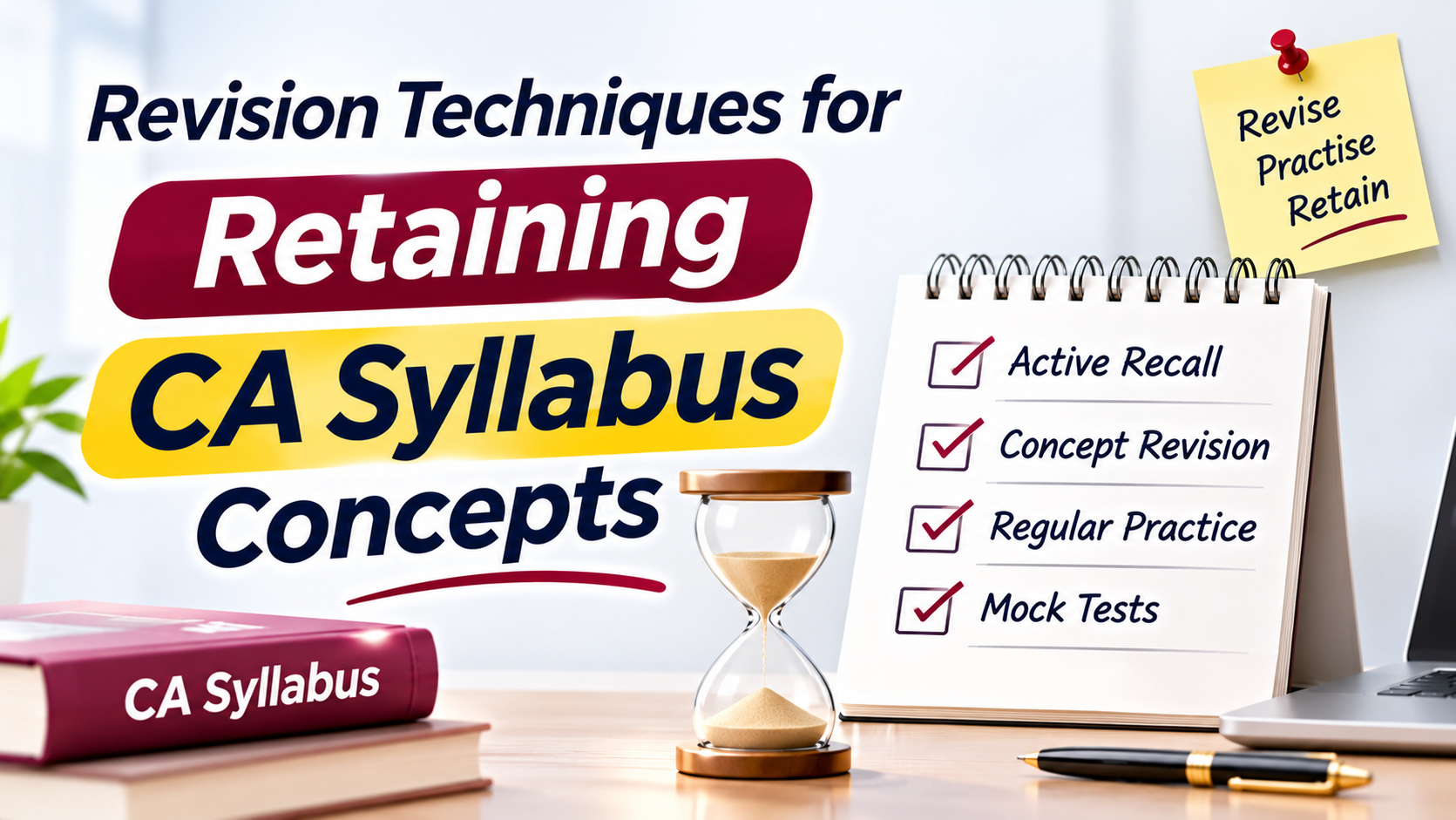
A useful revision system makes you retrieve information, apply it to questions and revisit it at planned intervals. This guide explains practical techniques that CA Foundation, Intermediate and Final students can adapt to their subjects, available study time and current preparation level. The aim is to make revision more active, measurable and sustainable.
Why concepts are forgotten after studying
Forgetting is a normal part of learning, particularly when several subjects compete for attention. A student may understand a provision while reading it but struggle to reproduce its conditions a week later. In practical subjects, the method may seem clear until a question changes one assumption. In theory-heavy areas, similar provisions can become mixed up.
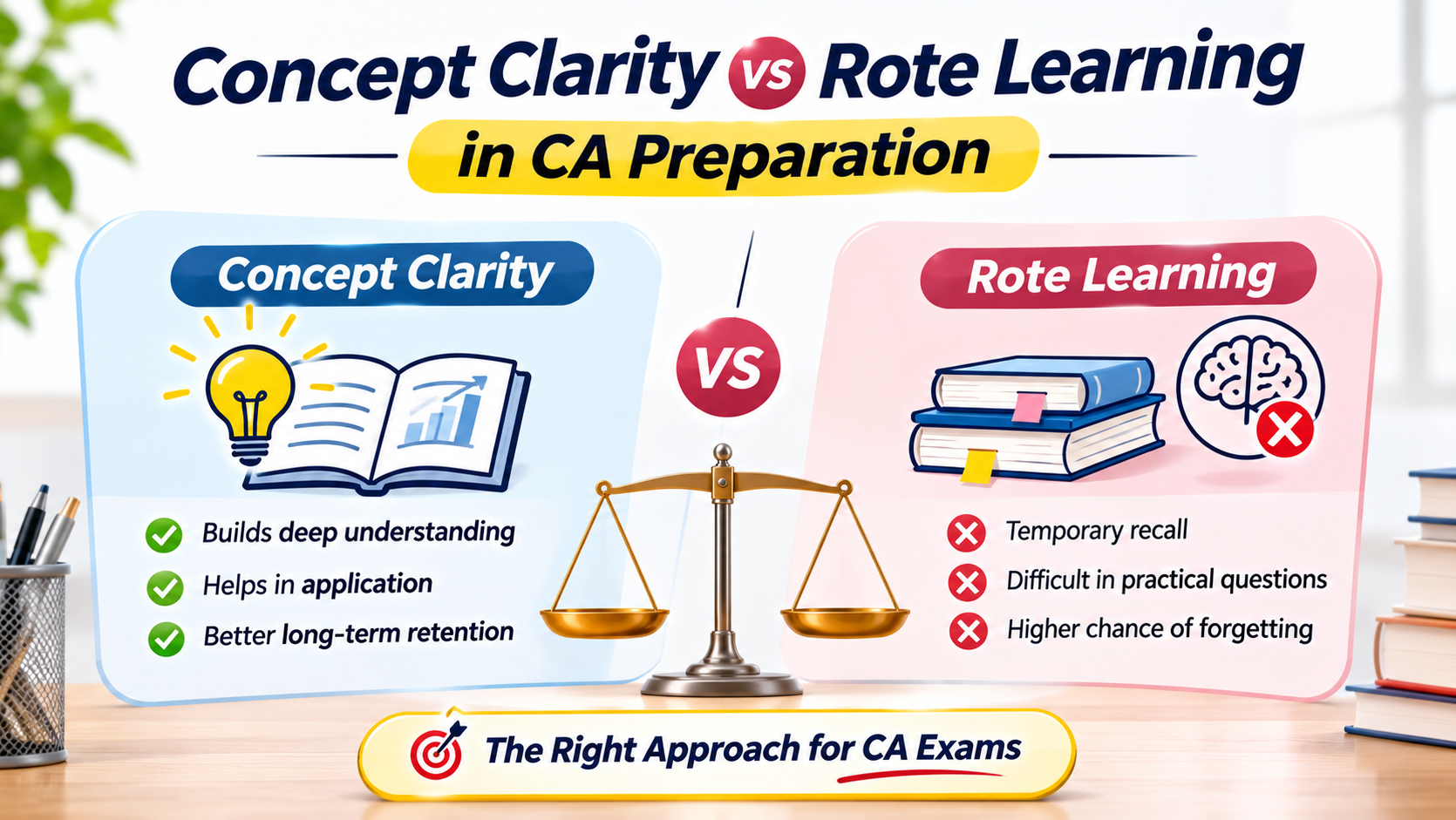
The problem often comes from relying on recognition rather than recall. When notes are open, an explanation looks familiar. When the notes are closed, the student must generate the explanation independently. Revision should therefore include closed-book attempts, question practice and quick checks that reveal what is actually remembered.
Use active recall instead of passive rereading
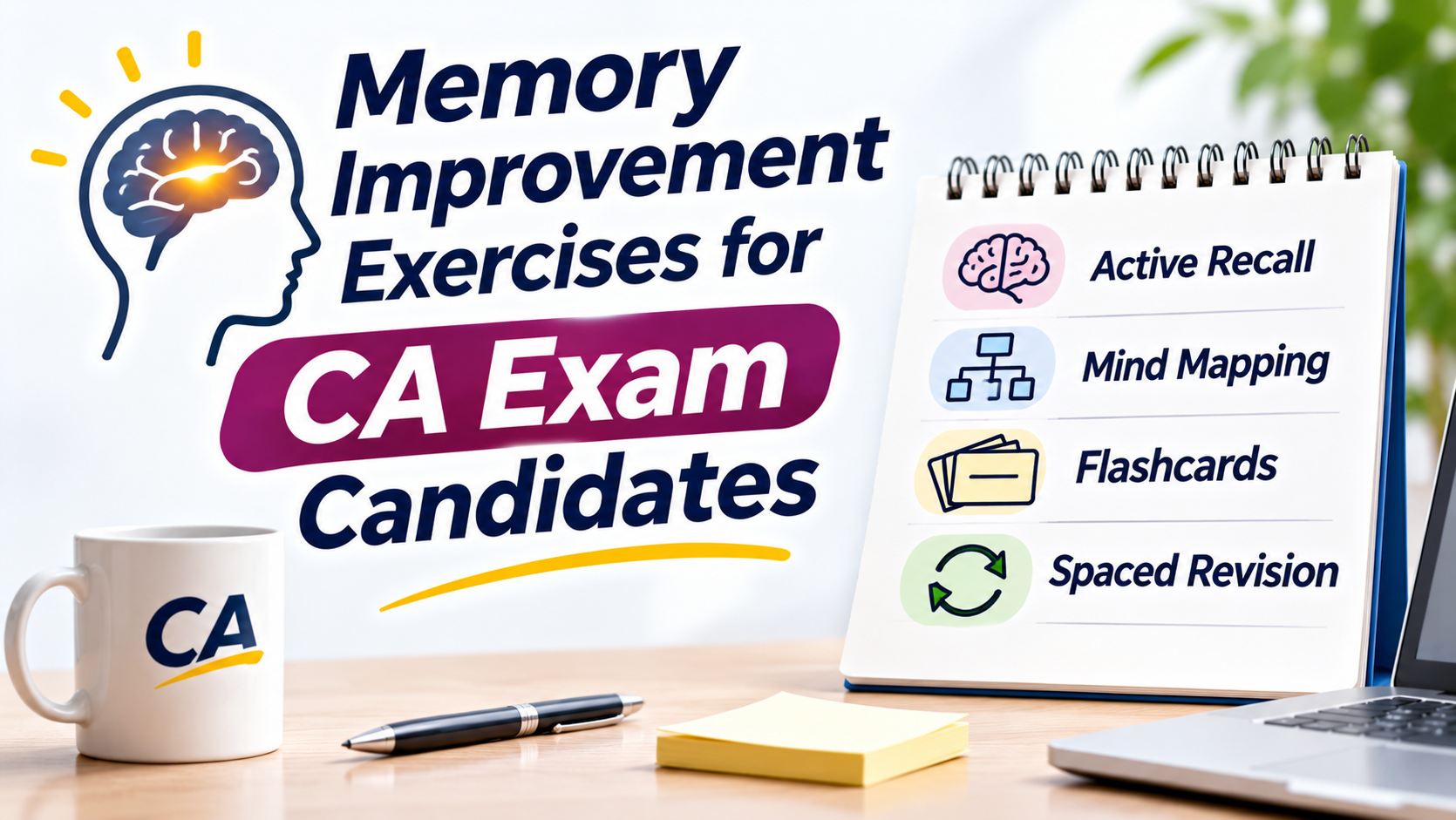
Active recall means trying to retrieve information before looking at the answer. After completing a topic, close the material and write the main concepts, steps, formulas or provisions from memory. You can also turn headings into questions and answer them without referring to your notes.
For example, after studying a chapter in law, list the key conditions, exceptions and consequences. After studying a costing method, write the sequence of calculations and explain why each step is required. Compare your response with the study material and mark missing or inaccurate points. This comparison is more useful than simply highlighting the same paragraph again.
Follow a spaced revision schedule
A topic should be revisited more than once after its first study session. A practical starting pattern is a short review on the next day, another review after three to four days, a further review after a week and a later review after two to three weeks. Adjust the intervals according to how difficult the topic is and how well you recall it.
Do not treat these intervals as a rigid scientific formula. If a concept is still weak, bring it forward. If you can explain and apply it correctly several times, extend the gap. A simple revision tracker can record the topic, date revised, recall quality and next review date.
Create compact revision material while studying
Revision notes should reduce the time needed to locate important information. They should not become a second textbook. Use short summaries, formula sheets, flowcharts, comparison tables and lists of common adjustments. Keep definitions and technical wording accurate, especially where the examination requires precise language.
For law and other theory-oriented topics, organise material under meaning, conditions, procedure, exceptions and consequences. For numerical subjects, record the method, key formula, presentation format and common error. Add page references to the detailed source instead of copying long explanations into the revision notebook.
Practise questions immediately after revising
A concept is not secure merely because you can explain it. You should also be able to identify when it applies and use it in an unfamiliar question. After revising a topic, solve a few questions without looking at the solution. Start with a basic question, then attempt one that combines the topic with another concept.
When checking your work, identify whether the mistake came from misunderstanding, memory failure, calculation, interpretation or presentation. Each cause requires a different response. Revisit the concept for a knowledge gap, practise more questions for an application gap and use a checking routine for careless errors.
Use subject-specific revision methods
Different CA subjects need different forms of recall. In Accounting and other numerical papers, revise the logic behind the treatment and solve questions with workings. In Taxation, organise provisions by conditions, exceptions, rates and computation steps, while checking the applicable Finance Act and attempt-specific material. In Law, practise structured answers using accurate provisions and clear application to facts.
For subjects involving standards or detailed technical guidance, use comparison tables to distinguish similar treatments. For audit and other descriptive areas, practise concise explanations and application-based answers rather than memorising isolated sentences. Always follow the syllabus and study material applicable to your examination attempt.
Maintain an error log and revisit weak areas
An error log is a short record of mistakes made during practice tests, chapter questions and revision. Include the question or topic, the reason for the error, the correct approach and the date you will retry it. Keep the entry brief so that the log remains usable.
Review this log once or twice a week. If the same mistake appears repeatedly, it may indicate that the underlying concept is not clear. If the error happens only under time pressure, practise timed questions. The purpose is not to collect mistakes but to prevent them from recurring.
Plan weekly and final revision realistically
A weekly plan should include new learning, revision of older topics and question practice. Reserve short sessions for topics studied earlier so that revision does not get postponed until the end. Give difficult and high-priority areas more attention, but do not ignore smaller chapters that can be revised efficiently.
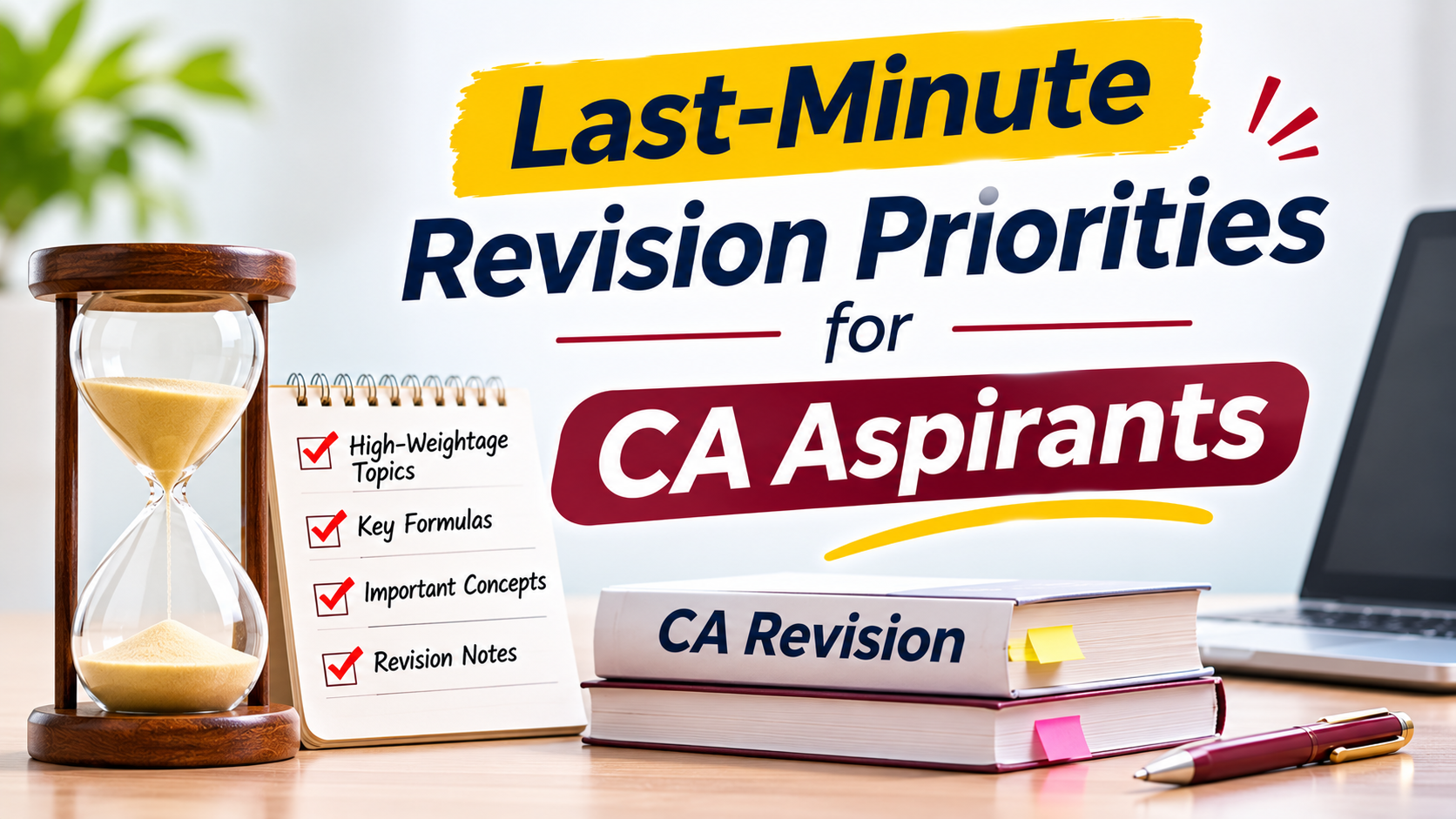
In the final phase, avoid rewriting all your notes or starting multiple new resources. Use concise revision material, marked questions, official study resources and mock-test analysis. Practise recalling key points under timed conditions and protect adequate time for sleep and breaks. A steady routine is usually more productive than an extreme schedule that cannot be maintained.
Quick Reference Table
| Revision stage | What to do | Evidence of progress |
|---|---|---|
| After first study | Close the book and recall key ideas | Can explain the topic without prompts |
| Next-day review | Answer short questions or reproduce a summary | Fewer missing points |
| Weekly review | Solve mixed questions and revisit errors | Improved accuracy and application |
| Final revision | Use concise notes and timed practice | Can retrieve and apply concepts under time limits |
How CA Exams Test Series Can Support Your Preparation
A structured CA Exams Test Series can help you check how well you understand and apply the concepts you have studied. Use sectional and full-length tests to practise within time limits, review the solutions and identify recurring gaps. Test performance should guide your next revision steps, while the prescribed syllabus and official study material remain the foundation of preparation.
Frequently Asked Questions
How many times should a CA student revise a chapter?
There is no fixed number for every chapter. Revise it soon after learning, revisit it at planned intervals and continue until you can recall the main points and solve relevant questions accurately.
Is rereading enough for CA exam revision?
Rereading can refresh familiarity, but it should not be the only method. Combine it with closed-book recall, question practice, short summaries and review of mistakes to check whether you can use the concept independently.
What is active recall in CA preparation?
Active recall is the process of retrieving information without looking at notes. Students can use it by writing formulas, explaining provisions, solving questions or answering self-made prompts before checking the correct material.
How can I remember provisions for CA Law?
Group provisions by topic, conditions, exceptions and consequences. Use short prompts and comparison charts, then practise writing structured answers. Check the exact wording and applicability against the material prescribed for your examination attempt.
How should I revise practical CA subjects?
Revise the underlying method and then solve questions without viewing solutions. Record calculation and interpretation errors, practise mixed questions and repeat weak question types after a gap.
Should I make separate revision notes for every subject?
Separate notes can make revision easier because each subject needs a different format. Keep them concise and consistent, using formula sheets, flowcharts, provision summaries or adjustment checklists where appropriate.
When should I start revising a completed chapter?
Begin with a short recall session soon after completing it. Follow with reviews over the next several days and weeks. Move the next review earlier if recall is weak or the topic is frequently tested.
How do mock tests help with retention?
Mock tests require you to retrieve and apply concepts under time limits. Their analysis also reveals topics you forget, misunderstand or cannot apply efficiently, helping you plan targeted revision.
How much time should I spend on revision daily?
Set revision time according to your total study hours, syllabus progress and exam date. Even a focused daily session can help if it includes recall and question practice rather than passive reading alone.
Can CA Exams Test Series help with revision?
A structured CA Exams Test Series can provide timed practice and performance feedback. Use test results to identify weak concepts, revisit the relevant material and attempt similar questions again; it should complement, not replace, syllabus study.