Table of contentsShowHide
- 1.Why Conceptual Clarity Matters
- 2.Begin With the Purpose of the Topic
- 3.Replace Passive Reading With Active Learning
- 4.Use Worked Examples Properly
- 5.Adapt Your Method to Each CA Subject
- 6.Practise From Basic to Exam-Level Questions
- 7.Use Spaced Revision and Recall
- 8.Analyse Mistakes Instead of Ignoring Them
- 9.Build a Weekly Routine That Can Last
- 10.Final Thoughts
CA preparation becomes difficult when students try to memorise every line without understanding the reason behind it. Accounting adjustments, tax provisions, audit concepts and financial management formulas are easier to retain when the logic behind them is clear.
Building clarity takes deliberate practice, not just longer study hours. The goal is to connect a concept with its purpose, apply it to questions, explain it in simple words and revisit it before it fades.
Why Conceptual Clarity Matters
CA exams require more than memorising a definition or copying a formula. Students must identify the relevant rule, interpret the question and apply the concept correctly. When you understand why a method works, unfamiliar questions become less intimidating because you can recognise the principle behind them.
Conceptual clarity also makes revision more efficient. Instead of relearning a whole chapter, you can revisit the central idea and practise the parts that remain difficult. Memorisation still matters for provisions, definitions and key terms, but understanding gives those details a structure.
Begin With the Purpose of the Topic
Before reading a chapter in depth, ask what problem the concept solves, where it is applied and what changes when its conditions change. For example, when studying depreciation, understand why the cost of an asset is allocated over its useful life before memorising the calculation method.
After studying a subtopic, explain it in one or two sentences without looking at your notes. Use simple language. If you cannot explain the idea, return to the relevant paragraph or illustration and identify the missing link. This small check prevents passive reading from being mistaken for mastery.
Replace Passive Reading With Active Learning
Repeated reading can make a page look familiar without helping you recall it independently. After a short section, close the book and write the main points from memory. Compare your answer with the source, correct gaps and try again later. You can also turn headings into questions, create a small concept map or compare two provisions that are easy to confuse.
Keep personal notes concise. Record difficult distinctions, exceptions, formulas, key terms and recurring mistakes rather than rewriting the textbook. These notes should help you revise quickly and test your memory.
Use Worked Examples Properly
Do not copy a solved illustration line by line. Pause at each step and ask why the figure, adjustment or rule is being used. Once you understand the solution, cover it and solve the question again independently. Then change one figure or condition and see whether you can still apply the method.
For numerical subjects, explain what a formula measures before substituting values. For Law and Audit, identify the issue, relevant rule, application and conclusion. For Taxation, separate the facts, applicable provision and calculation. This turns examples into skills you can transfer to new questions.
Adapt Your Method to Each CA Subject
Accounting requires attention to treatment, adjustments, journal entries and working notes. Costing and Financial Management need formula understanding, calculation practice and careful checking. Taxation requires organised notes on conditions, exceptions and relevant amendments. For Law and Audit, learn the structure of a rule and practise applying it to facts instead of memorising paragraphs in isolation.
Check the current ICAI syllabus and official material for the attempt you are preparing for. Old notes may not reflect every applicable change, especially in amendment-sensitive areas.
Practise From Basic to Exam-Level Questions
Start with a basic question to check the main concept, then move to standard illustrations, mixed questions and exam-style practice. If you only solve easy questions, you may struggle when the examination combines topics. If you begin with the hardest questions before learning the basics, you may waste time and confidence.
When stuck, identify the exact step causing difficulty, review that concept and attempt a similar question without help. Mix older topics into later practice so that you learn to choose the correct method without relying on a chapter heading.
Use Spaced Revision and Recall
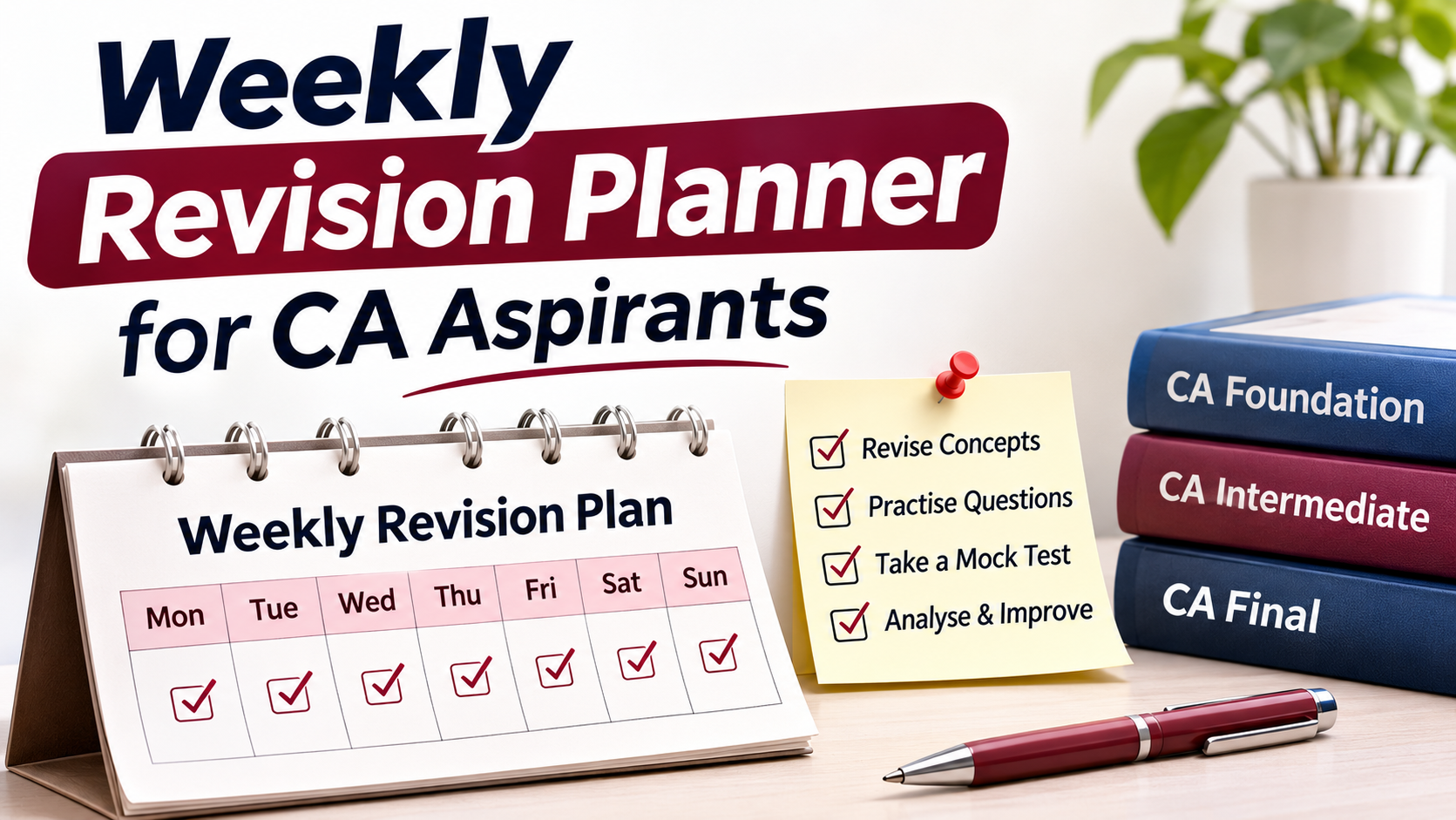
Revisit a new concept soon after learning it, again after a few days and later during weekly revision. Adjust the spacing according to how well you remember it. A short session can include recalling the core idea, checking notes and solving one or two questions.
Keep a list of specific weak points. “Why this adjustment is added back” is more useful than “revise accounting.” Specific reminders help you spend time on the actual gap instead of rereading an entire chapter.
Analyse Mistakes Instead of Ignoring Them
Classify errors as concept gaps, forgotten rules, calculation mistakes, misreading, time pressure or poor presentation. Each type requires a different response. Maintain a simple mistake log with the topic, error, correct reasoning and next review date. If the same mistake appears repeatedly, revisit the concept before attempting more questions.
CA Exams Test Series can support structured exam-style practice. After each test, review feedback, identify why marks were lost and schedule a focused correction session. A test is valuable when it changes what you do next.
Build a Weekly Routine That Can Last
Choose a manageable number of concepts each week. Combine new learning, older-topic recall, mixed question practice and a timed test or sectional exercise. Keep buffer time for difficult chapters and unexpected commitments. If you miss a target, adjust the next week rather than carrying an unrealistic backlog forward.
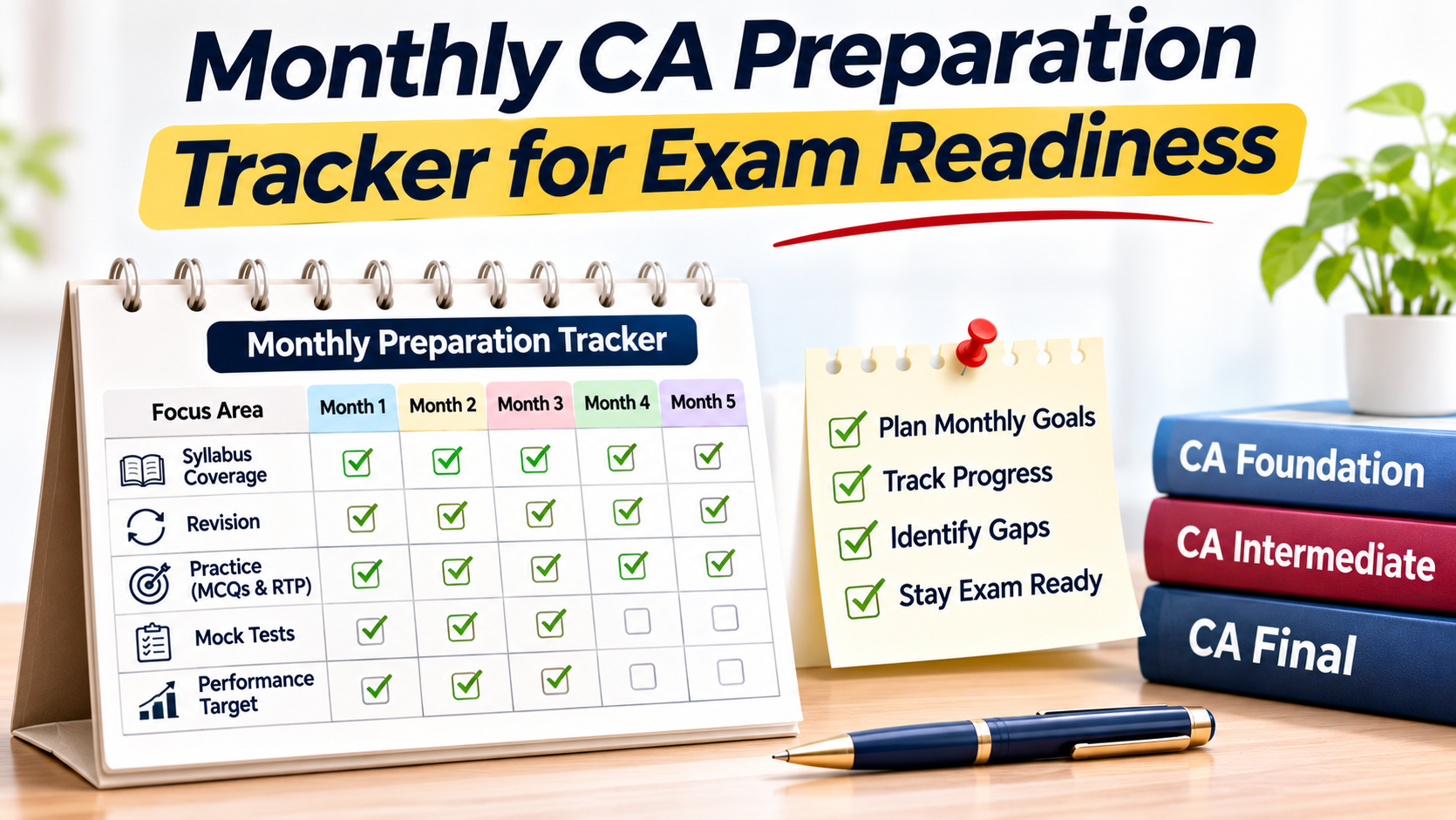
Use measurable outcomes. “Study for two hours” is less specific than “understand one concept, solve eight questions and review the errors.” Track accuracy and understanding as well as time spent.
Final Thoughts
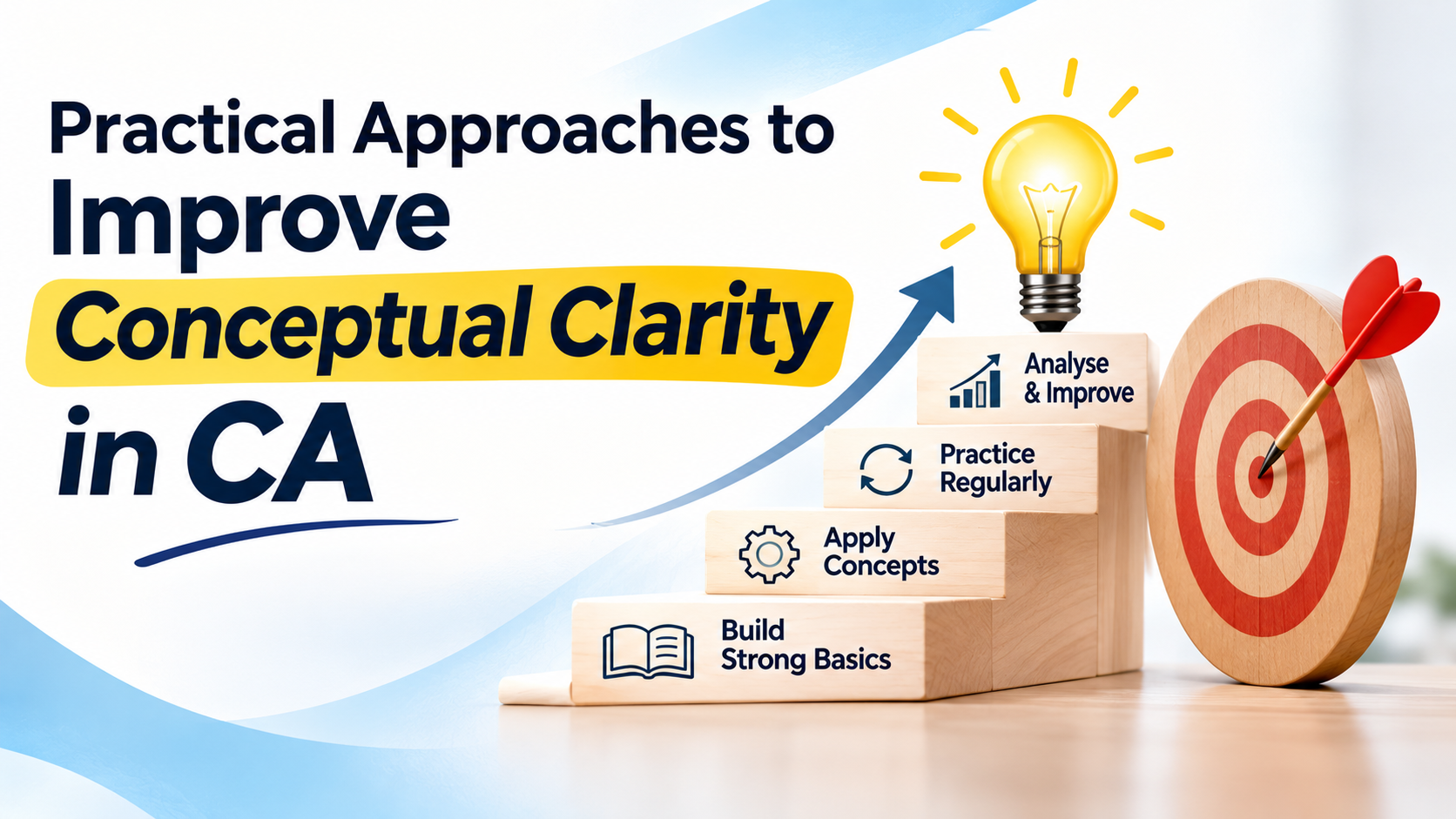
Conceptual clarity grows through a cycle: understand the purpose, explain it in your own words, apply it to questions, review mistakes and revisit the topic after a gap. Consistent practice is more effective than repeatedly reading without testing yourself.
Frequently Asked Questions
1. How can I improve my CA preparation routine?
Set measurable weekly targets, combine learning with independent question practice and review mistakes regularly. Use a tracker to identify weak areas and adjust the next week’s schedule instead of relying only on study hours.
2. Should I follow the same timetable throughout preparation?
No. Early preparation needs more concept building, while later stages need more revision, mixed questions and timed tests. Review your progress regularly and adjust the balance as the exam approaches.
3. How important is revision for CA exams?
Revision helps you recall topics after a gap and identify what you have forgotten. Include short review sessions throughout preparation rather than waiting until the entire syllabus is complete.
4. When should I start solving exam-style questions?
Start with basic topic-wise questions as soon as you understand a concept. Gradually add mixed and timed questions as syllabus coverage improves, making sure you analyse errors after each practice session.
5. How do I know whether a chapter is complete?
Check whether you can explain its main concepts, recall important rules or formulas and solve representative questions independently. If you still need the solution for every step, the chapter needs more practice.
6. How should I use mock-test feedback?
Classify mistakes by cause, such as concept gaps, calculation errors, timing or presentation. Schedule a focused correction session and then attempt similar questions to confirm that the problem has been addressed.
7. Should I study every subject every day?
Not necessarily. A weekly subject rotation can work well if every paper returns regularly and older topics are revised. Allocate more time to weak areas without leaving other subjects untouched for too long.
8. What if I miss my study targets?
Identify why the target was missed and reduce or rearrange the workload realistically. Protect core learning, revision and question practice rather than carrying an impossible backlog into every new week.
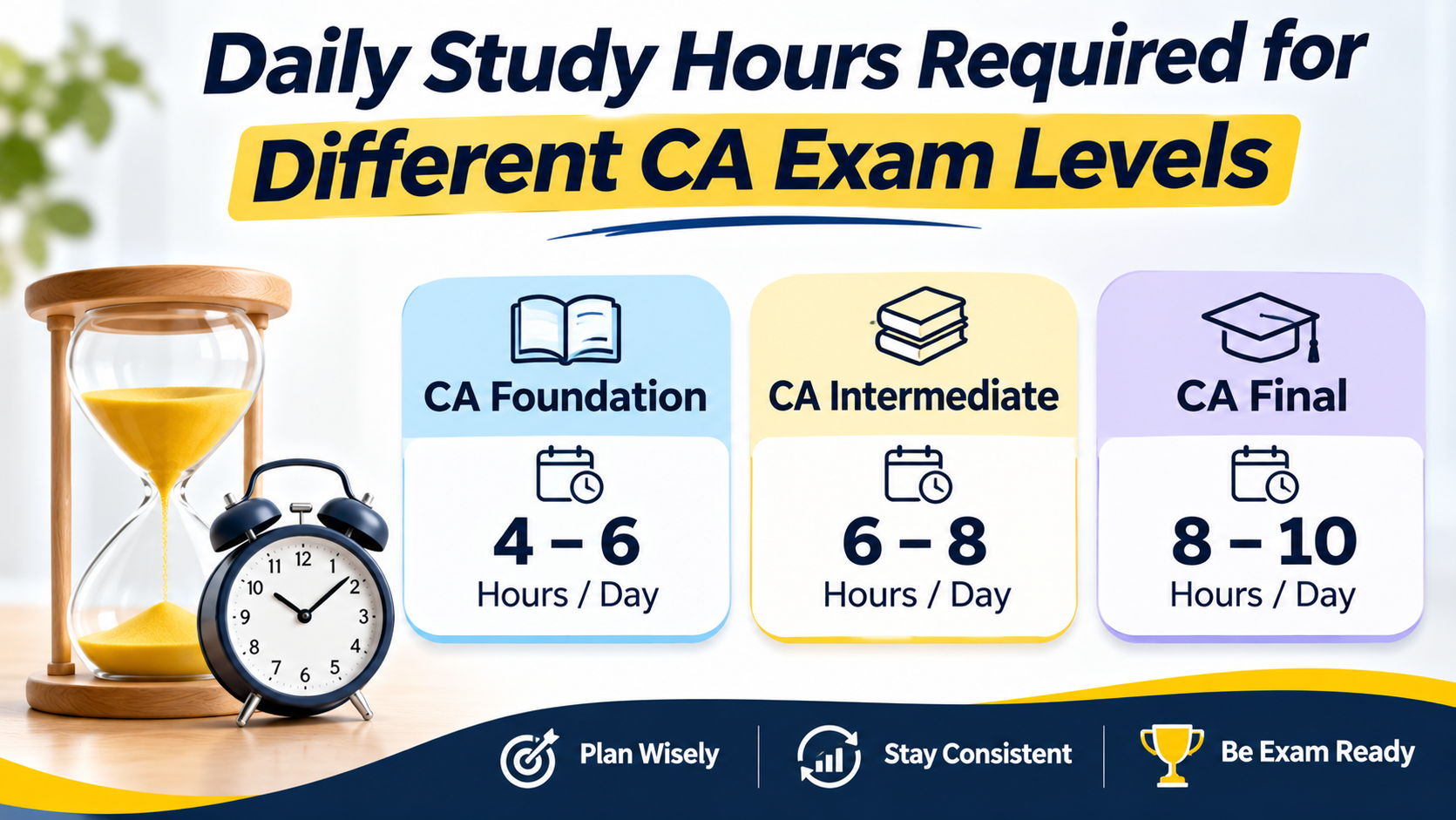
9. Are these study-hour or timeline suggestions official ICAI rules?
No. They are planning examples only. Always check the current ICAI syllabus, official examination schedule and instructions for your level and attempt before finalising your preparation plan.
10. How can CA Exams Test Series support preparation?
A test series can provide structured exam-style practice and feedback on timing, accuracy and presentation. Use the results to prioritise revision and practise weak areas rather than focusing only on the score.