Table of contentsShowHide
One of the most common questions among CA aspirants is how many hours they should study every day. Comparing routines with toppers or classmates can be misleading because a high number of hours does not automatically lead to better preparation.
The right routine depends on your CA level, class or work schedule, syllabus progress and exam date. Treat the ranges in this guide as planning suggestions rather than official requirements.
Why Study Hours Differ
Students start from different points. One may already understand the basics, while another is learning a subject for the first time. Class schedules, work and family commitments also affect available time. Study hours are a planning tool, not a measure of personal worth.
Separate class time from independent study. Classes explain topics, but self-study shows whether you can recall and apply them. A long day filled with distractions may be less useful than a shorter, focused session with active recall and question practice.
Suggested Daily Study Hours
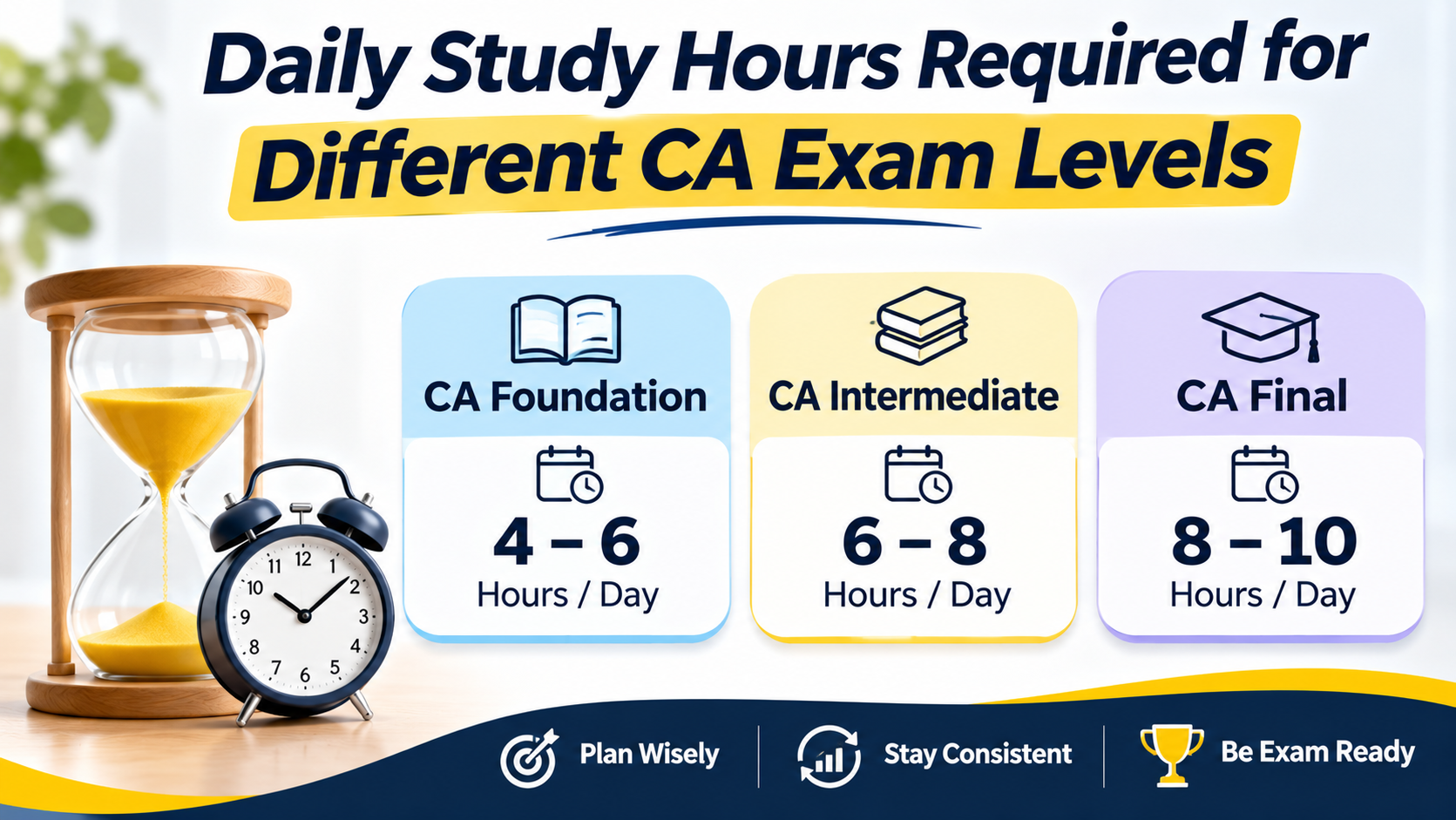
These ranges are illustrative planning suggestions for independent study, excluding formal classes. They are not ICAI-prescribed requirements. Adjust them to your syllabus, current progress, available time and ability to sustain the routine.
| CA level | Learning phase | Revision phase | Priority |
|---|---|---|---|
| Foundation | 3–5 focused hours | 5–7 hours if practical | Basics, questions and theory recall |
| Intermediate | 4–6 focused hours | 6–8 hours if practical | Subject rotation, practice and revision |
| Final | 5–7 focused hours | 7–9 hours if practical | Application, full answers and test analysis |
| Working students | Consistent available blocks | Plan leave strategically if possible | Weekday continuity and weekend practice |
CA Foundation: Build a Strong Base
Foundation students need regular contact with all papers in their current syllabus. A day can include one learning block, one question-solving block and a short recall session. Quantitative topics benefit from repeated problem practice; theory topics benefit from short written answers, comparisons and memory checks.
If you attend classes, review the lecture soon afterward. Note confusing points, solve a few questions and schedule longer practice if needed. This prevents you from having to relearn entire topics near the examination.
CA Intermediate: Use a Balanced Rotation
Intermediate students often need a more structured plan across multiple papers. Give each subject a place in the week and allocate extra time to difficult or calculation-heavy topics. A day might combine a numerical subject, a theory subject and a short revision session for an older chapter.
Measure progress by independent performance. Can you solve a representative question without checking the solution? Can you explain a provision accurately? Can you complete an answer within a reasonable time? These checks are more informative than counting chapters alone.
CA Final: Include Application and Integration
Final-level preparation should include concept learning, revision, application-based questions and timed practice. Avoid leaving integrated or case-based questions until the end. Use focused blocks with a clear output, such as learning a difficult concept, applying it to questions or revising a related topic.
Working students can use shorter weekday sessions to maintain continuity and longer weekend blocks for tests or deeper revision. If leave is available, plan it around revision and practice instead of deciding what to study at the last moment.
Make Each Hour Productive
Before starting a session, decide on an outcome: solve a set of questions, revise a topic or prepare a comparison table. Put away unnecessary notifications and take short breaks between focused blocks. Use active recall by closing your notes and writing what you remember before checking the source.
End the day by recording what you completed, what remains difficult and the first task for tomorrow. If you repeatedly miss targets, improve task size and focus before simply adding more hours. Sleep and breaks support concentration and should not be sacrificed for an extreme routine.
Adjust Hours Near the Exam
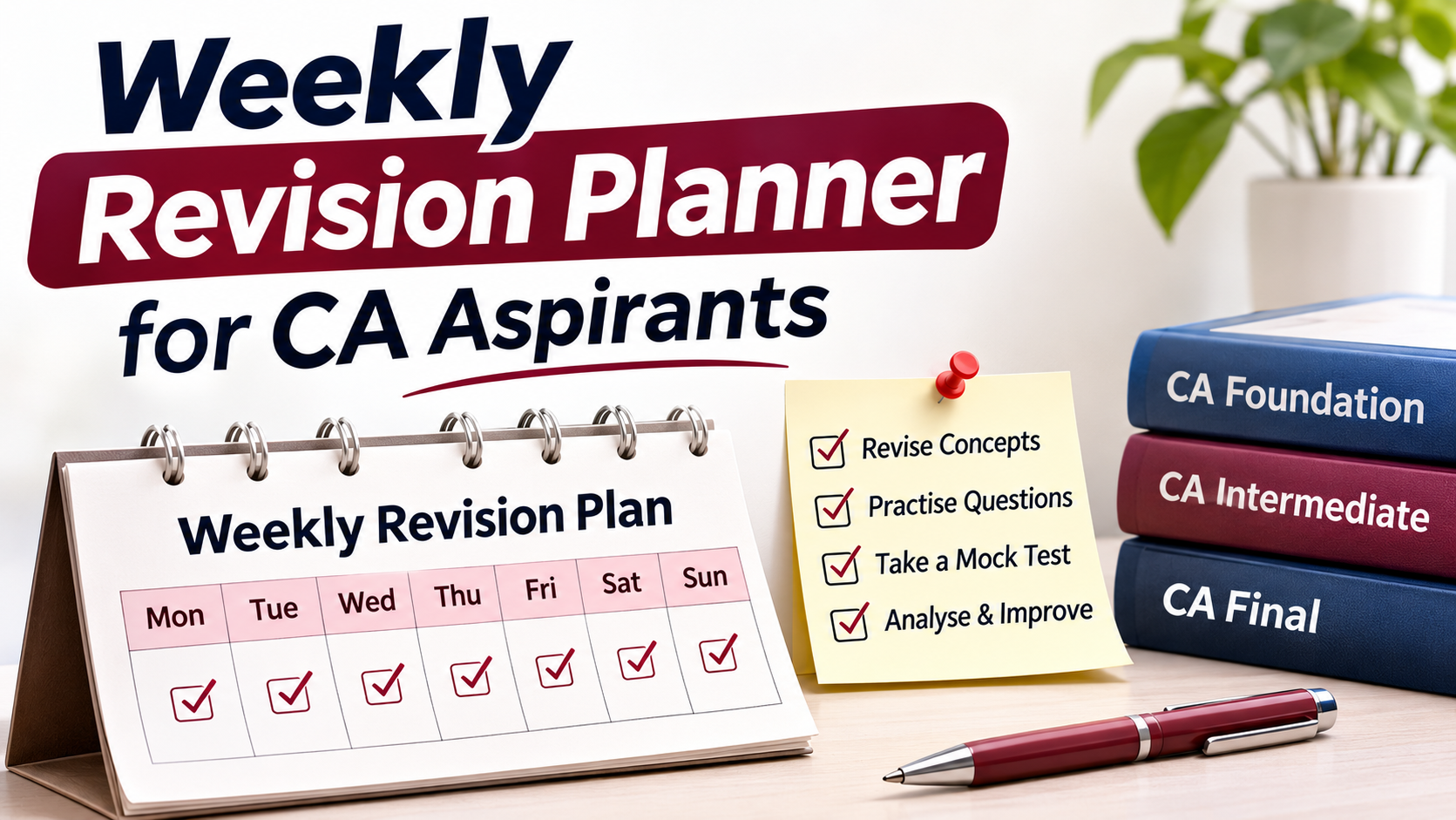
Early preparation should emphasise understanding and coverage. As the exam approaches, increase the share of revision, mixed practice, timed papers and correction of repeated mistakes. If your targets are consistently missed, check whether they are too large or your timetable ignores other commitments.
CA Exams Test Series can help you assess timing, accuracy and presentation. Use the results to decide where additional practice is needed rather than treating the number of hours or a single score as the only measure of readiness.
Final Thoughts
There is no universal number of hours that guarantees success. Choose a realistic routine for your level, count classes and self-study separately, and evaluate progress through recall, accuracy and question practice. A sustainable schedule is more useful than copying someone else’s timetable.
Frequently Asked Questions
1. How can I improve my CA preparation routine?
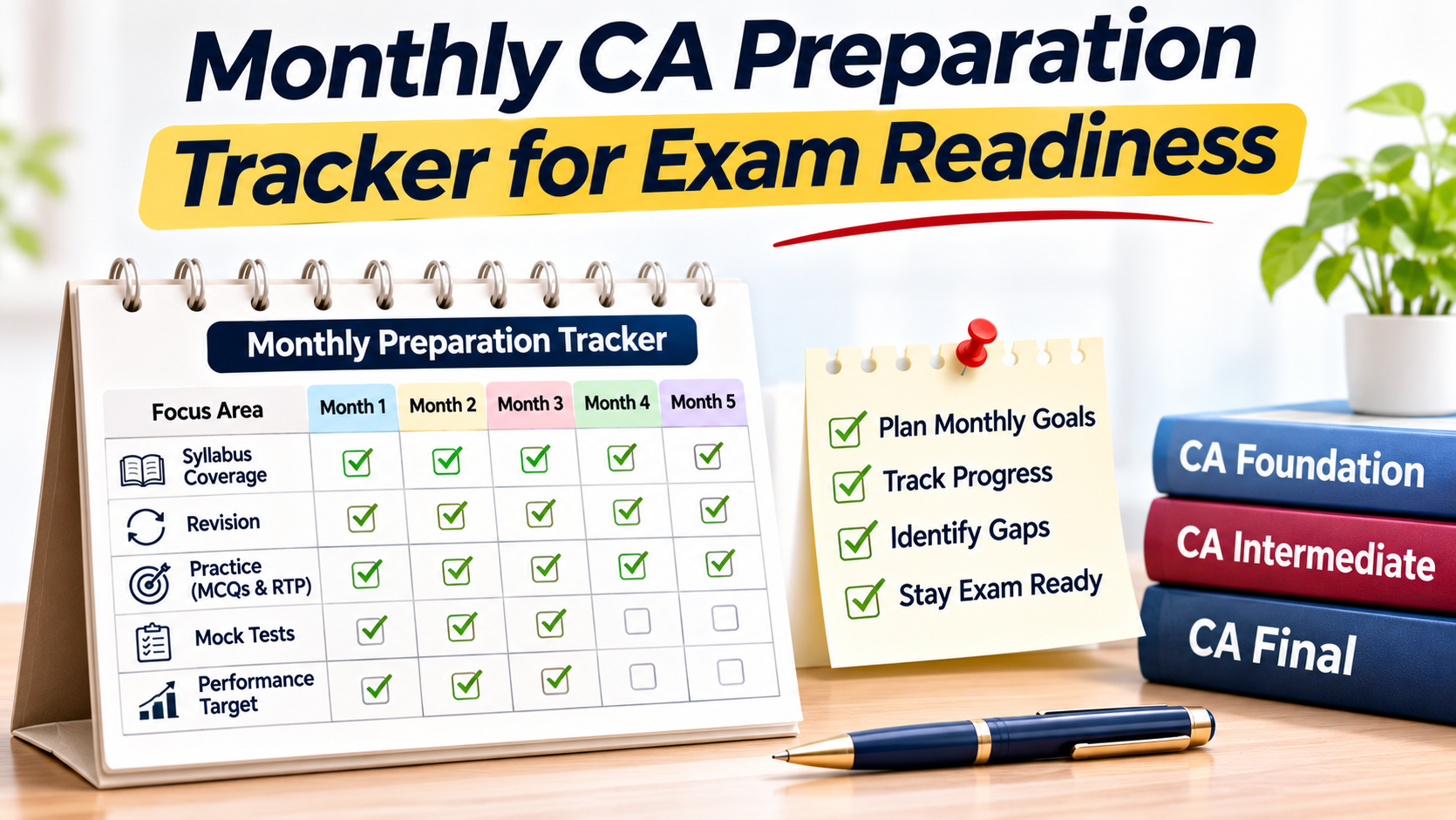
Set measurable weekly targets, combine learning with independent question practice and review mistakes regularly. Use a tracker to identify weak areas and adjust the next week’s schedule instead of relying only on study hours.
2. Should I follow the same timetable throughout preparation?
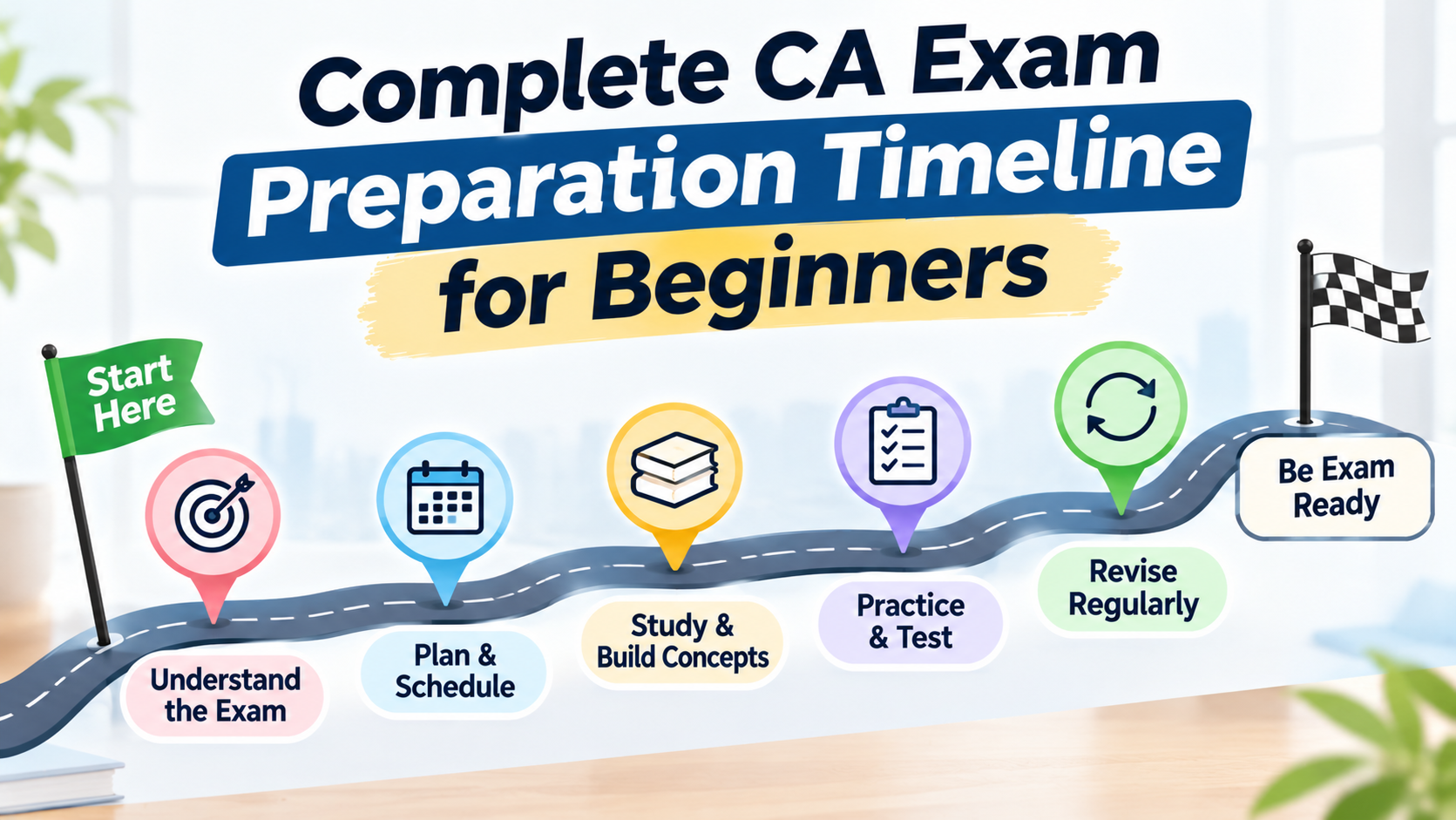
No. Early preparation needs more concept building, while later stages need more revision, mixed questions and timed tests. Review your progress regularly and adjust the balance as the exam approaches.
3. How important is revision for CA exams?
Revision helps you recall topics after a gap and identify what you have forgotten. Include short review sessions throughout preparation rather than waiting until the entire syllabus is complete.
4. When should I start solving exam-style questions?
Start with basic topic-wise questions as soon as you understand a concept. Gradually add mixed and timed questions as syllabus coverage improves, making sure you analyse errors after each practice session.
5. How do I know whether a chapter is complete?
Check whether you can explain its main concepts, recall important rules or formulas and solve representative questions independently. If you still need the solution for every step, the chapter needs more practice.
6. How should I use mock-test feedback?
Classify mistakes by cause, such as concept gaps, calculation errors, timing or presentation. Schedule a focused correction session and then attempt similar questions to confirm that the problem has been addressed.
7. Should I study every subject every day?
Not necessarily. A weekly subject rotation can work well if every paper returns regularly and older topics are revised. Allocate more time to weak areas without leaving other subjects untouched for too long.
8. What if I miss my study targets?
Identify why the target was missed and reduce or rearrange the workload realistically. Protect core learning, revision and question practice rather than carrying an impossible backlog into every new week.
9. Are these study-hour or timeline suggestions official ICAI rules?
No. They are planning examples only. Always check the current ICAI syllabus, official examination schedule and instructions for your level and attempt before finalising your preparation plan.
10. How can CA Exams Test Series support preparation?
A test series can provide structured exam-style practice and feedback on timing, accuracy and presentation. Use the results to prioritise revision and practise weak areas rather than focusing only on the score.