Table of contentsShowHide
- 1.Start by Checking Your Requirements
- 2.Preparation Timeline at a Glance
- 3.Phase One: Set Up a Study System
- 4.Phase Two: Build Concepts and Cover the Syllabus
- 5.Phase Three: Consolidate Through Questions
- 6.Phase Four: Revision and Mock Tests
- 7.The Final Weeks Before the Exam
- 8.Avoid Common Timeline Mistakes
- 9.Final Thoughts
Starting CA preparation can feel overwhelming because the course has multiple levels, different paper types and a large syllabus. Beginners often spend too much time searching for the perfect timetable and too little time following a workable one.
A clear timeline separates learning, practice, revision and exam readiness into manageable phases. Your exact schedule depends on your level, target attempt, current knowledge and available study time.
Start by Checking Your Requirements
First confirm your CA level, intended attempt and the current syllabus. Review official examination dates, subjects, study material and relevant announcements. A timeline built for another level or an earlier attempt may not fit your needs.
List what you have already studied, what is new, which topics feel difficult and how many hours you can realistically give each week. Include classes, work and other commitments. A good plan reflects your real starting point rather than an ideal day that rarely happens.
Preparation Timeline at a Glance
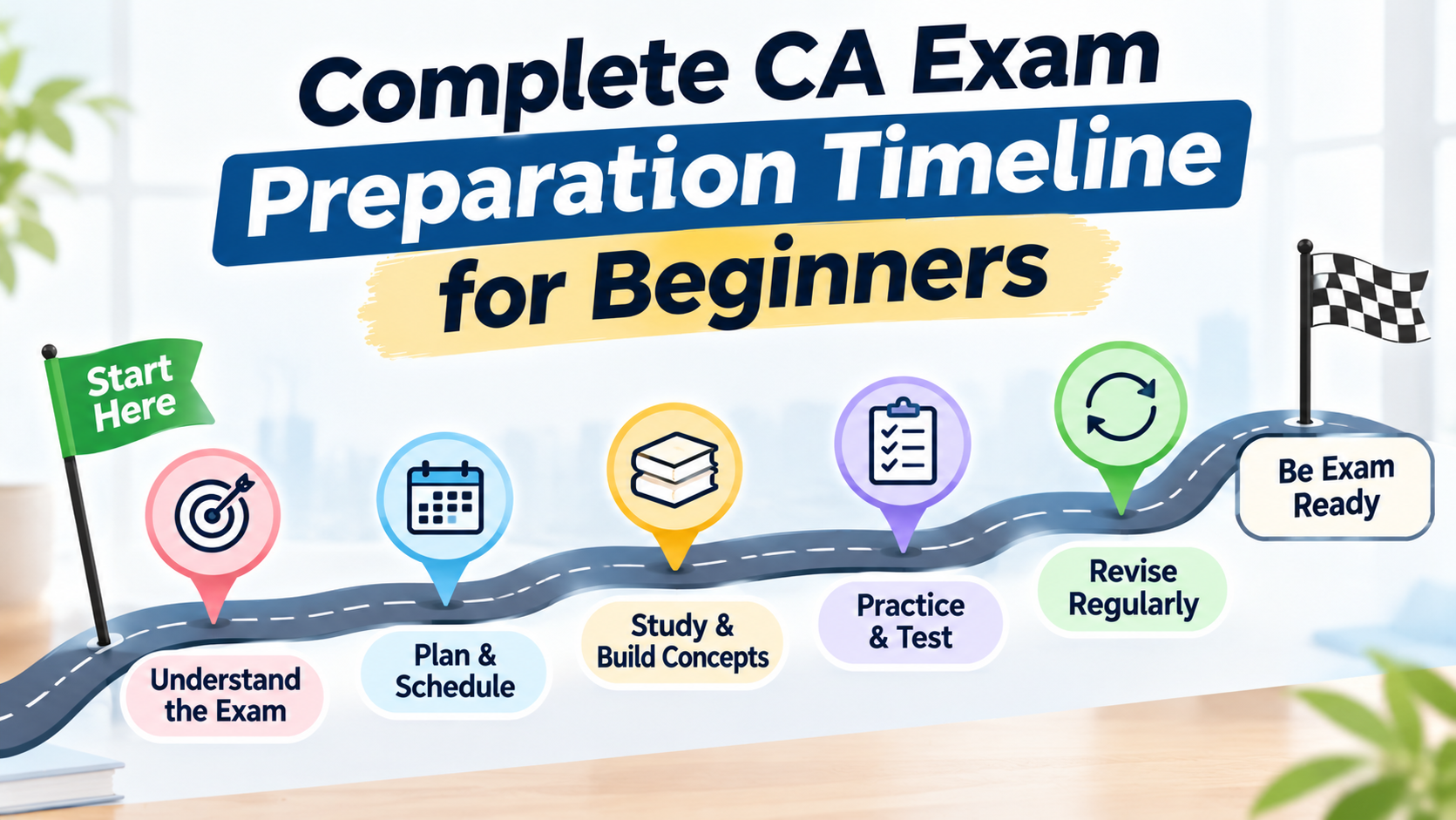
Use this as a flexible framework, not an official ICAI schedule. Adjust the length of each phase to the time available and the amount of syllabus you have completed.
| Phase | Main focus | Progress check |
|---|---|---|
| Planning | Check syllabus, materials and available time | Subject-wise calendar ready |
| Concept building | Learn topics and basic illustrations | Can explain concepts and solve standard questions |
| Consolidation | Complete remaining syllabus and mixed practice | Gaps are listed clearly |
| Revision | Recall notes and practise exam-style questions | First revision completed |
| Exam simulation | Timed tests, analysis and targeted repair | Timing and accuracy improve |
Phase One: Set Up a Study System
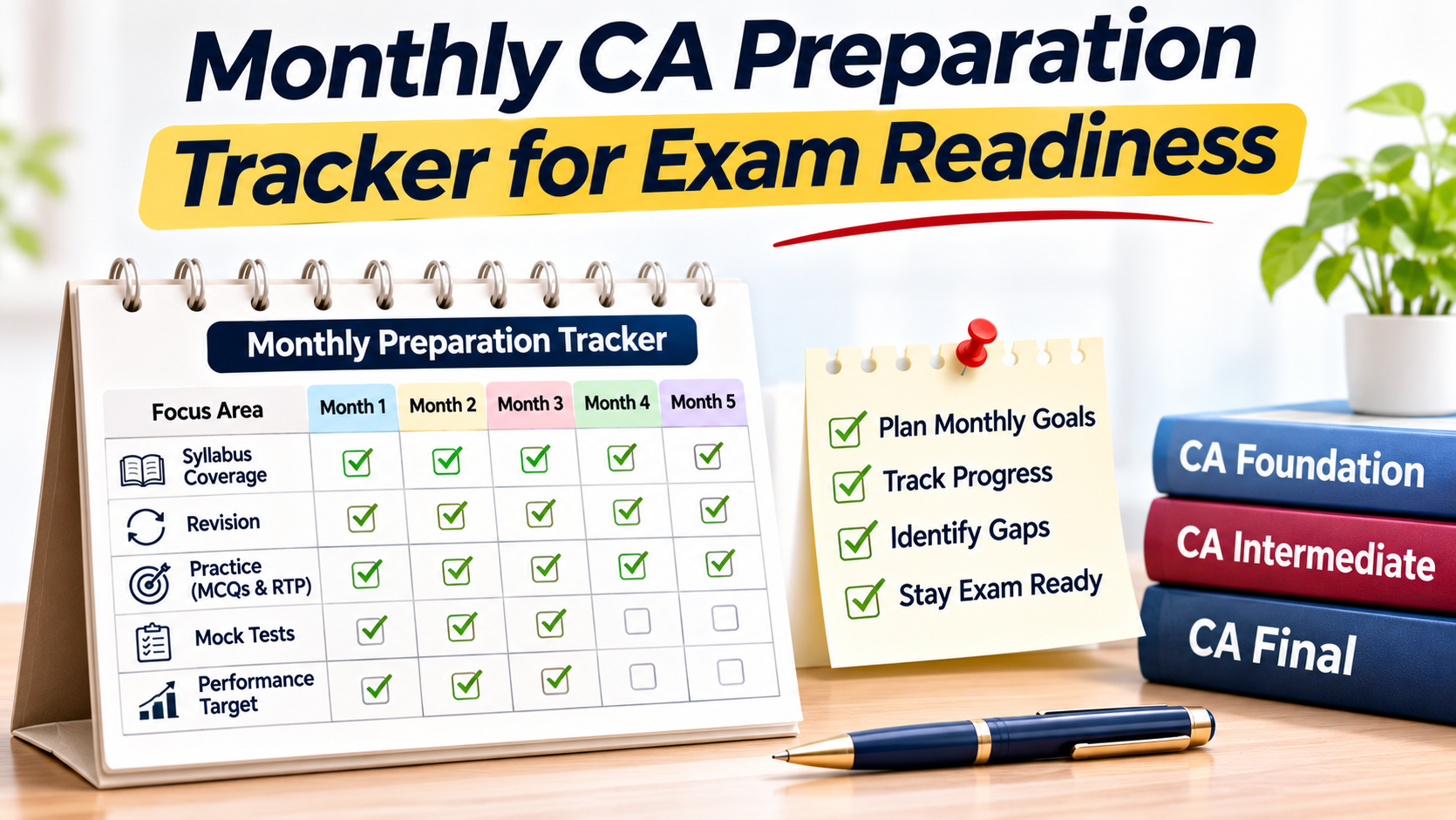
Use the first week to divide each subject into chapters or units and assign realistic weekly targets. Keep a central calendar and track each topic as not started, learning, practice completed or revision due. A chapter should not be marked complete just because you read it once.
At the end of every week, compare planned work with actual progress. If targets were missed, work out whether they were too ambitious, the topic was harder than expected or your study blocks were interrupted. Adjust the next week instead of carrying every unfinished task forward.
Phase Two: Build Concepts and Cover the Syllabus
During the main learning phase, study a concept and then practise it. For numerical subjects, work through examples and solve questions independently. For theory subjects, identify key terms, conditions and exceptions, then practise applying the rule to a short situation.
Avoid leaving one subject untouched for months. Rotate subjects across the week and include short reviews of earlier topics. When a difficult chapter slows you down, break it into smaller tasks and seek a clearer explanation if needed. Mark the topic for follow-up rather than letting it stop the entire schedule.
Phase Three: Consolidate Through Questions
As syllabus coverage improves, increase the time devoted to practice. Begin with topic-wise questions, then move to mixed questions and exam-style answers. Use relevant previous examination questions and official practice resources where available, but do not assume that past papers predict the next examination.
Prepare concise revision sheets for formulas, provisions, difficult distinctions and repeated mistakes. Avoid rewriting the textbook. Notes should make later revision faster and help you test your recall.
Phase Four: Revision and Mock Tests
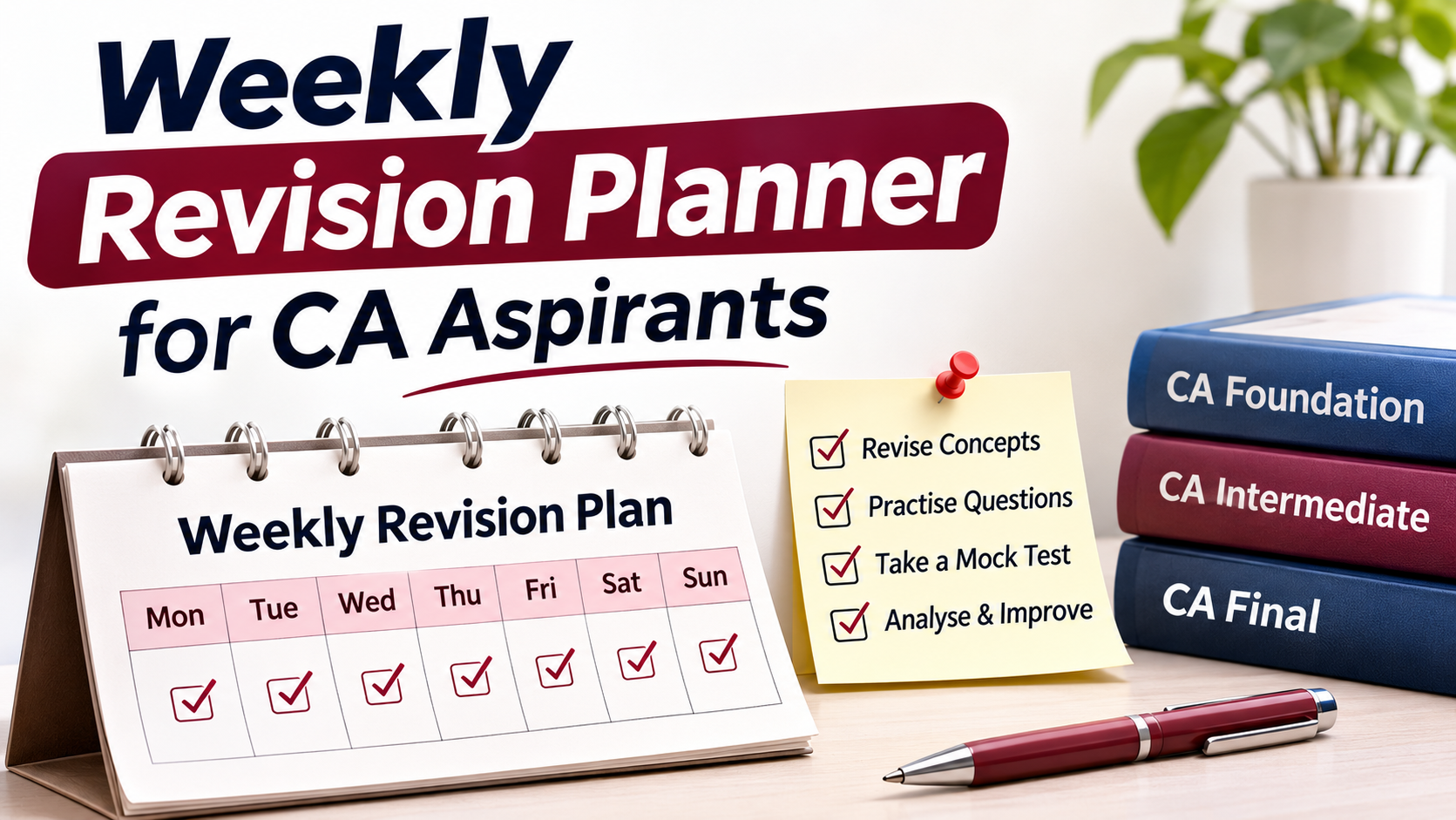
Reserve enough time for revision rather than using every remaining day to learn new material. Review concise notes, test recall and practise questions under time limits. Attempt sectional and full-length mock tests as appropriate for your syllabus coverage.
After a test, record concept gaps, careless errors, time-management issues and presentation weaknesses. CA Exams Test Series can be used as part of this structured practice phase. Use feedback to decide what to revise next; do not take test after test without analysing the results.
The Final Weeks Before the Exam
Focus on recall, accuracy and exam execution. Avoid changing all your study materials at the last minute. Verify amendment-sensitive topics using current official material and practise questions aligned with the applicable syllabus.
Protect sleep, plan breaks and check the official timetable, admit card instructions and permitted items. Keep the final day for light revision and practical preparation instead of attempting to learn the entire syllabus from scratch.
Avoid Common Timeline Mistakes
Overplanning, switching resources constantly and postponing revision are common reasons a timetable fails. Use a main study source and add other resources only when they solve a specific problem. Include revision throughout preparation and remember that lecture completion is not the same as exam readiness.
If you fall behind, reassess the remaining time and prioritise learning, revision and question practice realistically. An adjustable plan is more useful than an ambitious schedule that repeatedly breaks.
Final Thoughts
A useful CA preparation timeline divides the work into planning, concept building, consolidation, revision and exam simulation. Review it weekly, keep targets measurable and adjust the schedule to your actual progress. The best timeline is the one you can follow consistently.
Frequently Asked Questions
1. How can I improve my CA preparation routine?
Set measurable weekly targets, combine learning with independent question practice and review mistakes regularly. Use a tracker to identify weak areas and adjust the next week’s schedule instead of relying only on study hours.
2. Should I follow the same timetable throughout preparation?
No. Early preparation needs more concept building, while later stages need more revision, mixed questions and timed tests. Review your progress regularly and adjust the balance as the exam approaches.
3. How important is revision for CA exams?
Revision helps you recall topics after a gap and identify what you have forgotten. Include short review sessions throughout preparation rather than waiting until the entire syllabus is complete.
4. When should I start solving exam-style questions?
Start with basic topic-wise questions as soon as you understand a concept. Gradually add mixed and timed questions as syllabus coverage improves, making sure you analyse errors after each practice session.
5. How do I know whether a chapter is complete?
Check whether you can explain its main concepts, recall important rules or formulas and solve representative questions independently. If you still need the solution for every step, the chapter needs more practice.
6. How should I use mock-test feedback?
Classify mistakes by cause, such as concept gaps, calculation errors, timing or presentation. Schedule a focused correction session and then attempt similar questions to confirm that the problem has been addressed.
7. Should I study every subject every day?
Not necessarily. A weekly subject rotation can work well if every paper returns regularly and older topics are revised. Allocate more time to weak areas without leaving other subjects untouched for too long.
8. What if I miss my study targets?
Identify why the target was missed and reduce or rearrange the workload realistically. Protect core learning, revision and question practice rather than carrying an impossible backlog into every new week.
9. Are these study-hour or timeline suggestions official ICAI rules?
No. They are planning examples only. Always check the current ICAI syllabus, official examination schedule and instructions for your level and attempt before finalising your preparation plan.
10. How can CA Exams Test Series support preparation?
A test series can provide structured exam-style practice and feedback on timing, accuracy and presentation. Use the results to prioritise revision and practise weak areas rather than focusing only on the score.