Table of contentsShowHide
- 1.Why concept development matters in CA studies
- 2.How live classes create a guided learning environment
- 3.The value of asking doubts at the right time
- 4.Learning through examples and step-by-step explanations
- 5.Live classes for practical and theory subjects
- 6.Prepare before attending a live class
- 7.What to do immediately after class
- 8.Balance live classes with independent learning
- 9.Stay engaged in online live classes
- 10.Assess whether concepts are becoming stronger
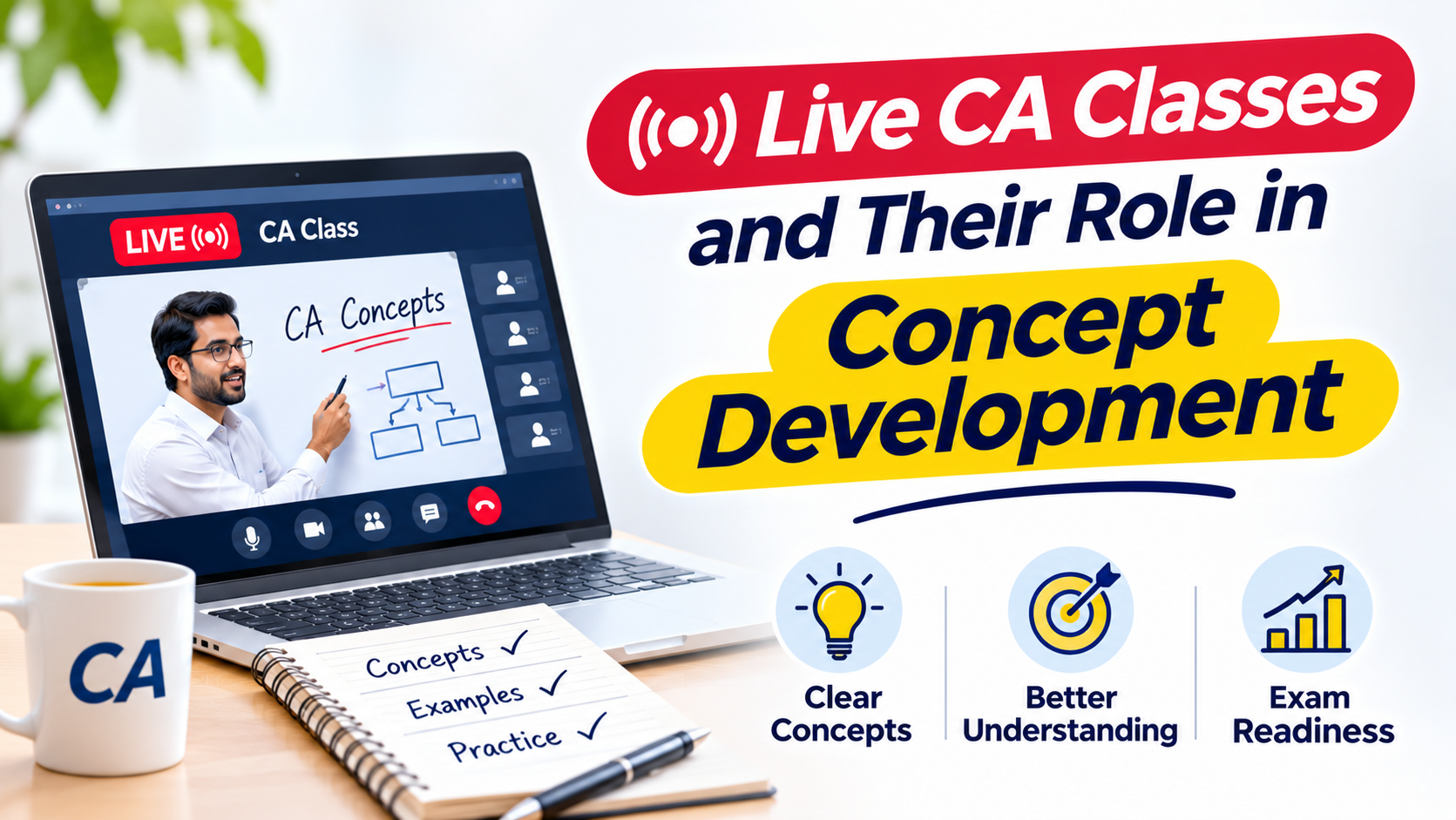
CA subjects often require more than memorising definitions, formulas or provisions. Students need to understand why a rule works, how a calculation is built and how a concept applies to a question. Live CA classes can support this process through explanations, doubt-solving and examples in real time.
Attending a live class is only the beginning of concept development. Understanding becomes stronger when students review the lesson, solve questions independently and revisit difficult areas. This article explains the role of live classes in CA Foundation, Intermediate and Final preparation.
Why concept development matters in CA studies
Conceptual understanding helps students handle questions framed differently from classroom examples. When a student understands the underlying principle, it becomes easier to identify relevant information, select a method and explain the result. Rote learning without understanding can make unfamiliar questions difficult.
CA preparation includes practical calculations, legal interpretation, accounting treatment and audit reasoning. A strong foundation supports later chapters because many topics build on earlier concepts. Focus on the logic behind a method, not only its final steps.
How live classes create a guided learning environment
A live class follows a planned sequence and gives students access to an instructor during the lesson. The teacher can introduce a concept, demonstrate its application and respond to questions as the topic develops. This structure may help students facing an unfamiliar chapter.
Real-time interaction can reveal common misunderstandings. When students ask questions, the teacher may explain a point differently or work through another example. This makes the lesson responsive to the learning needs of the class.
The value of asking doubts at the right time
Raise a doubt when the exact point of confusion is clear. Instead of saying an entire chapter is difficult, identify the definition, assumption, calculation step or interpretation causing trouble. A precise question makes it easier to receive a useful explanation.
Keep a doubt list if the pace does not allow an immediate interruption. Resolve important doubts before moving too far ahead. An unanswered foundational question can affect several later topics, so do not leave it hidden in your notes.
| Preparation factor | What to focus on |
|---|---|
| Planning | Set realistic daily and weekly targets. |
| Concepts | Understand the reason behind each method or rule. |
| Revision | Revisit completed topics at planned intervals. |
| Practice | Solve questions under suitable time limits. |
| Assessment | Analyse mistakes and take corrective action. |
Learning through examples and step-by-step explanations
Examples connect an abstract concept with the way it appears in an examination question. In practical subjects, a teacher can demonstrate how to identify data, select a formula, apply adjustments and present the answer. In theory subjects, examples show how a principle applies to facts.
Do not simply copy the solution. Pause at important steps and predict what should happen next. After the explanation, attempt a similar question without looking at the answer. This checks whether you understood the method or only followed the demonstration.
Live classes for practical and theory subjects
Practical papers benefit from detailed working demonstrations. Students can observe why a treatment is selected and where common calculation errors occur. They should practise variations of the question to learn how the method adapts when facts change.
Theory papers require understanding of terminology, purpose, exceptions and application. Live discussion can clarify these relationships, but students must also practise writing concise and relevant answers in their own words.
Prepare before attending a live class
Preview the chapter heading, learning objectives or a few pages of material before class. You do not need to master the topic in advance. A brief preview helps you recognise unfamiliar terms and prepare useful questions.
Keep the study material and notebook ready, and reduce notifications during the session. If you join late or miss a section, note what needs to be covered afterwards rather than allowing the gap to affect the next topic.
What to do immediately after class
Review the lesson while the explanation is fresh. Organise notes, complete unfinished examples and write the main idea in your own words. Check whether you can explain why the method or provision works, not merely repeat the teacher's wording.
Attempt questions without looking at the solution. If you make an error, identify whether it came from a concept gap, calculation step or misreading. Return to the relevant class notes and correct the issue.
Balance live classes with independent learning
Live classes should not occupy every available study hour. Students need time to revise, practise, complete assignments and prepare for tests. A timetable containing only lectures can create the impression of progress while leaving students unable to solve questions independently.
After each class, assign a follow-up task such as practical problems, a short written answer, a revision sheet or a concept map. Schedule another review later in the week to keep the topic active.
Stay engaged in online live classes
Join on time, keep the study material open and participate when the teacher invites questions. Avoid multitasking with unrelated tabs or messages. Use chat or doubt features for specific academic questions and follow class guidelines.
Take brief notes rather than writing every word. Mark important examples and topic references where available. If a technical interruption occurs, record the missed portion and use the authorised recording or support channel to cover it.
Assess whether concepts are becoming stronger
Concept development should be visible in your ability to solve unfamiliar questions, explain a rule, connect related topics and avoid repeating errors. Chapter and cumulative tests can show whether knowledge remains available after class.
CA Exams Test Series can complement live teaching with structured test practice and performance analysis. Use feedback to identify concepts needing reinforcement, then revisit class notes or ask a focused doubt. Strong learning combines explanation, application and review.
Frequently Asked Questions
How do live CA classes help students understand concepts?
Live classes provide structured explanations, worked examples and opportunities to ask doubts. Students can clarify difficult steps in real time and strengthen understanding through independent practice.
Are live CA classes better than recorded lectures?
Live classes offer real-time interaction, while recordings provide flexibility and replay options. The better format depends on schedule, learning preference and need for immediate doubt-solving.
Should I prepare before attending a live CA class?
A brief preview of the chapter and key terms can make the lesson easier to follow. Note unfamiliar concepts and prepare specific questions for the instructor.
How can I ask better doubts during CA classes?
Identify the exact concept, step or assumption that is unclear. Explain what you understood and where you became confused so the teacher can address it directly.
Is attending live classes enough for CA exam preparation?
No. Students must revise class topics, solve questions independently, complete syllabus-based study and attempt tests. Class attendance supports learning but does not replace practice.
How should I revise after a live CA lecture?
Review notes soon after class, explain the main concept in your own words and solve related questions without referring to the solution. Record unresolved doubts.
Can live classes improve practical subject performance?
They can demonstrate problem-solving methods and explain why particular steps are used. Independent practice is still necessary to improve speed, accuracy and application.
How do live classes help with theory subjects?
Teachers can explain the meaning, purpose and application of provisions or principles. Students should reinforce learning by recalling key points and writing exam-style answers.
What if I miss a live CA class?
Use an authorised recording or catch-up facility if available, review the missed topic and resolve doubts before proceeding. Keep the missed lesson in a dated task list.
How can CA Exams Test Series support concept development?
Timed tests and performance feedback show whether concepts can be applied independently. Use the analysis to identify weak areas and plan focused revision after live classes.