Table of contentsShowHide
- 1.Why an exam-day checklist matters
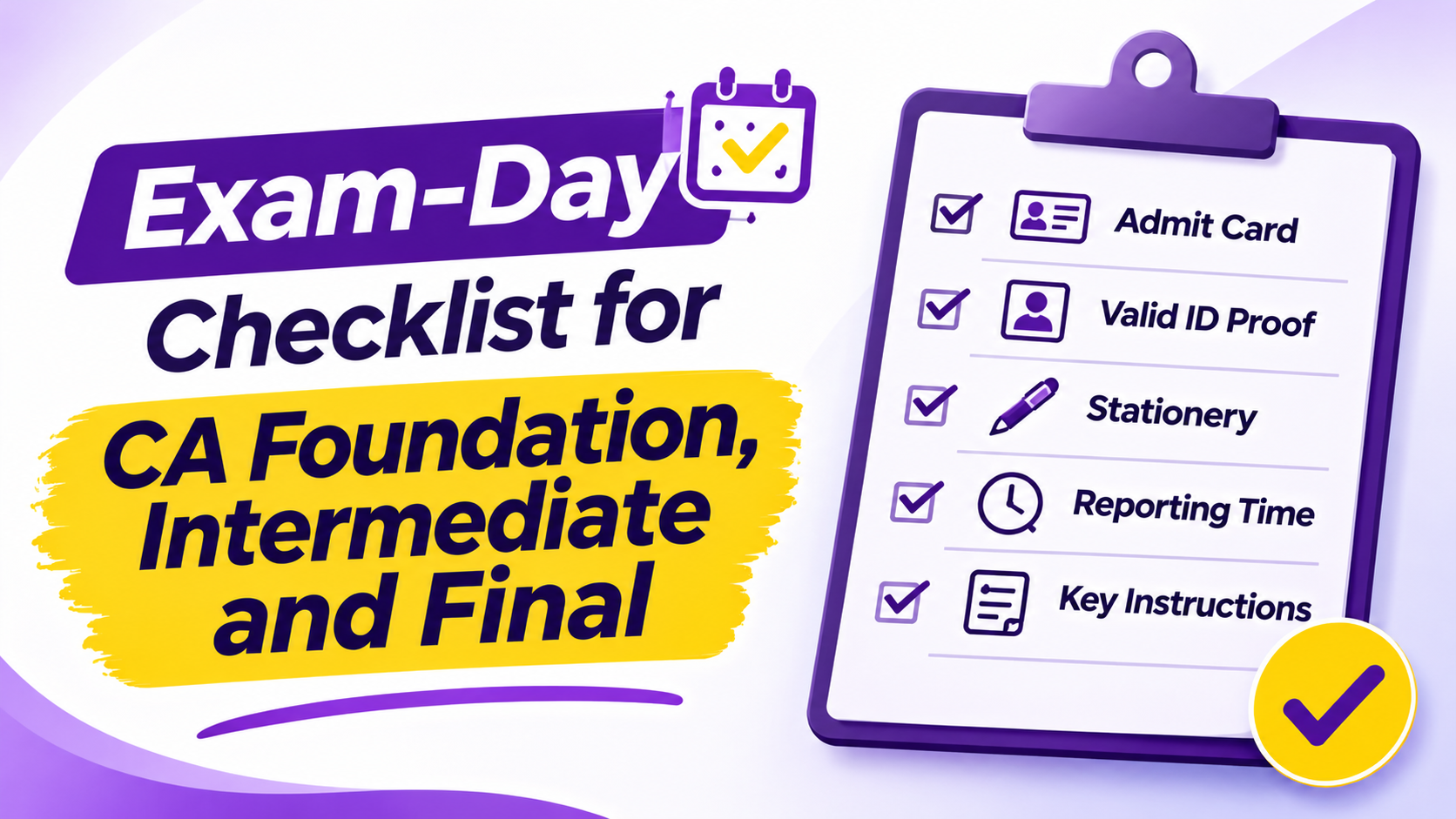
- 2.Documents to keep ready
- 3.Stationery and permitted items
- 4.The evening before the examination
- 5.Morning routine and travel planning
- 6.What to do after reaching the centre
- 7.Reading the question paper
- 8.Time management during the paper
- 9.Subject-wise reminders for Foundation, Intermediate and Final
- 10.After submitting the answer book
- 11.How CA Exams Test Series can support preparation
Exam day is the point where months of preparation come together. Even when concepts are clear and revision is complete, small oversights such as forgetting an admit card, reaching the centre late or misunderstanding an instruction can create unnecessary stress. A simple checklist helps you focus on the paper instead of avoidable problems.
This guide covers the practical steps CA Foundation, Intermediate and Final students should take before leaving home, after reaching the examination centre and while attempting the paper. Always treat the latest instructions issued by ICAI as final.
Why an exam-day checklist matters
A checklist reduces last-minute decisions and prevents avoidable problems from disturbing concentration. Months of preparation can be affected by simple oversights such as a missing admit card, an incorrect centre address or arriving after the reporting deadline. Preparing essentials in advance allows you to focus on the paper rather than logistics.
Use the checklist as a planning aid, not as a substitute for official instructions. ICAI's latest announcements and the directions printed on your admit card should always take priority because permitted items, reporting requirements and centre procedures may change.
Documents to keep ready
Keep your printed admit card in a folder and verify your name, roll number, course or group, paper details, photograph, date, reporting time and centre address. If any information appears incorrect, use the official correction or contact process well before the examination.
Carry the identity document and any other documents required under the current ICAI instructions. Do not assume that a phone image or digital copy will be accepted where a printed document is required. Keep all documents together and check them the previous evening.
Stationery and permitted items
Prepare permitted pens, pencils, an eraser, ruler and other stationery required for your paper. Test every pen and keep a spare. If a calculator is allowed, check the applicable rules and make sure it works. Avoid borrowing stationery at the last moment.
Do not pack mobile phones, smart watches, Bluetooth devices, notes or other restricted items with the intention of taking them into the hall. Read the current instructions carefully. When an item is not clearly permitted, leave it outside the examination area.
| Preparation factor | What to focus on |
|---|---|
| Planning | Set realistic daily and weekly targets. |
| Concepts | Understand the reason behind each method or rule. |
| Revision | Revisit completed topics at planned intervals. |
| Practice | Solve questions under suitable time limits. |
| Assessment | Analyse mistakes and take corrective action. |
The evening before the examination
Finish heavy study early enough to sleep properly. Review a short list of familiar formulas, provisions, formats or concepts instead of starting a completely new chapter. The purpose of final revision is to refresh recall, not to create new pressure or reduce sleep.
Check the route, travel time, reporting time and centre address. Set alarms and arrange documents and stationery near the exit. Allow a buffer for traffic, public transport delays, security checks and locating the correct building.
Morning routine and travel planning
Wake up with enough time to eat a familiar breakfast and get ready without rushing. Avoid experimenting with unfamiliar food or taking more caffeine than usual. Keep water and personal essentials ready, while following the centre's rules about what may be carried inside.
Leave early and confirm the centre entrance if the location is unfamiliar. Reaching with a time buffer gives you space to settle down, locate the correct room and complete entry formalities without panic.
What to do after reaching the centre
Check room arrangements and notice boards, listen to examination staff and confirm your seat or roll-number details. Keep your admit card and identity document available for verification. Follow directions about bags, prohibited items and movement within the premises.
Avoid comparing preparation levels or discussing predictions with other candidates. Such conversations rarely improve performance and may disturb concentration. Use the waiting period to breathe slowly, settle your materials and remind yourself to read the paper carefully.
Reading the question paper
Use reading time, where provided, according to the examination instructions. Scan the paper to understand its structure, compulsory requirements, internal choices and marks distribution. Identify questions you can answer confidently, but do not begin writing before the permitted start time.
Read each requirement carefully. In practical papers, identify the information given, adjustments required and expected format. In theory papers, note the command word and scope. A correct answer can still lose marks if it does not address what has actually been asked.
Time management during the paper
Allocate time in proportion to marks and keep a small buffer for checking. Avoid spending too long on one difficult requirement while leaving easier marks untouched. If a question is taking longer than expected, make a sensible attempt and move forward.
Write legibly, show relevant workings and label answers clearly. Keep calculations organised so the examiner can follow your approach. In descriptive answers, use headings or points where they improve clarity, but avoid irrelevant material.
Subject-wise reminders for Foundation, Intermediate and Final
Foundation students should pay attention to instructions for objective and descriptive papers, including how answers must be marked or recorded. Read each question carefully before selecting an option and avoid changing an answer without a clear reason.
Intermediate and Final students should plan for longer practical and descriptive requirements. Keep workings, assumptions and conclusions clear. For integrated questions, connect relevant concepts to the facts given and use the presentation methods practised during preparation.
After submitting the answer book
Stop writing when instructed and follow the invigilator's directions for arranging and submitting answer books or other materials. Complete identification details in the prescribed manner and do not leave until examination staff permit you to do so.
After the paper, avoid turning every uncertain answer into a source of worry. If another paper is scheduled soon, take a short break and return to the next subject's plan. Your attention is more useful when directed towards the paper that remains.
How CA Exams Test Series can support preparation
Exam-day confidence comes from habits practised before the examination. Timed mock tests help students become familiar with reading requirements, planning time, presenting answers and completing a paper within the allotted duration. Reviewing evaluated attempts also helps identify recurring mistakes.
CA Exams Test Series can be part of a student's practice routine through scheduled tests, timed attempts and performance review. Use mock tests to practise exam conditions, but compare final preparation decisions with the latest ICAI syllabus, announcements and instructions.
Frequently Asked Questions
What should I carry to a CA examination centre?
Carry your admit card, identity document and stationery specifically permitted under the latest ICAI instructions. Check the current guidelines before packing, as calculator and other item rules may vary.
Is a printed CA admit card necessary?
Follow the latest ICAI instructions for your examination. If a printed admit card is required, keep it ready the previous evening and ensure its photograph and details are clearly visible.
How early should I reach the CA exam centre?
Reach well before the reporting or entry deadline stated on your admit card. Allow extra time for traffic, security checks and locating the correct building or room.
Can I carry a mobile phone inside the examination hall?
Do not assume mobile phones or smart devices are allowed. Check current ICAI instructions and centre rules, and leave prohibited devices outside the examination area.
Should I study on the morning of the CA exam?
A short review of familiar formulas, provisions and key points can help. Avoid learning large new topics or attempting stressful full-length tests immediately before the paper.
What should I check on my CA admit card?
Verify your name, roll number, course or group, paper information, photograph, examination date, reporting time and centre address. Resolve discrepancies through the official process in advance.
How should I manage time in a CA exam?
Allocate time according to marks, attempt questions in a planned order and keep a buffer for checking. Move on from a difficult requirement when it consumes too much time.
What if I reach the examination centre late?
Entry decisions are governed by official examination rules and centre instructions. Contact the relevant official channel if an unexpected problem arises; do not rely on assumptions about late entry.
Should I discuss answers after the CA paper?
A brief discussion is optional, but repeatedly checking uncertain answers can increase stress. If another paper is approaching, prioritise rest and preparation for the next subject.
How can mock tests help with exam-day readiness?
Timed mock tests help practise time allocation, question selection and answer presentation. Reviewing mistakes before the examination makes your actual exam routine more familiar.