

Life Cycle Costing: Know about Meaning, Purpose, and Benefits
Life Cycle Costing (LCC) is a method that assesses the total expenses related to using a property in its lifetime and using a property in its lifetime, from acquisition to disposal. Learn more here.
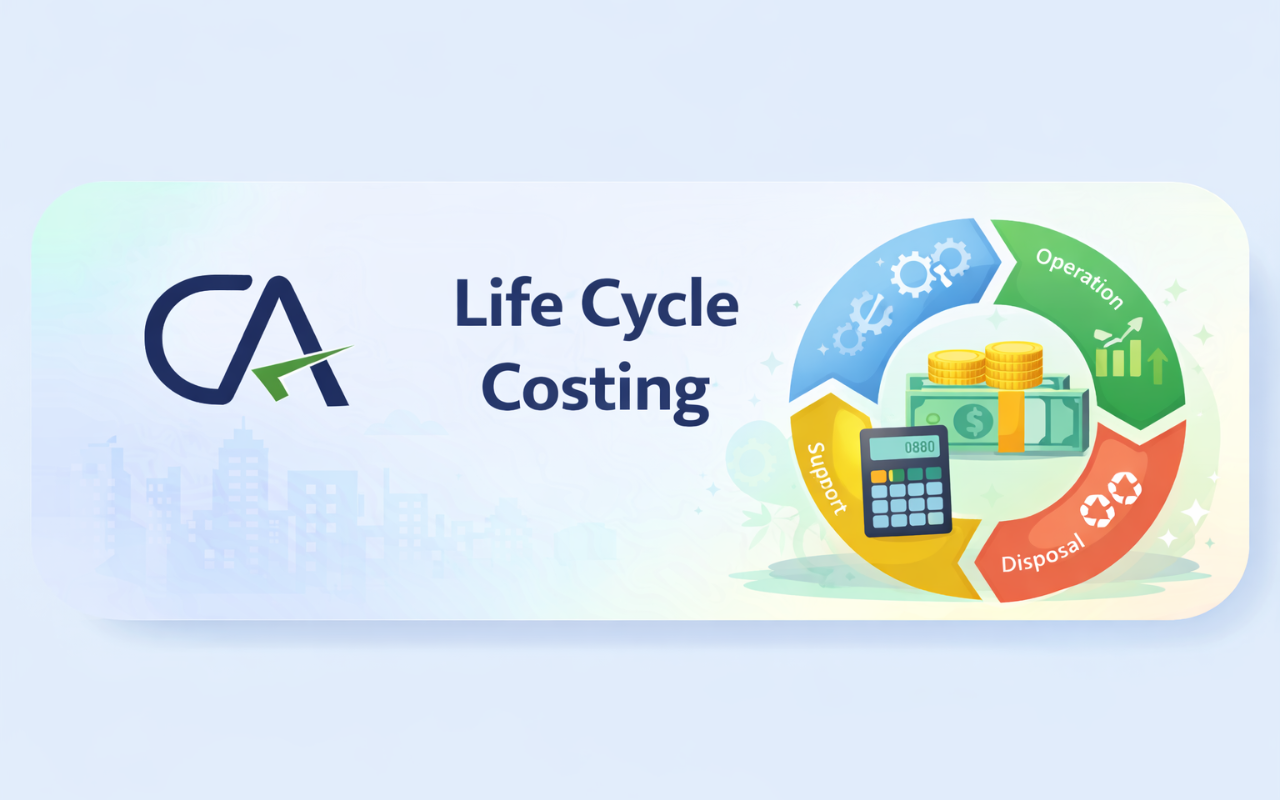
Table of Content
Life cycle is a method in cost accounting that sees the full expenses involved in using a property in its lifetime. For example, buy a car. Instead of only the advance price, the life cycle cost factors in fuel, maintenance, repair, and what you can get when you sell it later or do business. This fully allows businesses to make smart options by understanding the overall financial impact of their investment in the long run.
What is life cycle costing?
Life Cycle Costing (LCC) is a cost management approach that evaluates all expenses related to a product or project that ranks from its beginning to its end. This involves the cost for design, production, distribution, maintenance, and disposal, providing a broader perspective on expenditure. It supports strategic decision-making and stability efforts by providing an in-depth understanding of total life cycle expenses.
Examples of Life Cycle Costing
Consider a fleet management company deciding between a traditional gasoline-powered vehicle and an electric vehicle (EV). Life Cycle Costing (LCC) will analyze the overall expenses of each option in its life cycle, covering fuel or electricity use, maintenance, insurance, and final disposal costs. This comparison helps the company to identify more affordable and durable options for their long-term needs.
Major Purpose of Life Cycle Cost Analysis
The following life cycles are the objective of cost analysis:
-
Comprehensive cost evaluation: Life cycle cost analysis (LCCA) evaluates the total cost of a product, asset, or project ownership, from installation to disposal. This includes early design, acquisition, operation, maintenance, and final disposal or decommissioning costs. This overall assessment provides a complete understanding of financial implications throughout the lifetime of the unit under consideration.
-
Informed decision-making: By considering all costs throughout the life cycle, LCCA enables decision-making on investment options, resource allocation, and strategic planning. This helps stakeholders assess the long-term financial implications of various options and select the most cost-effective and durable options. Whether the decision, technologies, or decision-making between methods of procurement provides valuable insight to the LCCA decision-makers to guide.
-
Adaptation Price: LCCA allows organizations to optimize value by identifying opportunities to reduce costs and maximize the profit on the life cycle of a product or asset. By determining financial impacts, LCCA helps prefer investments that provide the highest returns on investment (ROI) and long-term value construction. This ensures aligned, efficient resource allocation with organizational objectives, reducing financial risks.
-
Minimizing cost: One of the main objectives of LCCA is to reduce the ownership and operational costs of property or products. By analyzing cost drivers and identifying the path for cost reduction, organizations can apply strategies to reduce overall expenses throughout the life cycle. This may include optimizing the maintenance program, selecting sustainable materials, or investing in energy-skilled technologies to reduce operating costs over time.
-
Long-term performance and competition to increase: Through LCCA, organizations evaluate their long-term performance and the competition of their investment. Factors such as reliability, durability, and untouchability are considered, supporting strategic decisions that promote permanent growth and competition in the market. LCCA aligns investment with organizational goals and contributes positively to overall performance metrics.
-
Facility of stability initiative: LCCA plays an important role in supporting stability efforts by assessing environmental impacts and long-term stability ideas. Beyond financial costs, LCCA evaluates environmental costs and benefits associated with various options, which is capable of making conscious decisions towards the environment. By determining the life cycle effects, businesses can reduce their environmental footprint and contribute to comprehensive stability objectives.
Benefits of Life Cycle Costing
The benefits of the cost of life cycle are as follows:
-
Cost transparency: LCC offers a clear approach to all the expenses related to a product or project in its entire life cycle, including hidden costs. This transparency allows businesses to correctly assess the total ownership costs, allowing financial resources and decisions to be informed to effectively adapt to the budget.
-
Informed Decisions: By capturing costs at different stages of the life cycle of a product, the LCC equipped businesses with comprehensive data to make strategic decisions. Product designs, sourcing strategies, or maintenance plans can maximize the price and profitability by considering the perspective of the full life cycle.
-
Stability: LCC enables organizations to evaluate the environmental impacts and long-term stability ideas associated with their products or projects. By determining environmental costs and benefits, businesses can adopt sustainable practices and take environmentally conscious decisions, aligning corporate social responsibility with goals and regulatory requirements.
-
Risk Mitigation: LCC helps identify risks and uncertainties in each life cycle phase, allowing businesses to develop effective risk mitigation strategies. Understanding the financial implications of risks enables organizations to address challenges, reduce disruption, and protect against financial losses. It ensures trade continuity and flexibility in dynamic market conditions.
Why Choose CA Exams Test Series for CA Preparation
When it comes to preparing for the hard CA exams, choosing the right test series can make all the difference. caexams.in has emerged as a trusted and result-oriented platform for CA Foundation, Intermediate, and Final aspirants. Here's why it should be your first choice:
- Trusted by Thousands of CA Aspirants: CAexams has built a strong reputation among CA students for its consistent quality and excellent student feedback.
- ICAI Pattern-Based Question Papers: All tests are strictly based on the latest ICAI exam pattern and syllabus, ensuring real exam-like practice.
- Timely Evaluation with Expert Feedback: Get your answers evaluated within 48–72 hours along with detailed feedback, a marking scheme, and improvement tips.
- Personalized Mentorship & Study Planner: Get personalized mentorship, performance tracking, and a daily study plan customized to your syllabus completion pace.
FAQs
What do you mean by life cycle costing?
Life Cycle Costing (LCC) is a comprehensive way to evaluate the total cost of operating a property or project throughout its lifetime, from initial acquisition to final disposal. This is only beyond the procurement price, given all the affiliated costs such as maintenance, operation, and final disposal.
What are the lifetime cycle costs?
The cost of the life cycle, also known as the cost of the entire life or the total cost of ownership, incorporates all the expenses associated with a property or project throughout his lifetime, from initial acquisition to final settlement. This includes not only the initial procurement value but also all the costs such as operational expenditure, maintenance, repair, upgrade, and final decommissioning or disposal costs.
What is the concept of LCC?
Life Cycle Costing (LCC) is a way to evaluate life or products from early acquisitions to the end of life or product ownership, operation, maintenance, and settlement of an asset or product throughout their lifetime. It is a comprehensive approach that goes beyond the initial procurement price only to incorporate all related costs, which offers a more complete picture of the right cost implications.
What is a life cycle cost model?
A life cycle cost model is a financial device used to assess the total cost of an asset, product, or project throughout its lifetime, from initial acquisition to disposal. It considers all affiliated costs, including early costs, operational expenditure, maintenance, and final disposal, which provides a comprehensive approach to long-term financial implications.
What is the process of LCC?
Life cycle cost (LCC) is a comprehensive way to evaluate the total cost of an asset or project owner throughout his lifetime, from initial acquisition to disposal. This includes identifying and analyzing all the relevant costs associated with the property in each stage of its life cycle, including purchases, operations, maintenance, and final disposal. This approach allows us to make informed decisions by considering long-term financial implications and optimizing the value for money.
What is the aim of life cycle costing?
The main objective of the life cycle cost (LCC) is to determine and reduce the total cost of a property or product throughout its lifetime, from initial acquisition to disposal. This overall approach for cost management helps organizations to take informed decisions by considering all concerned expenses, not only on the initial procurement price.
How to calculate LCC?
The original formula for the life cycle cost (LCC) is the sum of all the costs associated with an asset in its lifetime, including initial procurement, operational costs, maintenance, and disposal, and any residual or disposal value. Essentially, it is a comprehensive cost analysis that considers all expenses related to an item from cradle to grave.
What are the benefits of lifecycle costing?
Life cycle costings provide many benefits, including comprehensive cost evaluation, better decision-making, increased financial plan, risk management, and promotion of permanent practices. This provides a holistic approach to cost throughout the lifetime of a property, allowing more informed decisions and a focus on better budgets and long-term value.
What does lifetime cost mean?
In addition to the cost of buying goods, the total cost of keeping some goods during their lifetime. Costs may include expenses like maintenance, insurance, renewal, etc.
What is the principle of life cycle costing?
Life cycle cost, or cost of life, is the process of guessing how much money you will spend on a property during your useful life. The cost of the whole life covers the cost of a property from the time when you buy it, by the time you get rid of it.


