Table of contentsShowHide
- 1.Understand the different purpose of lectures and self-study
- 2.Why a fixed ratio may not work for everyone
- 3.Use a flexible balance at the first-learning stage
- 4.Increase independent practice as concepts become familiar
- 5.Make revision a separate part of self-study
- 6.Adjust the balance for practical and theory subjects
- 7.Plan around the stage of exam preparation
- 8.Recognise signs that lecture time is too high
- 9.Recognise signs that you need more teaching support
- 10.How CA Exams Test Series helps maintain the balance
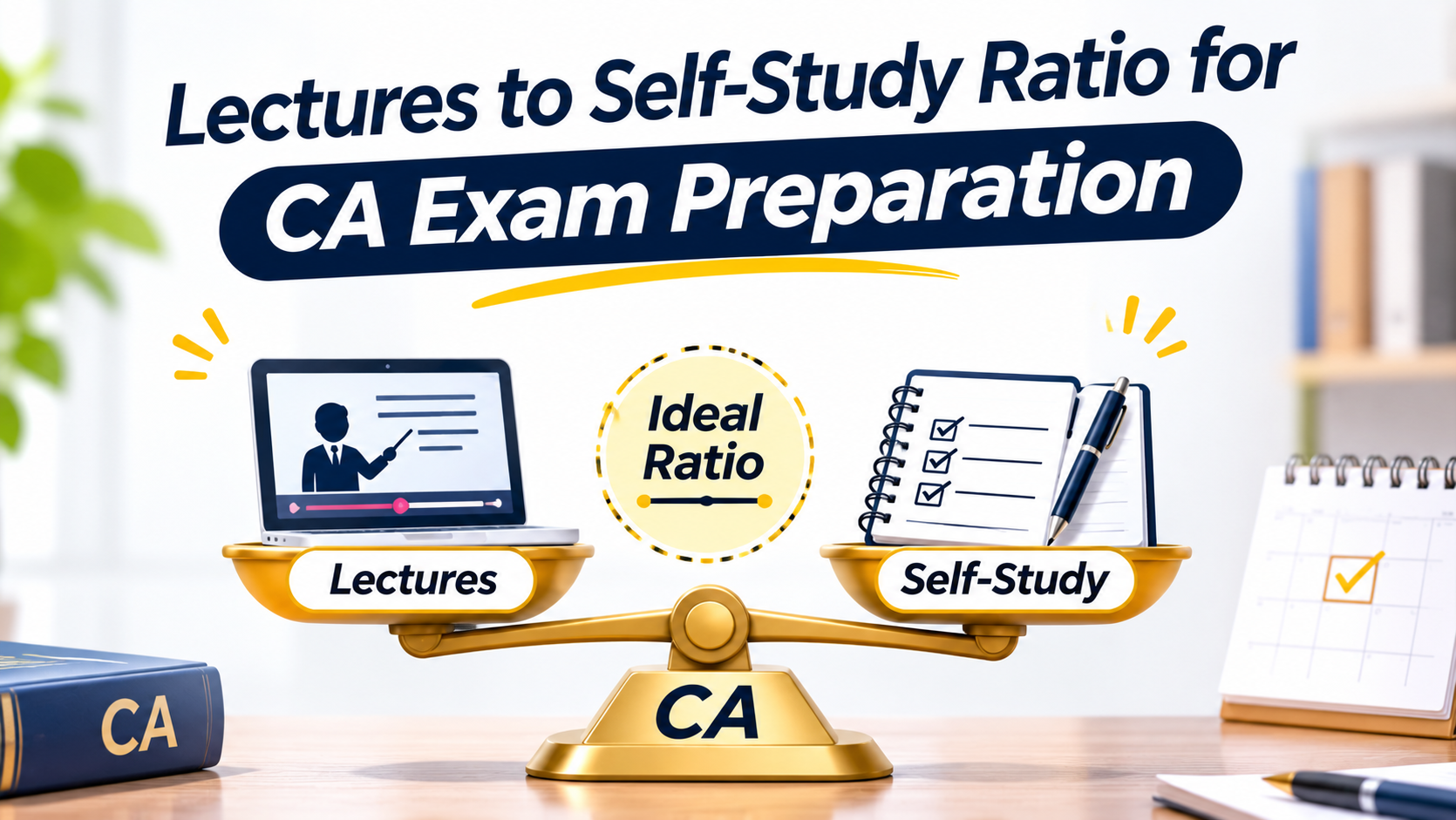
CA students often try to decide how many hours should go to lectures and how many should be reserved for self-study. It is tempting to follow a fixed ratio shared by another student, but the right balance depends on the subject, level of understanding, syllabus coverage and time remaining before the examination.
Lectures provide explanations and direction, while self-study turns those explanations into independent knowledge. If lecture hours dominate the timetable, students may finish classes without being able to solve questions. If self-study is planned without sufficient guidance, difficult concepts may remain unclear. The aim is to make both activities work together.
Understand the different purpose of lectures and self-study
Lectures introduce concepts, demonstrate methods and provide a sequence for learning. They can be especially useful when a topic is unfamiliar or requires detailed explanation. Students can ask questions and observe how an experienced teacher approaches a problem.
Self-study is where students revise, recall, solve questions and discover what they can do without assistance. It converts classroom understanding into the ability to answer an examination question independently. Neither activity should replace the other.
Why a fixed ratio may not work for everyone
A student beginning a subject may need more teaching support, while a student who has completed the syllabus may benefit from more revision and testing. Practical subjects may require extended problem-solving, while theory topics may need repeated recall and written practice.
Available time also matters. A student attending college or work may have fewer hours for lectures and must protect focused self-study blocks. Review actual progress rather than copying a timetable designed for someone with different commitments.
Use a flexible balance at the first-learning stage
When a topic is new, allocate enough time to understand the teacher's explanation and ask questions. However, schedule a follow-up session soon after the lecture. Revisit notes, summarise the concept and attempt a few related questions while the explanation is fresh.
If you cannot solve a basic question after class, identify the exact gap. Rewatching the entire lecture may not be necessary; a targeted review of the relevant concept followed by practice may be more efficient.
| Selection factor | What to check |
|---|---|
| Faculty and teaching | Subject expertise, clear explanations and sample classes |
| Learning support | Doubt-solving, study material and syllabus alignment |
| Assessment | Chapter tests, mock exams and useful feedback |
| Practical fit | Batch timing, commute, batch size and total cost |
| Independent work | Enough time for revision and question practice |
Increase independent practice as concepts become familiar
Once the basic concept is clear, reduce repeated lecture viewing and spend more time solving questions. Attempt problems before checking solutions, and explain why a particular method or provision applies.
Use lecture time selectively for difficult areas, new topics and unresolved doubts. This prevents the timetable from becoming a long sequence of classes with too little opportunity to apply what has been taught.
Make revision a separate part of self-study
Self-study should not mean only completing homework. Include short revision sessions that revisit earlier topics. Use active recall, summary sheets and question practice to check whether you can retrieve concepts after a gap.
Schedule revision soon after a lecture, again after a few days and later during cumulative review. Adjust intervals according to recall and topic difficulty. The important point is to revisit material rather than leave it untouched.
Adjust the balance for practical and theory subjects
For practical papers, students need time to solve fresh questions, practise calculations and review mistakes. Watching a teacher solve many examples may create familiarity, but independent attempts reveal whether the method has been understood.
For theory papers, lectures can clarify provisions and concepts, while self-study should include recall and written answers. Reading the same paragraph repeatedly is less useful than closing the book and explaining the point in your own words.
Plan around the stage of exam preparation
During initial coverage, lectures and concept learning may take a larger share of study time. During consolidation, balance class learning with chapter practice and revision. In the final stage, prioritise recall, mock tests, error correction and focused doubt-solving.
Do not continue the same timetable throughout the preparation cycle. Review syllabus position every week and shift time towards the activity that currently limits progress. A flexible plan responds to learning needs.
Recognise signs that lecture time is too high
If you have completed many lectures but struggle to solve basic questions without notes, your schedule may need more independent practice. Other warning signs include growing backlogs, repeated passive note-taking and little time to revise completed chapters.
Pause additional content where appropriate and consolidate what you have studied. Ask whether you can explain the concept, solve a fresh question and identify common mistakes. These are better indicators of progress than the number of videos completed.
Recognise signs that you need more teaching support
If the same concept remains unclear after several attempts, you may need a different explanation or help from a teacher. Repeatedly guessing at a method can waste time and reinforce errors.
Write a specific doubt and take it to faculty or an appropriate support channel. After receiving an explanation, solve a similar question independently. The goal is to return to self-study with clearer understanding.
How CA Exams Test Series helps maintain the balance
A test series checks whether lecture learning and self-study are producing examination readiness. Timed attempts reveal gaps in recall, application, speed and presentation that may not be obvious during class.
CA Exams Test Series can be scheduled after suitable syllabus coverage and used as a checkpoint. Analyse the result before deciding whether the next block should involve another lecture, targeted revision or more question practice.
Frequently Asked Questions
What is the ideal lecture-to-self-study ratio for CA exams?
There is no universal ratio. It depends on syllabus stage, subject difficulty, prior understanding and available time. Review progress and adjust the balance regularly.
Are lectures more important than self-study?
Both serve different purposes. Lectures explain concepts, while self-study builds recall and independent problem-solving. Students need both for effective preparation.
Should I study after every CA lecture?
Yes. A short review and question-practice session soon after class helps consolidate the topic and identify doubts early.
Should I reduce lectures after completing the syllabus?
Usually, the focus should shift towards revision, question practice and tests. Use additional lectures selectively for unresolved concepts or updates.
How much self-study do practical subjects need?
Practical subjects require substantial independent problem-solving. Attempt fresh questions and review methods rather than only watching solved examples.
How should I balance lectures and theory revision?
Use lectures to clarify concepts and self-study for recall, short notes and written answers. Revisit topics regularly to strengthen retention.
What if I have a lecture backlog?
Prioritise essential lessons, set a realistic recovery target and protect time for revision and question practice. Avoid allowing new lectures to create an unmanageable backlog.
How do I know if I rely too much on lectures?
If you cannot solve questions without assistance despite completing many classes, increase independent practice and review the specific concepts causing difficulty.
When should I take mock tests?
Start chapter tests after suitable topic coverage and add cumulative or full-length tests as preparation progresses. Always reserve time to analyse results.
How can CA Exams Test Series help?
Timed tests and performance feedback help measure whether lecture learning and self-study translate into independent exam performance.