Table of contentsShowHide
- 1.A fixed routine supports consistent study
- 2.Direct interaction makes doubts easier to raise
- 3.Faculty can explain difficult concepts progressively
- 4.Peer learning can broaden understanding
- 5.Immediate feedback can correct misunderstandings
- 6.Classroom tests create regular checkpoints
- 7.A shared learning environment can improve motivation
- 8.Classroom learning can support answer-writing habits
- 9.Make classroom hours productive with follow-up study
- 10.How CA Exams Test Series complements classroom learning
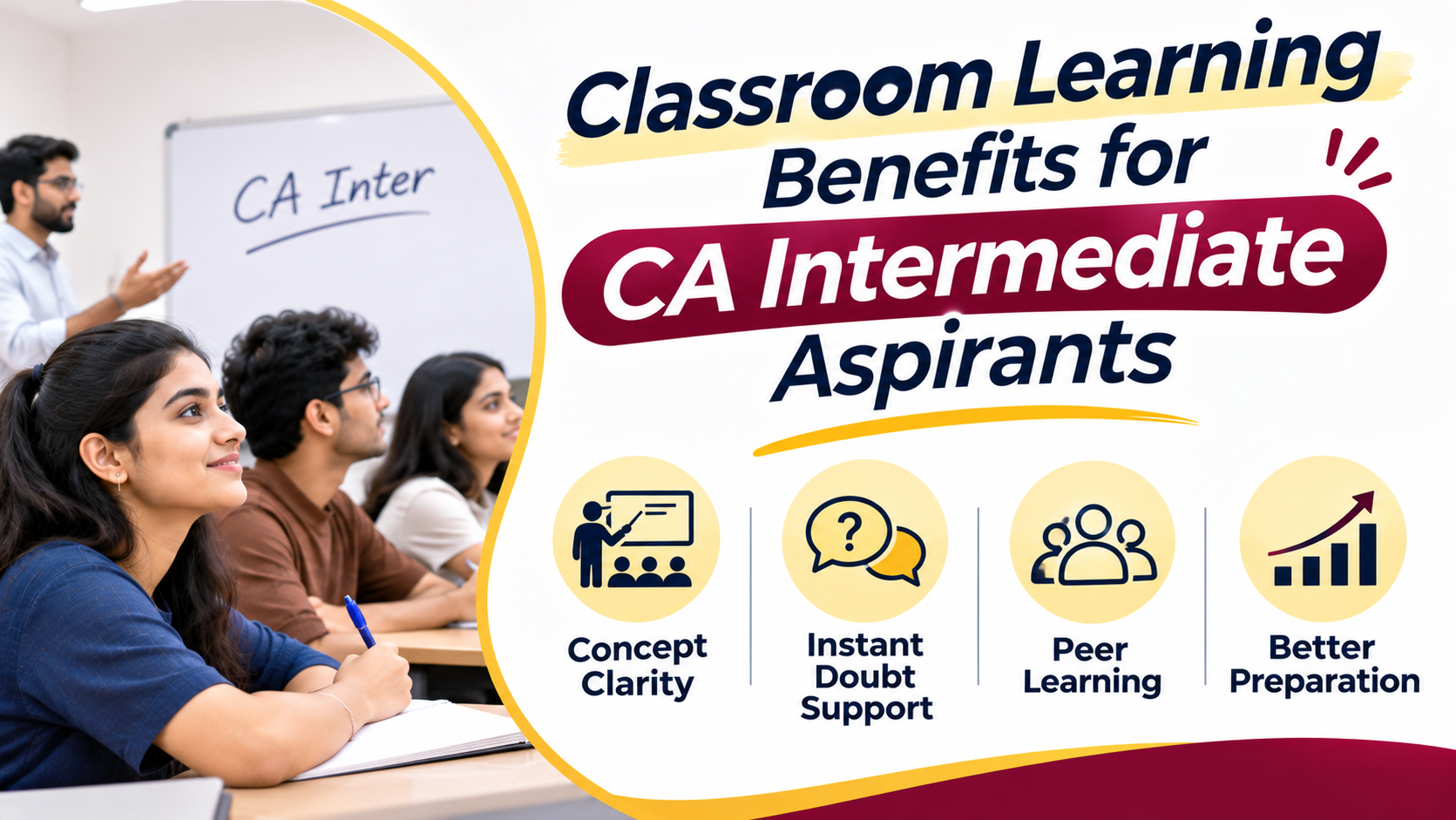
CA Intermediate introduces students to subjects that demand stronger conceptual understanding, application and regular practice. For some aspirants, classroom learning provides a structured environment in which they can follow a timetable, interact with faculty and learn difficult topics through guided explanations. It can also create a routine that is harder to maintain through independent study alone.
Classroom coaching is not automatically the right choice for every student. Its value depends on teaching quality, class structure and the amount of independent work students complete afterwards. This guide explains the practical benefits of classroom learning and how CA Intermediate aspirants can make the most of it.
A fixed routine supports consistent study
Scheduled classes give students a regular time and place for learning. This can be useful for aspirants who find it difficult to begin studying independently or who need external structure to keep different subjects moving forward.
A fixed routine also creates a natural sequence for syllabus coverage. Students can plan revision and homework around class timings, provided they avoid treating attendance as the only measure of preparation.
Direct interaction makes doubts easier to raise
In a classroom, students can ask questions while a concept is being explained and receive clarification in the same session. A teacher may notice confusion and explain the point through another example or a different approach.
Students should prepare specific doubts instead of waiting until an entire chapter becomes difficult. Note the exact step, term or condition that is unclear. This makes classroom interaction more productive.
Faculty can explain difficult concepts progressively
CA Intermediate subjects may contain unfamiliar technical concepts, detailed provisions and multi-step calculations. A faculty member can break these into smaller parts, explain the underlying logic and show how each part connects with the next.
Students benefit when the teacher demonstrates a method and then asks them to attempt a similar question. This gradual movement from explanation to independent work helps build confidence without encouraging passive learning.
| Selection factor | What to check |
|---|---|
| Faculty and teaching | Subject expertise, clear explanations and sample classes |
| Learning support | Doubt-solving, study material and syllabus alignment |
| Assessment | Chapter tests, mock exams and useful feedback |
| Practical fit | Batch timing, commute, batch size and total cost |
| Independent work | Enough time for revision and question practice |
Peer learning can broaden understanding
Classroom discussions expose students to different questions and ways of thinking. A classmate may raise a doubt that others had not considered, prompting the teacher to explain an exception or an alternative method.
Peer discussion should remain focused on understanding and practice. Comparing preparation hours or worrying about another student's progress can be distracting. Use the classroom environment to exchange explanations and learn from mistakes.
Immediate feedback can correct misunderstandings
When students attempt questions during class, faculty can identify errors in reasoning, calculations or interpretation. Early correction is useful because an incorrect method can become a habit if repeated without review.
Ask why a step is incorrect and what clue in the question should have guided the approach. Understanding the reason for an error makes it easier to avoid the same mistake in later chapters.
Classroom tests create regular checkpoints
Chapter tests and periodic assessments can encourage students to revise topics before moving too far ahead. They also show whether students can apply what was taught without relying on the teacher's explanation.
Check whether the coaching programme provides feedback after tests. A score is only one part of evaluation. Students should understand which topics were weak and whether the issue involved knowledge, time management or answer presentation.
A shared learning environment can improve motivation
Studying alongside other aspirants may help students feel connected to a common goal. Regular attendance and group discussion can provide encouragement during a demanding preparation period.
Motivation should not depend entirely on the class environment. Students still need personal targets and independent routines for days when classes are not scheduled. Use peer support positively without turning preparation into competition.
Classroom learning can support answer-writing habits
Faculty can demonstrate how to read requirements, organise points, present workings and manage time. Students can observe how an answer is structured and practise similar responses under guidance.
The next step is to write answers independently. Reproduce the method in your own practice, then compare your response with feedback. Merely copying classroom notes does not develop examination writing skill.
Make classroom hours productive with follow-up study
Before class, review the previous topic and note doubts. During class, focus on explanations and examples rather than copying every word. After class, revise the lesson and solve questions without looking at the solution.
Keep a weekly record of chapters covered, questions attempted and topics requiring more help. This turns classroom learning into a complete cycle of explanation, application and review.
How CA Exams Test Series complements classroom learning
Classroom teaching provides guidance, while mock tests check whether students can use that learning independently under examination conditions. Timed practice helps reveal gaps in speed, recall and presentation.
CA Exams Test Series can complement classroom preparation with structured tests and performance review. Use results to decide which topics need further explanation, revision or additional question practice.
Frequently Asked Questions
What are the benefits of classroom learning for CA Intermediate?
Classroom learning can provide a fixed routine, direct faculty interaction, peer discussion, guided explanations and regular assessment. Students still need independent revision and practice.
Is classroom coaching necessary for CA Intermediate?
No. Students can choose classroom, online or self-study approaches depending on their learning needs, access to guidance and ability to remain consistent.
How does classroom learning help with difficult subjects?
Faculty can explain concepts progressively, demonstrate methods and address doubts. Students can then practise similar questions independently.
Does classroom coaching improve discipline?
Scheduled classes can create structure and accountability. Students must still plan homework, revision and practice outside class.
Can peer learning help CA Intermediate students?
Yes. Focused discussion can expose students to different questions and explanations. Avoid comparisons that distract from individual preparation.
What should I do before attending a class?
Review the previous topic, read the upcoming chapter briefly if possible and note specific doubts. This helps you follow the lesson more actively.
Is attending class enough to prepare for CA Intermediate?
No. Class attendance must be followed by self-study, question practice, revision and mock tests to build independent exam readiness.
How can I make classroom notes useful?
Write concise explanations, examples and doubts. Review the notes after class and add corrections when you solve questions independently.
Why are classroom tests important?
They provide checkpoints for understanding and application. Reviewing mistakes helps students identify weak topics and improve their approach.
How can CA Exams Test Series support classroom students?
A test series adds timed examination practice and performance feedback, helping students assess whether classroom learning transfers to independent answers.