Table of contentsShowHide
- 1.Why doubt-solving matters for difficult CA topics
- 2.Recognise whether the doubt is conceptual or practical
- 3.Prepare questions before a doubt session
- 4.Ask focused questions and share your working
- 5.Use examples to confirm the explanation
- 6.Maintain a personal doubt register
- 7.Revise resolved doubts through active recall
- 8.Use test errors to discover hidden doubts
- 9.Schedule weekly follow-up and practice
- 10.Avoid common doubt-solving mistakes
- 11.Quick Reference Table
- 12.Conclusion
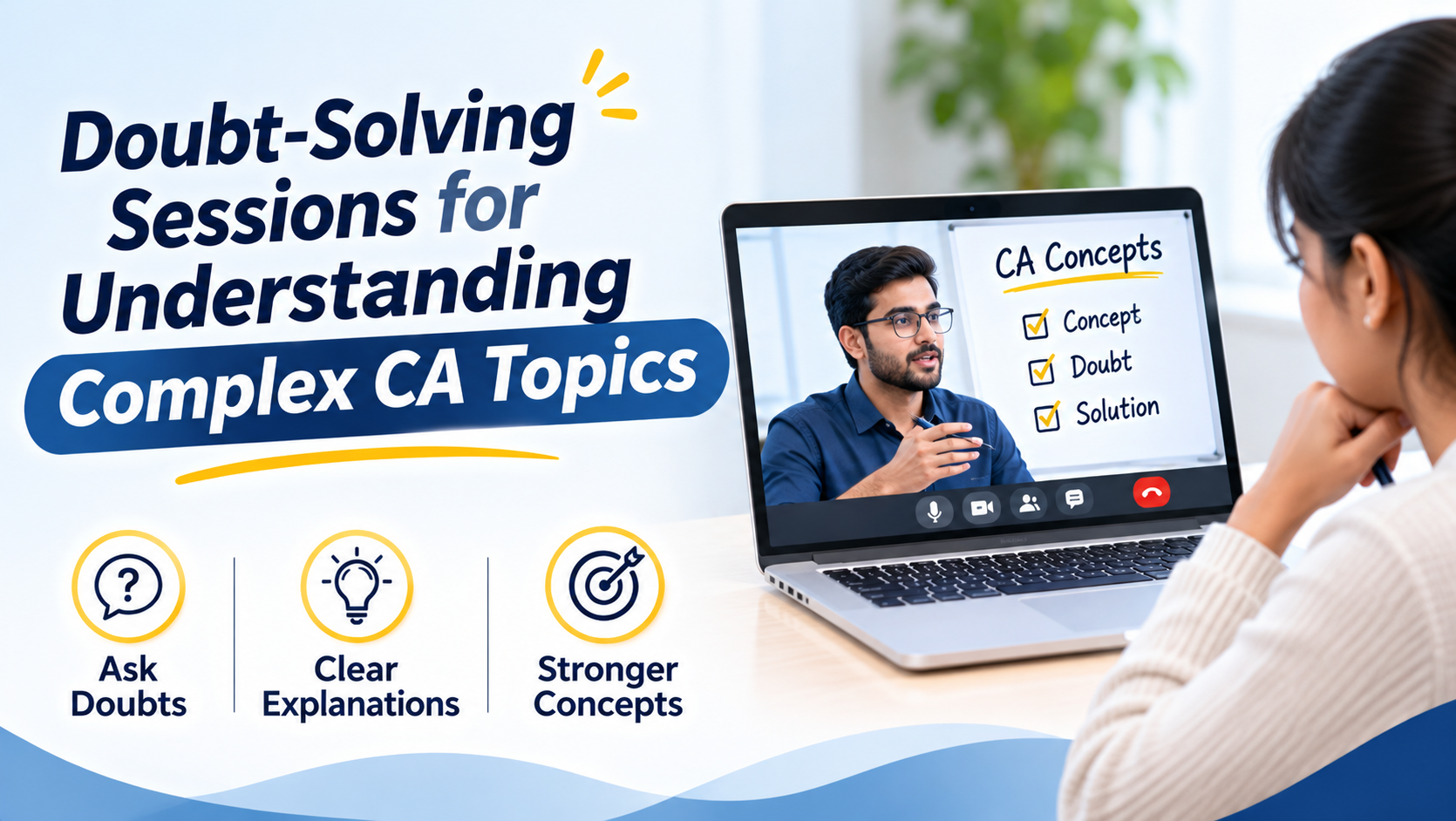
Doubt-Solving Sessions for Understanding Complex CA Topics is an important part of planning effective Chartered Accountancy preparation. Students often find that effort alone is not enough: the way they organise learning, practice and revision determines how confidently they can answer questions.
This guide explains a practical approach that students can adapt to their course level and timetable. CA Exams Test Series can provide structured practice checkpoints, while the latest applicable ICAI study material remains the primary reference for syllabus and examination requirements.
Why doubt-solving matters for difficult CA topics
Identify the precise point where the logic stops. A complex topic may contain several rules that seem easy separately but become confusing when combined in a question.
For doubt-solving sessions for understanding complex ca topics, turn this advice into a specific action rather than a vague intention. Decide which chapter or skill needs attention, allocate a realistic session and check the result with closed-book recall or a question attempted without assistance. Keep the relevant notes concise and verify technical details from the current official material.
Recognise whether the doubt is conceptual or practical
Classify whether you have forgotten a definition, misunderstood a condition, selected the wrong treatment, made a calculation error or struggled to write the answer.
The next step is to review the outcome honestly. If the method did not help you answer a new question, identify whether the problem was understanding, memory, application, presentation or time management. Change the practice task accordingly and revisit it after a short interval instead of repeating the same activity without feedback.
Prepare questions before a doubt session
Attempt the chapter and one relevant question before asking for help. Bring your workings, the applicable study-material reference and a clear description of what you tried.
For doubt-solving sessions for understanding complex ca topics, turn this advice into a specific action rather than a vague intention. Decide which chapter or skill needs attention, allocate a realistic session and check the result with closed-book recall or a question attempted without assistance. Keep the relevant notes concise and verify technical details from the current official material.
Ask focused questions and share your working
A specific question such as why an adjustment changes the final treatment is easier to resolve than saying an entire chapter is confusing. Explain your reasoning so the teacher can identify the gap.
The next step is to review the outcome honestly. If the method did not help you answer a new question, identify whether the problem was understanding, memory, application, presentation or time management. Change the practice task accordingly and revisit it after a short interval instead of repeating the same activity without feedback.
Use examples to confirm the explanation
After the explanation, solve a fresh variation without looking at the solution. Change a condition or figure and explain why the result changes.
For doubt-solving sessions for understanding complex ca topics, turn this advice into a specific action rather than a vague intention. Decide which chapter or skill needs attention, allocate a realistic session and check the result with closed-book recall or a question attempted without assistance. Keep the relevant notes concise and verify technical details from the current official material.
Maintain a personal doubt register
Record the topic, question, explanation, source and follow-up action. Keep entries short enough to revisit and mark questions that remain unresolved.
The next step is to review the outcome honestly. If the method did not help you answer a new question, identify whether the problem was understanding, memory, application, presentation or time management. Change the practice task accordingly and revisit it after a short interval instead of repeating the same activity without feedback.
Revise resolved doubts through active recall
Close the notes and reproduce the explanation in your own words. Revisit the same concept after several days and attempt another question to test retention.
For doubt-solving sessions for understanding complex ca topics, turn this advice into a specific action rather than a vague intention. Decide which chapter or skill needs attention, allocate a realistic session and check the result with closed-book recall or a question attempted without assistance. Keep the relevant notes concise and verify technical details from the current official material.
Use test errors to discover hidden doubts
A mock test can reveal weak application, missing conditions and incomplete answers that ordinary reading does not expose. Analyse recurring mistakes rather than looking only at marks.
The next step is to review the outcome honestly. If the method did not help you answer a new question, identify whether the problem was understanding, memory, application, presentation or time management. Change the practice task accordingly and revisit it after a short interval instead of repeating the same activity without feedback.
Schedule weekly follow-up and practice
Reserve time each week for pending questions, clarification and retesting. Prioritise doubts that block further chapters or recur across several practice attempts.
For doubt-solving sessions for understanding complex ca topics, turn this advice into a specific action rather than a vague intention. Decide which chapter or skill needs attention, allocate a realistic session and check the result with closed-book recall or a question attempted without assistance. Keep the relevant notes concise and verify technical details from the current official material.
Avoid common doubt-solving mistakes
Do not treat an explained answer as mastered until you can solve a related question independently. Avoid collecting solutions without revisiting them.
The next step is to review the outcome honestly. If the method did not help you answer a new question, identify whether the problem was understanding, memory, application, presentation or time management. Change the practice task accordingly and revisit it after a short interval instead of repeating the same activity without feedback.
Quick Reference Table
| Preparation activity | Suggested action | Evidence of progress |
|---|---|---|
| Initial learning | Understand a selected topic | Explain main points |
| Practice | Attempt relevant questions | Mark errors and corrections |
| Revision | Use active recall | Reproduce without notes |
| Assessment | Review a timed test | Set improvement targets |
Conclusion
Effective preparation combines understanding, targeted practice and regular review. Use the methods that address your actual weak areas and keep the schedule flexible enough to improve as you learn.
Frequently Asked Questions
It helps students organise their preparation and connect learning with measurable outcomes. The method works best when followed by independent questions, active recall and an honest review of weak areas rather than relying only on time spent studying.
Start when the activity becomes relevant to your syllabus coverage and timetable. Review the decision regularly as the examination approaches, allowing time for practice, revision and any compulsory academic commitments.
Choose one manageable topic, define a clear task and check the result through a short self-test. Keep notes simple, ask focused questions when necessary and gradually expand the routine as confidence improves.
Foundation students should focus on understanding basic concepts and developing accuracy. Use short practice tasks and frequent recall, then build towards timed questions once enough of the relevant syllabus has been covered.
Intermediate students should balance several subjects and give additional attention to weak concepts. Use chapter and sectional practice to identify gaps while continuing regular revision of topics that have already been studied.
Final students may need to connect complex concepts and practise complete answers under time limits. Prioritise accurate reasoning, current applicable material, question analysis and repeated correction of recurring errors.
Avoid copying another student’s timetable, counting activity as mastery and postponing all revision. Also avoid collecting notes or tests without reviewing them. Make each session lead to a clear learning or practice outcome.
Use closed-book recall, fresh questions and timed tests. Compare errors and completion time across attempts, and check whether the same weakness continues after targeted revision and practice.
A short weekly review is a useful starting point, with additional checks after significant tests or difficult chapters. Adjust the frequency according to the workload and the number of unresolved topics.
CA Exams Test Series can provide structured examination-style practice and feedback. Students can use the findings to identify weak topics, improve time allocation and plan more focused revision before their next attempt.