Table of contentsShowHide
- 1.Measure Learning by Understanding, Not Video Hours
- 2.Set a Realistic Daily Lecture Target
- 3.Choose Playback Speed According to Topic Difficulty
- 4.Pause with a Clear Purpose
- 5.Use Short Learning Blocks and Planned Breaks
- 6.Combine Lectures with Active Recall
- 7.Manage Difficult Topics Without Getting Stuck
- 8.Keep a Lecture Progress Tracker
- 9.Avoid the Trap of Watching Lectures in Bulk
- 10.Connect Online Learning with Exam Practice
- 11.Quick Reference Table
- 12.Conclusion
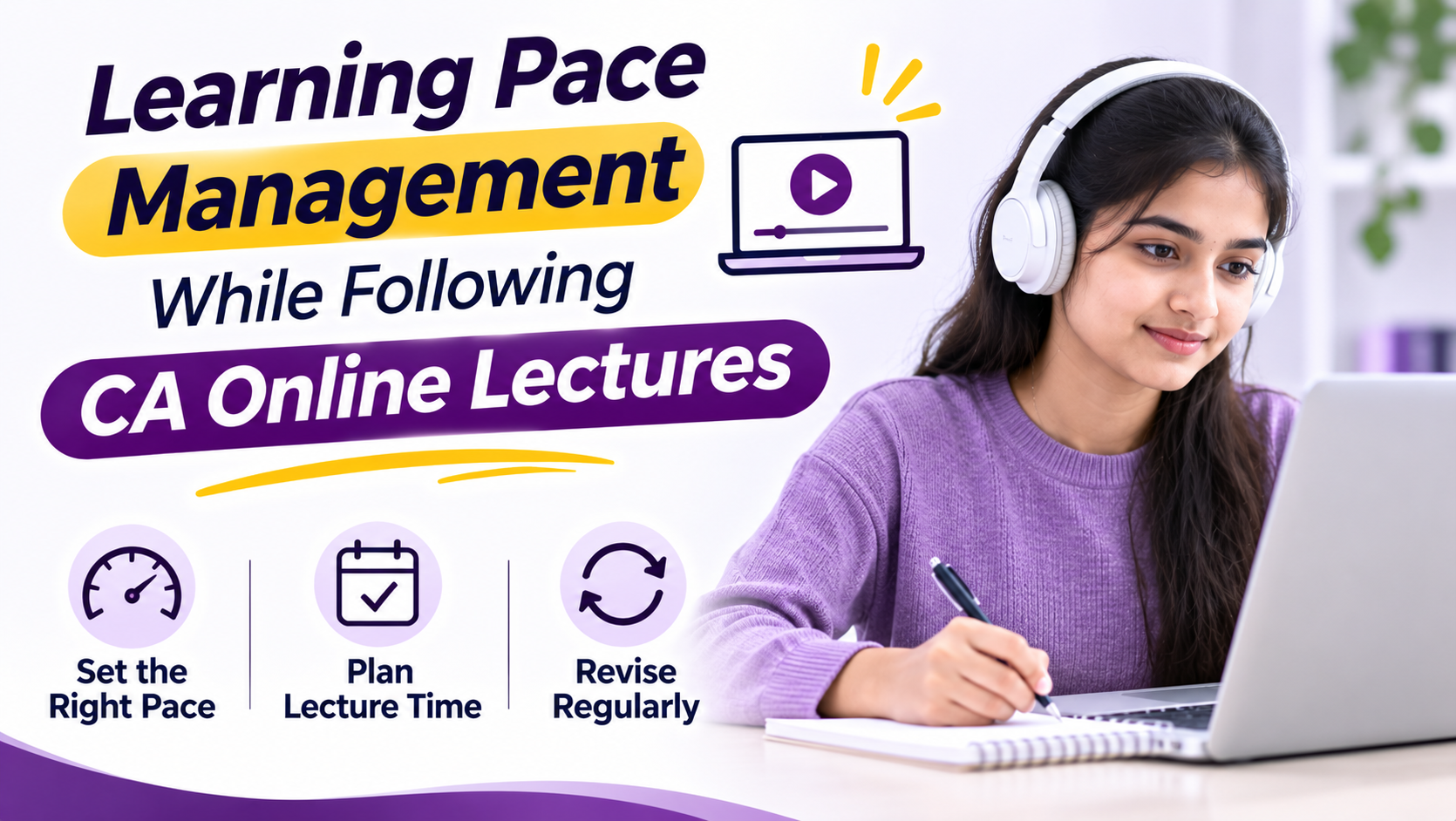
The right pace is not the fastest playback speed. It is the speed at which you can understand the explanation, make useful notes, solve related questions and remember the concept later. A planned routine helps you use online classes without turning video completion into the only measure of progress.
Measure Learning by Understanding, Not Video Hours
Completing a lecture does not necessarily mean that you have learnt the topic. After a session, you should be able to explain the main concept, identify its important conditions and attempt a basic question without depending entirely on the video.
Track topics understood and questions solved alongside lecture hours. This gives a more realistic picture of progress and helps you identify when you are moving too quickly or spending too long on one explanation.
Set a Realistic Daily Lecture Target
Divide the available study time between lectures, revision and practice. Avoid planning a full day around continuous video watching. Long lecture blocks can reduce attention and leave little time to apply what you have heard.
Estimate lecture time using the actual duration and your expected pauses. A difficult practical chapter may require more time than a familiar theory topic. Build a buffer rather than assuming every video will take exactly its recorded duration.
Choose Playback Speed According to Topic Difficulty
Use normal speed when a faculty member is introducing a new concept, explaining a complex adjustment or working through a detailed numerical problem. A slightly faster speed may be suitable for familiar explanations or revision, provided you can follow every step.
Do not increase speed simply to meet a target. If you repeatedly rewind or cannot explain the point afterwards, return to a slower pace. The objective is comprehension, not the number shown on the video player.
Pause with a Clear Purpose
Pause when you need to solve a question yourself, write a formula, compare two provisions or summarise a difficult explanation. Avoid stopping after every sentence to copy notes. Excessive pauses can interrupt the flow and make it harder to understand how ideas connect.
Before resuming, state what you have understood and what remains unclear. This small check keeps you engaged and prevents passive viewing.
Use Short Learning Blocks and Planned Breaks
Break long sessions into manageable blocks. After one focused lecture segment, take a short break, review the key points and attempt a related question. The length of each block can vary depending on your concentration and the subject.
Do not use breaks to drift into unrelated screen activity. Step away from the screen, stretch or get water, then return with a clear next task.
Combine Lectures with Active Recall
At the end of a topic, close the video and notes. Try to explain the concept, reproduce the main formula or outline the steps of a solution. This reveals whether you understood the lecture or only recognised the explanation while watching it.
If recall is weak, revisit the exact section rather than replaying the entire lecture. Make a brief correction note and test yourself again after some time.
Manage Difficult Topics Without Getting Stuck
When a topic feels difficult, identify the precise point causing trouble. It may be a missing basic concept, an unfamiliar term or a particular step in a practical solution. Review the prerequisite material before replaying the same explanation repeatedly.
Mark unresolved doubts and use the available faculty support or doubt-solving channel. Set a reasonable time limit for independent effort so that one topic does not consume the time allocated to every other subject.
Keep a Lecture Progress Tracker
Record the subject, chapter, lecture number, actual time spent, understanding level and next action. Use simple labels such as watched, understood, needs practice and doubt pending. This prevents you from confusing video completion with topic readiness.
Review the tracker every few days. If the same subject repeatedly falls behind, adjust your daily allocation or revisit the reason. You may need shorter lecture blocks, additional practice or help with foundational concepts.
Avoid the Trap of Watching Lectures in Bulk
Watching several lectures back-to-back can create a sense of progress, but information may not stay accessible if you do not review it. After each major topic, solve questions and revisit earlier concepts before moving too far ahead.
Use a weekly cycle that includes new lectures, revision of older topics and a test. This gives you regular opportunities to retrieve information and discover gaps before the examination.
Connect Online Learning with Exam Practice
Once you have covered a topic, attempt questions under a suitable time limit. Review the solution and identify whether errors came from misunderstanding, forgotten rules, calculation mistakes or poor time allocation.
CA Exams Test Series can form part of a structured practice routine after lectures and revision. Use test performance to decide whether you need to slow down, revisit a concept or move forward to the next topic.
Quick Reference Table
| Learning task | Suggested approach |
|---|---|
| New or difficult concept | Normal speed with purposeful pauses |
| Familiar explanation | Moderately faster playback if clear |
| Practical illustration | Pause and solve each major step |
| Revision lecture | Use focused segments and active recall |
| Unresolved doubt | Mark the timestamp and ask for help |
Conclusion
A useful preparation routine depends on consistency, honest review and practical adjustments. Keep your plan aligned with the applicable ICAI syllabus and official instructions, and use CA Exams Test Series as one part of a wider routine of learning, revision and question practice. The goal is to make every class, study session and test contribute to better understanding and more confident exam performance.
Frequently Asked Questions
What is the best speed for watching CA online lectures?
There is no ideal speed for every topic. Use a pace that allows you to understand the explanation and follow practical steps. Normal speed is often useful for new or difficult concepts, while familiar sections may allow faster playback.
Is watching CA lectures at 2x speed effective?
It may work for familiar revision content if comprehension remains strong. For new concepts or numerical illustrations, high speed can hide important reasoning. Check your understanding by explaining the topic and solving questions without the video.
How many hours of online lectures should I watch daily?
Set a target according to your available time, subject difficulty and syllabus position. Include separate blocks for revision and question practice. A realistic schedule that you can follow consistently is more useful than an excessive video-hour target.
Should I complete one subject's lectures before starting another?
That depends on your course plan and subject requirements. Many students benefit from rotating subjects so that earlier topics remain active. Follow a balanced schedule and avoid leaving a paper untouched for long periods.
When should I pause a CA online lecture?
Pause when you need to solve a question, write a key formula, summarise a complex idea or mark a doubt. Avoid pausing after every sentence. Use pauses to support learning rather than copying the entire lecture.
How can I know whether I have understood an online lecture?
Close the video and explain the concept in your own words. Then attempt a related question without looking at the solution. If you cannot recall the steps or apply the rule, revisit the specific section and practise again.
What should I do if I fall behind my online lecture schedule?
Review the pending lectures and prioritise them by syllabus importance and difficulty. Adjust the coming week's targets realistically, reduce unnecessary rewatching and keep time for revision. Do not try to clear the entire backlog in one sitting.
Are handwritten notes necessary for online CA lectures?
They are not compulsory, but concise notes can help with formulas, provisions, examples and doubts. Choose handwritten or digital notes based on what you can revise easily. Avoid writing so much that you stop following the explanation.
How should I revise after completing an online lecture?
Review the main points briefly, use active recall and solve questions related to the topic. Revisit difficult sections only where needed. Schedule another short review later so that the concept remains accessible beyond the day of viewing.
How can mock tests help students following online lectures?
Mock tests show whether lecture learning can be applied under exam conditions. Analyse errors by topic and type, then decide whether to revisit a lecture, revise notes or practise more questions before the next test.