Table of contentsShowHide
- 1.Why Chapter-Wise Practice Matters
- 2.Start With a Clear Syllabus Map
- 3.Set Priorities for Each Chapter
- 4.Follow a Learn-Practise-Review Cycle
- 5.Build a Weekly Practice Schedule
- 6.Use Different Question Types
- 7.Track Accuracy and Weak Areas
- 8.Revise Chapters at Planned Intervals
- 9.Common Planning Mistakes to Avoid
- 10.How a CA Test Series Supports Practice
- 11.Conclusion
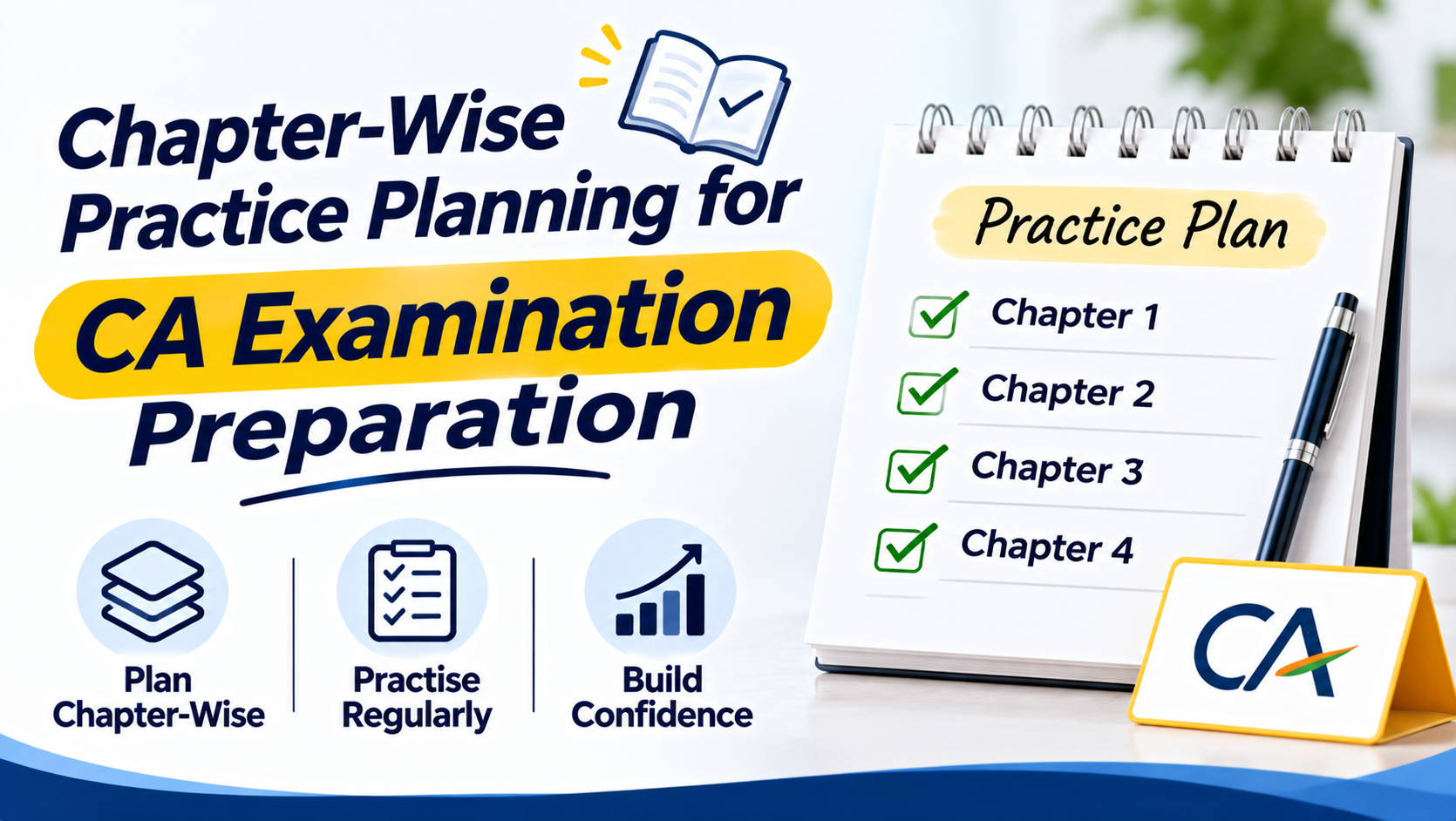
Preparing for a CA examination is not simply about finishing every chapter. Students also need enough practice to understand how concepts are tested, identify gaps and apply what they have learned under exam conditions. A chapter-wise plan makes this process manageable by breaking a large syllabus into smaller targets.
A useful plan connects learning, question practice, revision and performance review. Practise each chapter soon after studying it and revisit it at planned intervals. This builds confidence while keeping preparation aligned with examination demands.
Why Chapter-Wise Practice Matters
A chapter-wise plan breaks a large syllabus into manageable targets. It helps you distinguish between reading a chapter and being able to solve questions from it. That distinction matters in CA examinations, where students must apply concepts, interpret requirements and present answers within a limited time.
Smaller targets also make progress measurable. Instead of writing “study taxation”, decide which topic to revise, how many questions to attempt and when to review the result. This gives every study session a clear outcome.
Start With a Clear Syllabus Map
Use the latest ICAI syllabus and study material applicable to your level and attempt. List each subject and divide it into chapters and smaller topics where needed. Create a tracker with columns for first study, basic practice, advanced questions, revision, test score and pending doubts.
Use simple status labels such as Not Started, Learning, Practising, Needs Revision and Completed. A chapter should not be marked complete only because the lecture or reading is over. Include question practice and error review before closing it.
Set Priorities for Each Chapter
Prioritise chapters according to your understanding, size, connection with other topics and relevance to the current syllabus. A difficult foundational chapter may need early attention, while a familiar chapter may need shorter maintenance sessions. Do not rely only on assumptions about weightage; the distribution can change between attempts.
You can classify chapters as High, Medium or Maintenance priority. High-priority topics need focused learning and repeated practice. Medium-priority topics need application practice. Maintenance topics are reasonably secure but still require periodic revision.
Follow a Learn-Practise-Review Cycle
After studying a topic, close the book and recall the main points. Attempt basic questions without checking the solution. Move to application-based questions when the fundamentals are clear. Review correct answers too, because a correct result reached through guesswork may not be dependable.
For every mistake, record the reason: concept gap, memory lapse, calculation error, misreading or incomplete presentation. Write a short correction note and reattempt the question after a gap. This makes feedback part of learning rather than a one-time activity.
Build a Weekly Practice Schedule
A balanced week should include new chapter practice, revision of older topics and timed tests. For example, study a new topic early in the week, solve basic questions on the same day, attempt application questions the next day and revisit selected questions later. Keep a fixed weekly review slot to update the tracker and reset priorities.
| Day | Practice focus | Expected outcome |
|---|---|---|
| Monday | Study a topic and solve basics | Check concept clarity |
| Tuesday | Application questions | Improve problem solving |
| Wednesday | Revise an earlier chapter | Strengthen recall |
| Thursday | Mixed chapter questions | Practise topic selection |
| Friday | Timed chapter test | Build speed and accuracy |
| Saturday | Review errors and reattempt | Correct recurring mistakes |
| Sunday | Weekly review and planning | Set next-week priorities |
Adjust this pattern to your classes, work commitments and remaining preparation time. A realistic plan followed consistently is more useful than an ideal timetable that is repeatedly missed.
Use Different Question Types
Combine illustrations, objective questions where applicable, descriptive questions, case-based questions and past examination questions. Short questions test recall, while longer practical questions test application and working. For theory papers, practise writing structured answers rather than only reading model solutions.
Do not practise only familiar questions. Mix topics after the basics are secure so that you learn to identify the relevant concept without being told the chapter name. Use past papers to understand question styles, not as a promise that the same questions will repeat.
Track Accuracy and Weak Areas
Record more than the number of questions attempted. Note total questions, correct attempts, marks earned, time taken and error categories. If accuracy is good but time is high, practise efficient methods. If speed is high but accuracy falls, slow down to read requirements and verify calculations.
Review patterns across several sessions. Use the data to choose your next action, not to label yourself as good or weak at a subject. A repeated error deserves a focused correction session.
Revise Chapters at Planned Intervals
A chapter needs repeated encounters. Revisit key concepts after a short gap, then during weekly and monthly revision. Topics that are difficult or easily forgotten may need more frequent retrieval practice.
During revision, try solving selected questions before opening your notes. Write formulas, steps or provisions from memory and then check for omissions. This active approach shows what you can retrieve independently.
Common Planning Mistakes to Avoid
Do not spend more time designing a timetable than practising questions. Avoid treating every chapter equally when your understanding and workload differ. Do not postpone all testing until the syllabus is complete; short chapter tests can begin early, followed by cumulative and full-length papers.
Also avoid marking a chapter complete without reviewing mistakes. A tracker is useful only when it reflects actual ability to solve questions and when weak areas lead to further practice.
How a CA Test Series Supports Practice
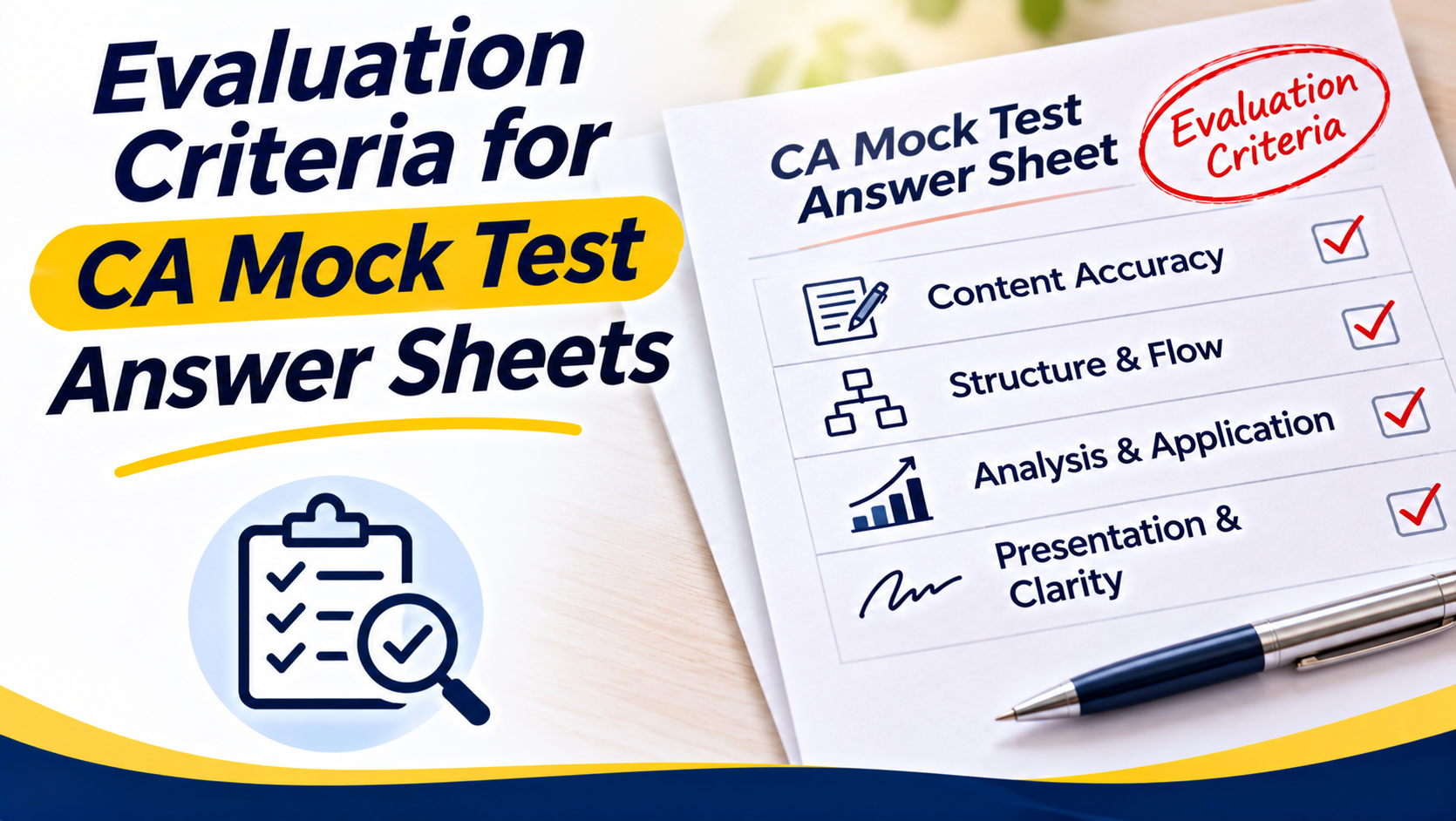
A structured CA test series adds assessment to chapter-wise preparation. Chapter tests check understanding soon after learning, while cumulative tests show whether earlier topics can still be applied. Evaluation can highlight gaps in working, accuracy, time use and presentation.
Use the results as feedback rather than focusing only on the score. CA Exams Test Series can complement ICAI study material, revision notes and past-paper practice. The value comes from reviewing each assessment and using it to decide what to practise next.
Conclusion
Chapter-wise practice turns a large CA syllabus into clear learning and assessment goals. Map the syllabus, prioritise sensibly, practise after studying, review errors and revisit chapters at planned intervals. Measure progress by how well you solve and explain questions, not only by how many pages you have covered.
Frequently Asked Questions
How should I start chapter-wise practice for CA exams?
Begin with the latest syllabus for your level and attempt. Divide each subject into chapters, study one topic at a time, solve basic questions and then move to application-based practice. Review mistakes before marking a chapter complete.
Should I practise questions immediately after studying a chapter?
Yes. Solving questions soon after studying checks whether you can apply the concept independently. Start with basic questions, review the method and gradually attempt mixed or exam-style questions as your understanding improves.
How many questions should I solve from each chapter?
There is no fixed number for every chapter. The required practice depends on chapter size, question variety and your accuracy. Cover different question types and continue until you can solve representative questions without relying on solutions.
Is chapter-wise practice enough for CA examination preparation?
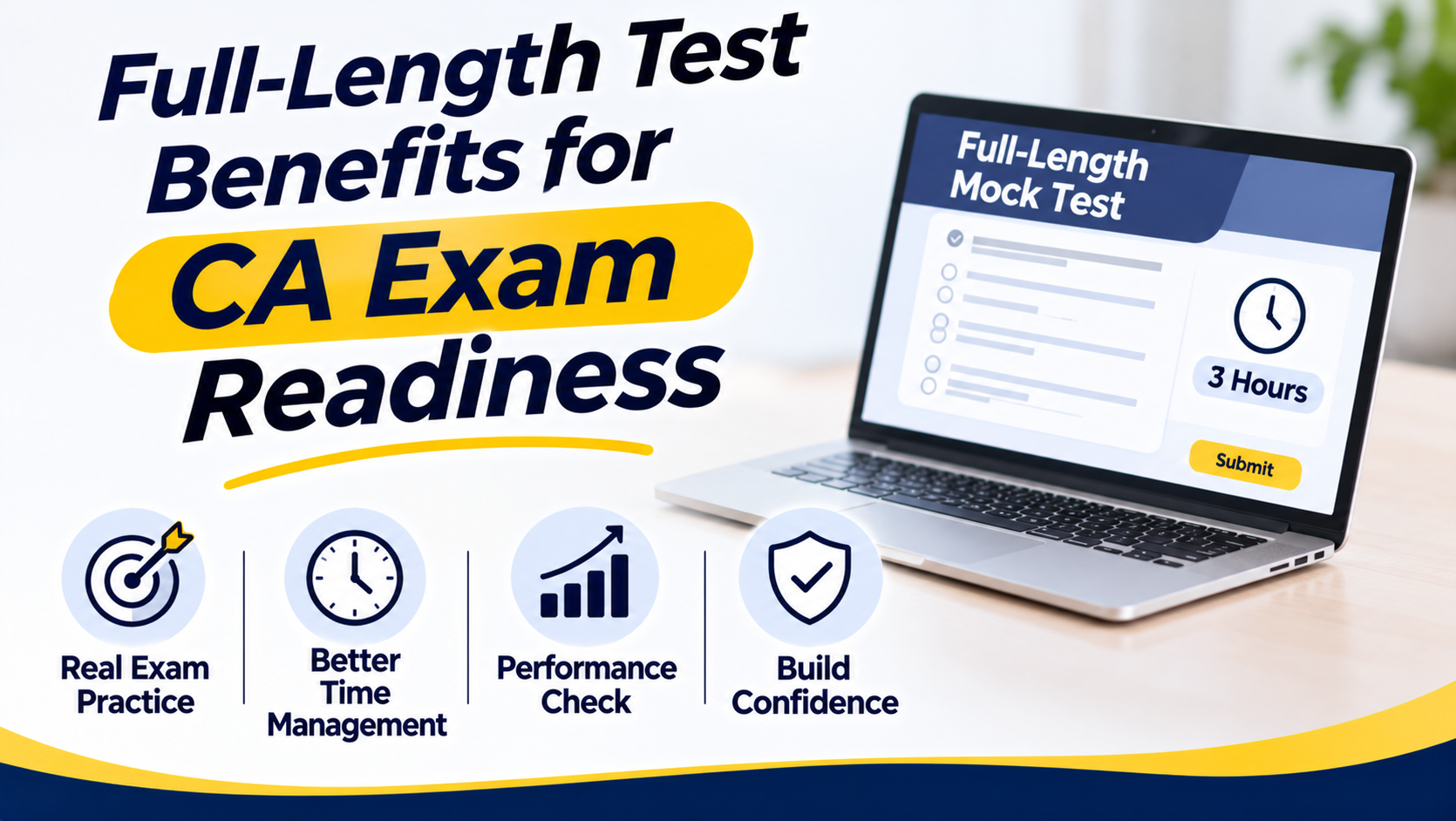
Chapter-wise practice builds topic-level understanding, but combine it with cumulative tests, revision and full-length mock examinations. Mixed practice is important because the actual paper may require you to identify concepts without chapter headings.
How can I decide which chapter to practise first?
Consider your understanding, chapter size, links with other topics and the applicable syllabus. Prioritise difficult or foundational chapters, but maintain regular revision of familiar topics so earlier learning remains active.
Should I use past CA examination papers for chapter practice?
Past papers help you understand question styles and apply concepts in an exam context. Use them with the current syllabus and official study material, and do not assume that the same questions or weightage will repeat.
How can I track chapter-wise preparation?
Maintain a tracker with study status, questions attempted, accuracy, time taken, revision dates and pending doubts. Add a short error category after each test so your next practice session addresses a specific weakness.
When should I take a chapter-wise mock test?
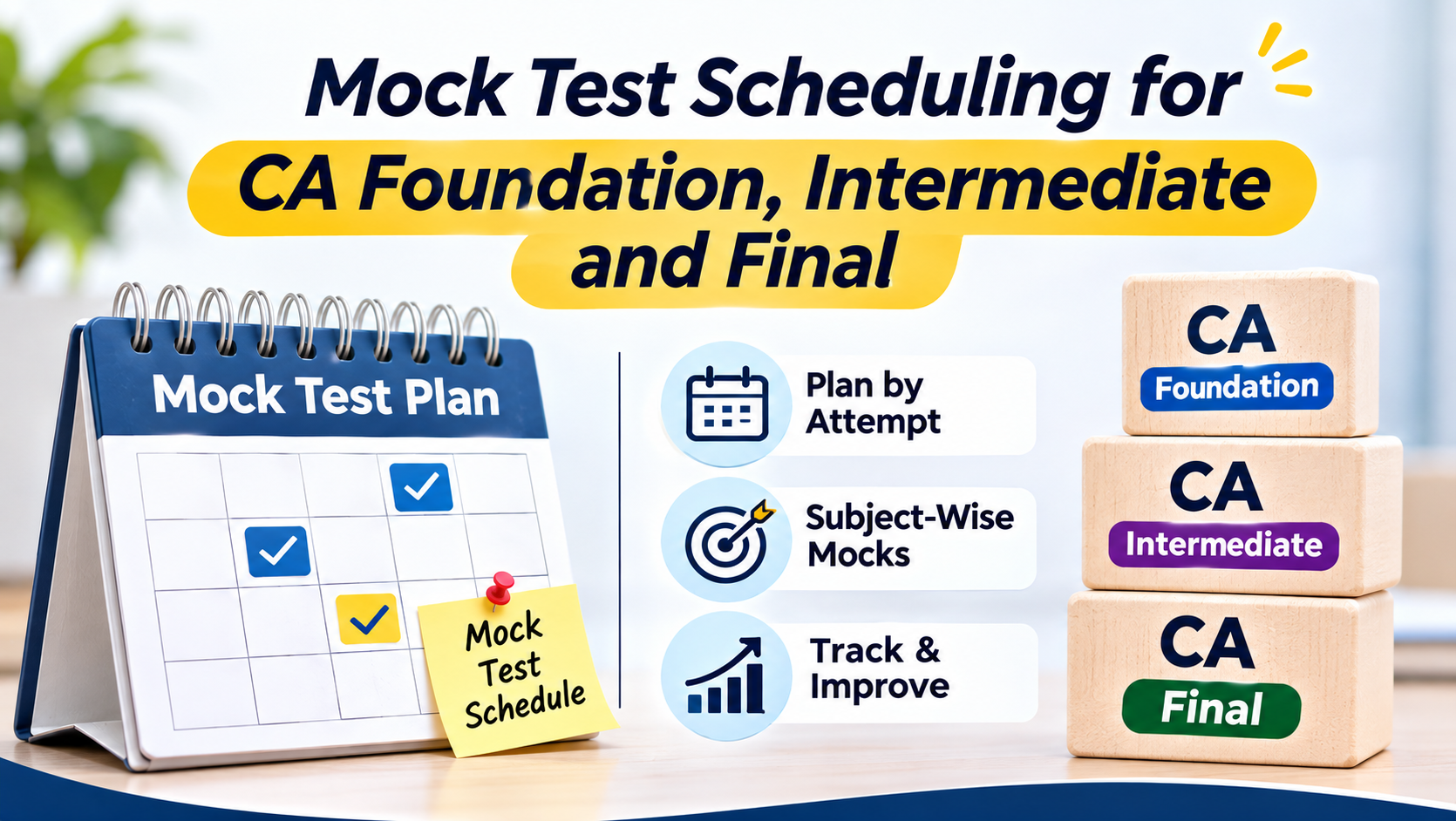
Take a short test after completing the main concepts and basic practice of a chapter. Later, attempt cumulative tests covering several chapters to check retention and improve topic selection.
What should I do if I repeatedly make mistakes in one chapter?
Identify whether the problem is conceptual, memory-related, calculation-based or due to presentation. Revisit the relevant concept, solve targeted questions and reattempt earlier incorrect questions after a gap.
Can a CA test series be used along with self-study?
Yes. A CA test series can complement self-study with timed practice, evaluation and performance feedback. Continue using ICAI material as your core resource and use test results to plan revision.