
Table of contentsShowHide
- 1.Set targets that describe an outcome
- 2.Daily targets for CA Foundation students
- 3.Daily targets for CA Intermediate students
- 4.Daily targets for CA Final students
- 5.Use a simple daily structure
- 6.Balance learning, practice and revision
- 7.Use realistic time estimates
- 8.Track completion and learning quality
- 9.Plan for missed targets
- 10.Use weekly and monthly checkpoints
- 11.Use CA Exams Test Series to measure progress
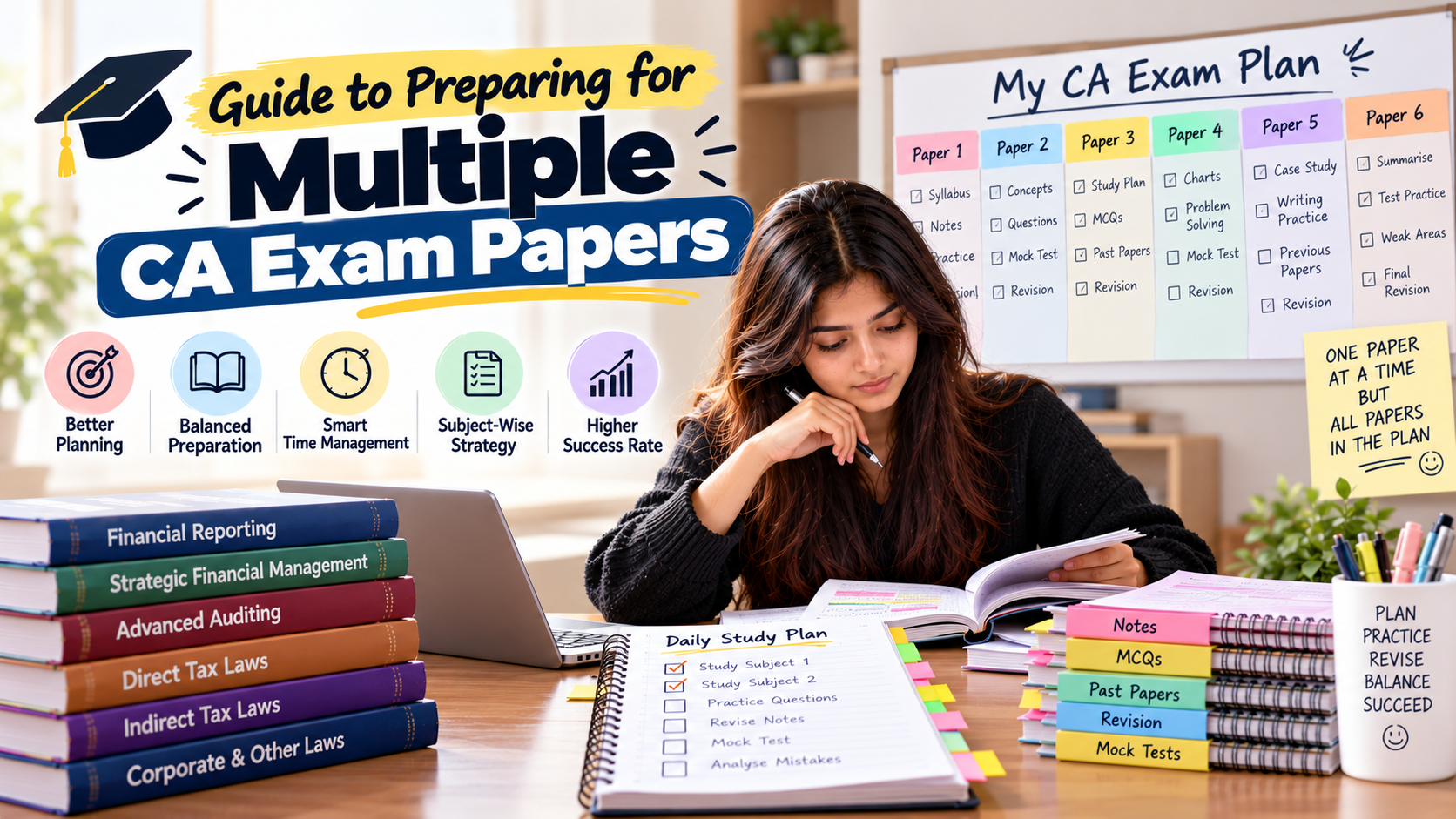
A daily target gives CA students a clear answer to the question, 'What should I complete today?' Without a defined outcome, study time can disappear into repeated reading, frequent timetable changes or spending too long on one topic.
Targets should match your examination level, syllabus progress, available time and current strengths. Foundation, Intermediate and Final students need different mixes of concept learning, problem-solving, revision and exam practice, so the plan should be adjusted rather than copied from someone else.
Set targets that describe an outcome
A useful daily target names the work to complete, not just the subject to open. Examples include learning a defined concept, solving selected questions, revising a chapter from memory or writing an answer under a time limit.
Keep the target specific enough to check at the end of the day. Estimate how long the task may take and break it down if necessary. A realistic outcome helps you see progress and makes it easier to adjust the next day's plan.
Daily targets for CA Foundation students
Foundation students should build basic concepts and develop regular practice across the applicable papers. Daily targets can combine a learning block, a question-practice block and a short review of earlier material. The balance should follow the current syllabus and personal needs.
Do not postpone practice until every chapter has been read. Use questions to identify misunderstandings early and review mistakes before moving on. Keep short notes of formulas, definitions or concepts that need another look, while using prescribed material for full explanations.
Daily targets for CA Intermediate students
Intermediate preparation needs a planned balance across multiple papers, including concept study, practical problem-solving or structured theory answers as appropriate. Choose daily tasks that move one or more papers forward without allowing other subjects to disappear from the weekly plan.
Rotate papers across the week and track chapter status, question accuracy and revision. If one paper is weaker, allocate extra time temporarily while maintaining contact with the others. Timed practice should become more prominent as readiness improves.
Daily targets for CA Final students
Final-level preparation benefits from focused work on complex concepts, integrated questions where applicable, exam-style answer writing and regular revision. Targets should name the topic and the expected output, such as completing a question set and analysing the errors.
Use performance data to decide whether a session should focus on learning, application or revision. Keep earlier chapters in rotation and practise under time limits as appropriate. Check the current syllabus and applicable guidance for your attempt rather than relying on old notes alone.
Use a simple daily structure
A practical day may include a high-focus session for the hardest task, a second session for another paper and a shorter block for recall or error review. This is an example rather than a fixed timetable; classes, work, energy and responsibilities will affect the schedule.
Put the most important task first when possible. Leave transition time between subjects and avoid planning every minute without a buffer. If your available time is limited, prioritise a few meaningful tasks rather than creating a long list you cannot complete.
Balance learning, practice and revision
Daily targets should not consist only of new chapters. Include question practice to apply concepts and a short revision block to retrieve older learning. The balance changes as the examination approaches: early preparation may emphasise understanding, while later stages require more revision and timed practice.
Review the work completed and decide the next action. If you can explain a topic but cannot solve questions, practise application. If you solve questions but keep forgetting rules, schedule recall. Let the type of task respond to the gap you have identified.
Use realistic time estimates
Students often underestimate how long a topic or question set will take. When the plan repeatedly runs over time, unfinished tasks accumulate and the timetable becomes stressful. Track actual time for a week to build more accurate estimates.
Break lengthy tasks into smaller blocks and define what counts as completion. Completing a question set should include checking answers and understanding mistakes, not merely writing final figures. This creates more useful targets and reduces false progress.
Track completion and learning quality
At the end of the day, record what you finished, what remains and what you learned. Include simple evidence such as questions attempted, accuracy, topics recalled or mistakes corrected. A target marked complete is more meaningful when it reflects understanding or practice.
Use a weekly review to spot repeated problems. If targets are often missed, reduce the workload or divide tasks more carefully. If they are completed easily but results are not improving, improve the quality of practice or add more challenging questions.
Plan for missed targets
A missed target is information about the plan, task or circumstances. Decide whether it is essential, whether it should be rescheduled and what can be shortened. Avoid automatically moving every unfinished task to tomorrow, because that can create an impossible backlog.
Keep a small buffer in the week and revise priorities when needed. If you miss a session, return to the routine at the next opportunity. Sustainable preparation depends on adjusting sensibly, not on never experiencing a disruption.
Use weekly and monthly checkpoints
Daily targets work best when they support a broader plan. Set weekly outcomes for syllabus coverage, revision and practice, then review progress against the longer examination timeline. This helps ensure that daily activity contributes to overall readiness.
At each checkpoint, check both completion and performance. A chapter may be marked finished but still require practice. Use mock-test findings and recall results to refine future targets, and confirm official exam dates and syllabus details through current ICAI communications.
Use CA Exams Test Series to measure progress
CA Exams Test Series can be included as a practice checkpoint for students at different CA levels. Use results to check whether daily work is improving accuracy, recall, answer structure and timing.
After each test, convert the findings into a few daily targets. Focus on the cause of errors, then reattempt similar questions after a gap. This links daily planning with performance rather than treating the timetable as an end in itself.
Frequently Asked Questions
How do I set daily targets for CA exams?
Choose specific outcomes based on syllabus progress, available time and current weaknesses, and include learning, practice and revision.
Should Foundation, Inter and Final students use the same timetable?
No. Broad planning principles are similar, but subject mix, complexity and practice needs differ by level and individual progress.
How many daily targets should I set?
Set a manageable number that fits your available hours and allows time to check answers and review mistakes.
Should daily targets include revision?
Yes. Short recall sessions help maintain earlier learning while you continue with new topics.
What should a CA Foundation student focus on daily?
Build concepts, practise questions from applicable papers and review mistakes regularly using current prescribed material.
How should CA Intermediate students organise daily study?
Rotate papers across the week and track chapter progress, practice accuracy and revision needs for each paper.
What are useful daily targets for CA Final?
Use focused concept work, exam-style questions, revision and mistake analysis based on your preparation stage.
What if I cannot finish a daily target?
Reassess its priority, break it into smaller tasks and reschedule realistically instead of carrying an unlimited backlog forward.
How can I tell if my targets are effective?
Track completion and learning evidence such as recall, question accuracy, corrected errors and timed performance.
How can CA Exams Test Series support planning?
Test feedback can help turn weak areas into specific study tasks for the next day or week.